This white fruit was eaten every day 30 years ago, overran the mountains with nobody wanting it, and now at 15 yuan per jin, people can't afford it
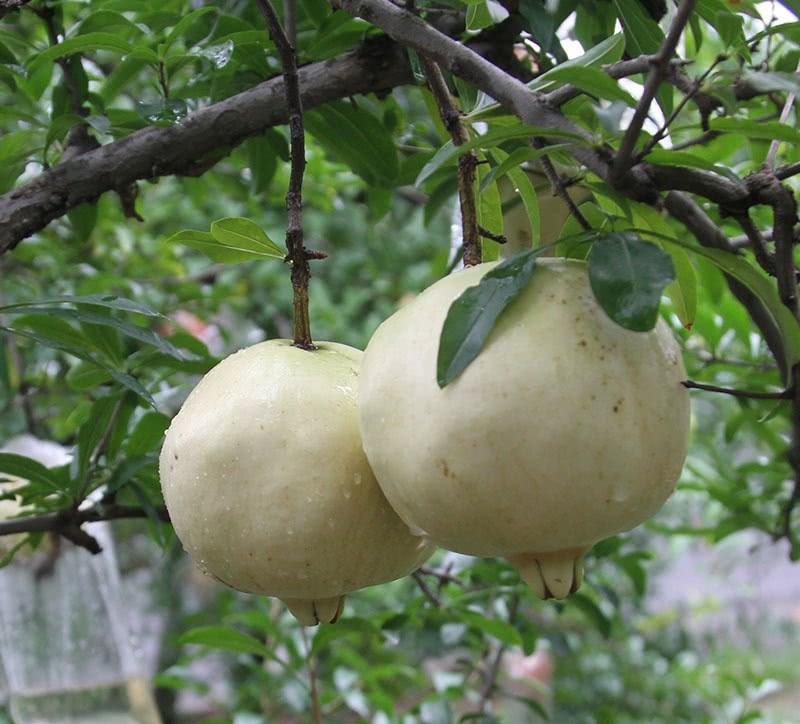
Speaking of fruit, probably everyone eats it every day, right? The benefits fruit brings us are well known, and now there are so many kinds of fruit that we can choose the ones we like, and eating more fruit basically does no harm. Now, with the advancement of science and technology, some old varieties of fruit from the past have been optimized and brought back to the market, radiating powerful vitality. The fruit to be discussed today was once a wild fruit tree in the mountains, eaten every day in childhood, and now after careful cultivation it has become highly sought after in the market.
This fruit is called the white pomegranate. People may not see it often now, but I remember that white pomegranates were very common in my childhood; it is a wild variety. I remember that back then my grandmother's house had a white pomegranate tree, and the yield of white pomegranates was very low; each year one pomegranate tree did not bear many fruits. But because of the low yield of white pomegranates, some people replaced their white pomegranate trees with other fruit trees that had higher yields. Now, after optimization and cultivation, white pomegranate trees are planted in many places in our country. White pomegranates are more expensive than red pomegranates, and they can only be eaten during the early autumn period each year.
The flowers, fruits and seeds of the white pomegranate are all white. Many people think the fruit of the white pomegranate must be considered very expensive, but you do not know that the most precious parts of the white pomegranate are actually its flowers and roots. Its flowers and roots are in fact valuable medicinal materials. The root of the white pomegranate has the effect of tonifying the kidney and boosting qi; besides that, the flower of the white pomegranate also has the effect of relieving cough and moistening the lungs. Since white pomegranate trees are already few, and white pomegranate trees grow relatively slowly, it follows that white pomegranate flowers and roots are even scarcer. Add to that the medicinal value of white pomegranate flowers and roots, and so white pomegranate flowers and roots appear even more precious.
The white pomegranate tree can really be considered a treasure from top to bottom. Not only does the white pomegranate taste good, but even its flowers and roots have such high medicinal value. The wild white pomegranates eaten in the mountains during childhood tasted rather sour and astringent, completely inferior to the cultivated kind of today. The white pomegranate has long had the reputation of being a "purely sweet" pomegranate. Do not judge it by the fact that it is not as eye-catching as the red pomegranate; its taste is very sweet, and anyone who has eaten it cannot forget it. But white pomegranates are not easy to cultivate; generally they must be planted for 10 years before they produce a relatively good yield.
So the price of white pomegranates is relatively high. Ordinary red pomegranates generally cost 10 yuan for 2-3, while white pomegranates may cost 10 yuan for just one, averaging 15 yuan per jin, and many people say they cannot afford to eat them. I wonder whether any of the readers here have ever eaten a white pomegranate?