This vegetable is often mistaken for Andrographis paniculata, but it is actually an ornamental flower
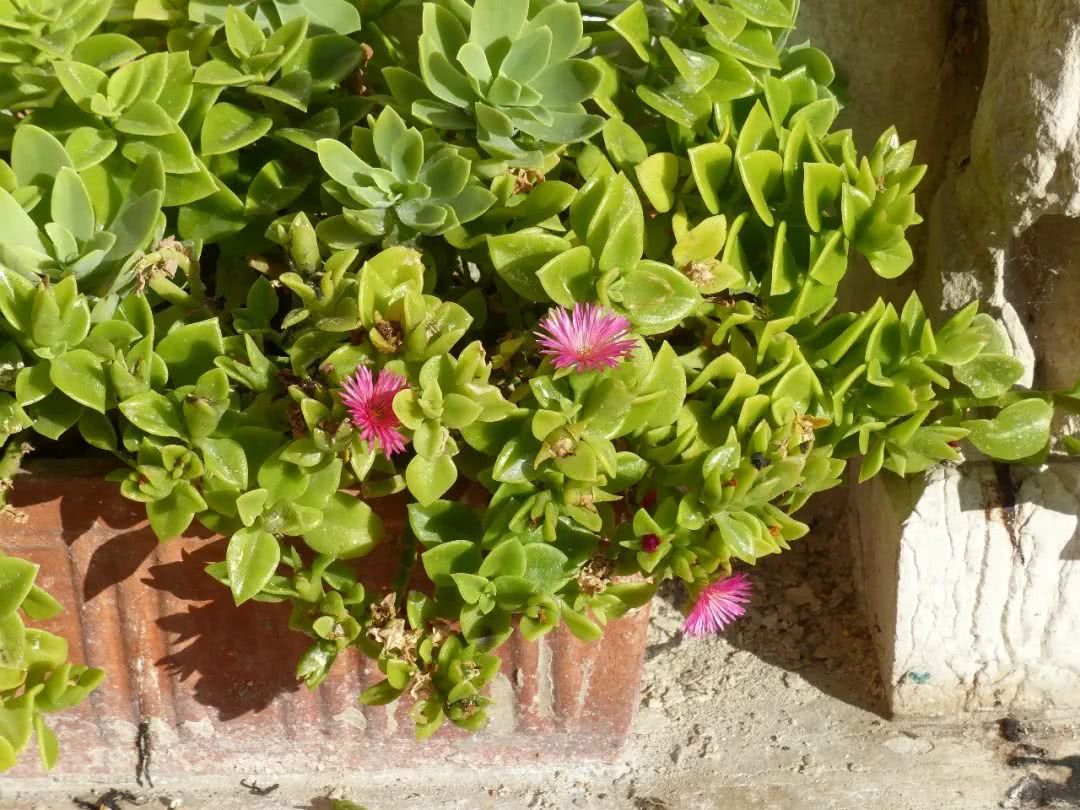
Recently you may have occasionally seen a very delicate, beautiful ornamental plant in the park. It is Aptenia cordifolia. A few years ago I also saw it in the vegetable market, where vendors called it Andrographis paniculata, but that was all a fake. Actually, it is just an edible ornamental plant, and it is very easy to care for, quickly growing into a large patch.
If you want to propagate Aptenia cordifolia, it is also very simple. You can directly cut a relatively long stem, about 9~12 cm or so, with 3 or 4 growth nodes. Before cuttings, first remove the leaves at the bottom of the branch, prepare some loose, breathable, well-drained sandy soil, insert the branch directly into the soil and water it thoroughly, keeping the soil moist. Generally, it will take root and sprout in about two weeks.
Aptenia cordifolia likes a warm and humid environment year-round. The minimum care temperature should be kept above 5°C to avoid frost damage. The care environment should also remain ventilated and allow light through. Pay attention to maintaining a certain level of air humidity and it will grow well.
Aptenia cordifolia has leaves that are emerald green year-round. The leaves are especially delicate. Not only are the leaves very ornamental, but it can also produce exquisite and beautiful small flowers. Its flowers are generally pink, and it actually also has other different flower colors, including the common red and yellow, looking a bit like small chrysanthemums.
Aptenia cordifolia is especially suitable for pot cultivation, and can also be grown as a hanging basket, directly suspended on a windowsill. It will grow well with regular watering. To cultivate Aptenia cordifolia, prepare loose, breathable, well-drained humus soil. The soil should be rich in humus. For the flower pot, also choose well-drained red clay pots, tile pots or plastic pots.
During the care period, Aptenia cordifolia does not need too much light. It can also grow in semi-shade or in a bright place, but if you want to promote flowering, you need to give it about 6~8 hours of scattered light every day.
You can place Aptenia cordifolia on an east-facing or south-facing windowsill or balcony. In summer, when the temperature is high and the sunlight is strong, avoid exposure to intense sun or excessive direct sunlight.
If you want Aptenia cordifolia to grow vigorously, there are also certain techniques. Pay attention to regularly pinching the stems. If you see its branches grow to more than 15 cm, you can pinch off the tender buds at the top. This can promote branching and make it prone to rot.
During the growing season, Aptenia cordifolia can be given a slow-release organic liquid fertilizer once every 2~3 weeks. The concentration must not be too high, and should be half less than usual.
If you want to promote flowering in Aptenia cordifolia, you can occasionally give some potassium dihydrogen phosphate solution and spray it directly onto the leaf surface. This will help promote flowering.