This fish can survive on nothing but feces; after invading China it corrupted local fish and fell out of favor
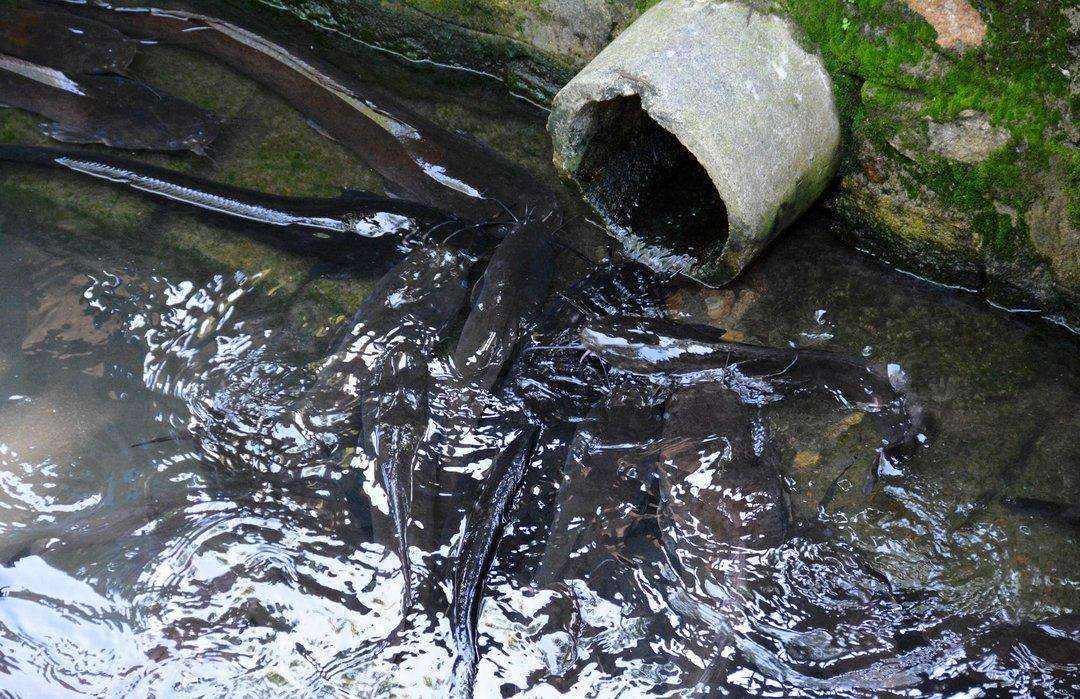
I grew up in the countryside, and when I talk about rural life as a child, I can say it was rich and varied. In the countryside back then, although living conditions were not as good as they are now, and rural kids had no toys to play with and no snacks to eat, out in the rural wild there were things better than toys and snacks, namely all kinds of wild fruits to eat and all kinds of wild game to catch, such as river shrimp, crabs, and fish in the river, and so on.
Back then, as soon as a holiday came, many rural kids would follow the adults in their family to the nearby small creeks or dried-up muddy ponds to catch fish; it was not only fun, but the fish they caught could also be taken home for a hearty meal.
Speaking of catching fish, surely many friends who have lived in the countryside have experienced it, especially in summer and early autumn, when catching fish in rural ponds is the most interesting; the fish are not only big and fat, but the flesh is also very tasty, and many farmer friends love it very much. However, in the countryside there is one kind of fish that farmer friends disdain; although it is large, few people are willing to eat it, and this fish is the "Egyptian walking catfish."
Speaking of the Egyptian walking catfish, we have to mention the walking catfish, which is a native fish species in China, basically all wild, rarely artificially farmed, and because it resembles the catfish and has long barbels, it is also commonly known as the "whiskered catfish."
Originally this walking catfish was a very tasty wild fish, but unfortunately it is small; wild ones generally weigh only half a jin, and the largest wild walking catfish can only grow to about 20 cm and around 1 jin in weight. Because this fish is too small, many people felt there was not much to eat, so the "Egyptian walking catfish," an exotic species, was introduced from Egypt's Nile River.
Although the Egyptian walking catfish has a name very similar to the walking catfish, its habits are not similar at all. China's native walking catfish mainly feed on aquatic plants, while the Egyptian walking catfish is very ferocious and greedy, with extremely strong survival ability, basically eating anything, such as aquatic insects, small miscellaneous fish, shrimp and other small aquatic animals, and it can even eat pig blood and feces. In particular, after eating pig blood and feces, the Egyptian walking catfish can still grow rapidly, so if the living environment is poor, the Egyptian walking catfish can survive on feces, while other fish cannot.
Compared with China's native walking catfish, the Egyptian walking catfish not only has stronger survival ability, but is also very large. China's native walking catfish generally grows to 1 jin, while the Egyptian walking catfish can grow to as much as 4 jin, 4 times that of the native walking catfish, and the fry of the Egyptian walking catfish can grow to this size within 1 year, so when it first entered China, it was very popular with fishermen in the countryside.
But it is exactly such a fish, large and with strong survival ability, that later became the most disdained for a period of time. Why?
The main reason is that after this Egyptian walking catfish entered China, it hybridized with the local walking catfish, making the local walking catfish also become a ferocious hybrid fish; under the label of eating feces, it ruined the reputation of the walking catfish, and it was disdained because it was considered very dirty.
However, nowadays, as Egyptian walking catfish farming becomes more and more mature, this hybridization situation has also decreased, and the living environment of the Egyptian walking catfish has also improved, no longer surviving by eating feces as in the past.
This Egyptian walking catfish grows fast, has high yield, a short production cycle, and good flesh quality, and in southern China it can be farmed 3 seasons per year, so it is increasingly loved by people, especially people in places such as Fujian and Guangdong in southern China, who love to eat it.
Dear friends, I wonder if you have ever eaten this Egyptian walking catfish? You are welcome to leave a message and share your thoughts!