Grow Flowers: Pick Up 4 Magic Weapons by the Roadside, Save on Rooting Powder and Fertilizer and Avoid Root Rot
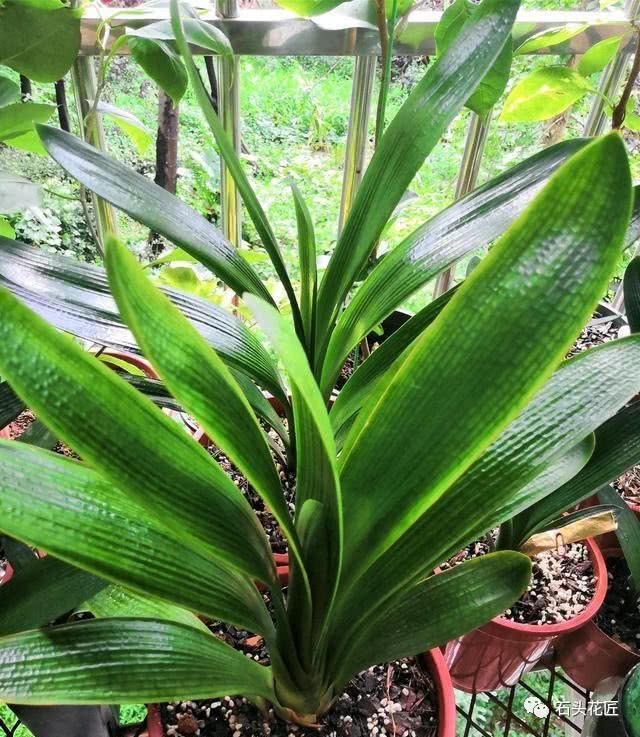
More and more people like to keep some flowers and plants at home, which not only beautifies the room and greens the living space, but also purifies the air and releases oxygen. It is very good for the health of family members. Of course, growing flowers can also improve one's self-cultivation and purify the mind. It benefits both body and mind. After growing flowers for a long time, a person's mindset becomes calm and composed.
Especially for friends who are very fond of growing flowers, they always keep all kinds of green potted plants at home. The more plants you grow, the more time and energy it naturally takes to care for them. A whole series of tasks also increases, such as repotting, changing soil, watering and fertilizing. Especially when plants need to be repotted and have their soil changed every spring, the soil needs to be fermented, a mixed soil prepared, and then the plants lifted out and repotted. The purpose of repotting flowers in spring is also to replenish nutrients and let the flowers grow more robustly.
Today I will share 4 kinds of planting materials commonly used for growing flowers. They can generally be found by the roadside or in parks. They are not only easy to obtain but also save money. Each planting material has a different function. Some can be used as fertilizer, some as rooting powder, and some as a drainage layer. Some can even sterilize and disinfect. Detailed introduction below.
Bricks and tiles
Bricks and tiles are the most common in daily life, and they can generally be seen by the roadside and on construction sites. In fact, they are very good base materials for growing flowers. Generally, when growing flowers, a drainage layer needs to be placed at the bottom of the flowerpot. The function of the drainage layer is to prevent the soil in the pot from clogging the bottom holes, which can easily lead to water accumulation in the pot during later cultivation. So placing a layer of tiles or bricks at the bottom of the flowerpot can prevent soil from clogging the bottom holes and also increase the pot's air permeability. Tiles and bricks are made through high-temperature firing. They are not only sterile but also rich in various minerals, and can also provide nutrients for plant growth. Especially when growing flowers such as Christmas cactus, clivia and orchids, which like to grow in a water-permeable and air-permeable environment, placing bricks and tiles at the bottom of the flowerpot as a drainage layer can effectively improve the plant's growing environment.
Pine cones
Pine cones are extremely common in parks. You often see pine cones on the grass or hanging on trees. Using them to grow flowers is a very good planting material. After picking the pine cones, dry them in the sun and smash them, mix them with humus soil, put the mixture in a bag, keep the soil moist, and then place it in a cool place to ferment. Generally, one month is enough for full fermentation. The resulting organic soil is very fertile. Importantly, pine cones are rich in pine oil and rosin, which have a sterilizing and disinfecting effect. So using organic soil fermented from pine cones to grow flowers can not only provide nutrients for flower growth but also play a sterilizing and disinfecting role, making root rot less likely during flower cultivation. When growing potted plants that like fertilizer, such as clivia, jade plant, pothos and spider plant, using organic fertilizer fermented from pine cones means that after repotting and adding soil, you do not need to fertilize the flowers again for a year, and the plants can still grow luxuriantly and robustly.
Earthworm castings
Earthworm castings are known as the king of the most natural organic fertilizers. They are the droppings excreted by earthworms after eating grass, wood and leaves and digesting them in their bodies. Earthworm castings are rich in nitrogen, phosphorus, potassium, calcium and 18 trace elements, and are the most nutrient-rich fertilizer for growing flowers. Earthworm castings are often seen in grasslands. They are just wrinkled clumps of soil. Despite their ugly appearance, when used to grow flowers, their fertilizing effect surpasses any other fertilizer. Generally, the earthworm castings picked up are dried in the sun and pressed into powder. Burying them in flowerpots as fertilizer has a very good effect. Earthworm castings are a very fully fermented organic fertilizer, so during use there is no need to worry at all about using too much on plant roots. According to your own preference, you can add as much as you want. Especially when growing plants such as orchids, choosing earthworm castings with comprehensive fertilizing effect and mixing them with other planting materials to grow flowers has a very good effect.
Willow branches
Willows are the most common in parks and green belts. Willow branches contain a substance called salicylic acid. Using them to grow flowers has the effect of promoting plant rooting and sprouting. So in spring, summer and autumn each year, after cutting back fresh living willow branches, soak them in clean water for one day. The resulting pale yellow aqueous solution is rich in salicylic acid. When taking cuttings of flowers, you can soak the trimmed cuttings in this aqueous solution for two hours, and then the survival rate of the cuttings will be greatly improved. Moreover, during flower cultivation, if you need to speed up the growth of the plant's root system, you can also use this aqueous solution directly to water the flowers, which can promote plant rooting and is also a process of root care.
So the 4 magic weapons for growing flowers mentioned above are all very easy to find in daily life, and they are all free things. When used to grow flowers, each has its own strengths and each has its own function. Especially for friends who grow many flowers at home, using these four things to grow flowers is certainly very convenient and money-saving.
If you find it useful, please like it below, follow, and forward it to more friends.
I am [Stone Flower Gardener], and I share small tips on growing flowers every day. Remember to follow me.