A German flower shop has been open for 50 years. What is the secret to its success?
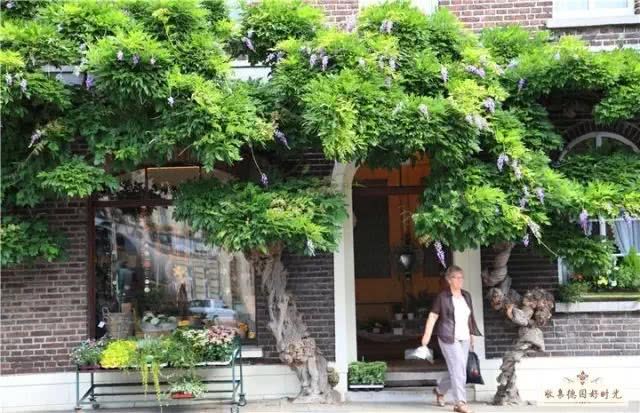
Germans are probably one of the peoples in the world who love growing plants and flowers the most. Whether in towns or villages, there is shade everywhere, green grass, and clusters of flowers. Every household has evergreen plants and blooming flowers. When Germans visit someone's home, the most common gift they bring is also flowers. Weddings are covered in flowers, anniversary celebrations are covered in flowers, and even funerals are covered in flowers.
Compared with cities, small towns and villages are more like ecological gardens. In our small town, every household's front and back yards and the areas by their windows and doors are brought to life with flowers and green plants. But even though every family grows flowers, customers still come to the town's flower shop.
The town flower shop is easy to recognize. It is in an old house on the main street in the center of town. Beside the door, two old wisteria trees wrapped in ancient vines are like huge sun umbrellas, their branches and leaves covering the doors and windows. These two century-old wisteria trees are a symbol of the town.
A retired old engineer who lives in Duisburg said that when he was young, he often cycled to a small city on the Dutch border, and our town was on the only route. Every time he saw these two old wisterias, he knew he was already halfway there.
The flower shop is not big, just two rooms facing the street. The shop window changes its decorative style with the seasons. Especially in spring, when the wisteria blooms, the wisteria flowers cover the whole wall and window like curtains and fringes of light purple and pale blue.
Germans call wisteria "blue raindrops." Whenever the wisteria is in full bloom, photography lovers from near and far come to take good pictures. I am one of them, and I have recorded the many ways the "blue raindrops" scatter and fall.
The flower shop's proprietress said that many people give her the wisteria photos they have taken. A whole wall in her home is covered with them, as if wisteria wallpaper had been pasted on it.
The kindly proprietress of the flower shop is over seventy years old and a resident of the town. She handles flowers and plants gently and with great feeling. Every day she combines different fresh flowers and green plants into bouquets of different styles for customers to choose from.
She knows the language of flowers well. According to customers' needs, she recommends flowers suitable for different occasions, or helps customers choose some lovely small ornaments to create the flower arrangement they like.
German bouquets are somewhat different from Chinese ones. They pay more attention to the matching of color and shape, interspersing green plants and leaves, even grass, at different heights among several flowers. This gives them a strong sense of three-dimensionality and makes them more natural, rather than a big bunch packed full of the same flowers.
Germany has vocational horticultural schools where one can learn techniques for growing flowers and plants and floral craft.
The town flower shop also displays some vegetables, fruit, and juice, all pure organic foods from farms in the town. Some townspeople like to come here to buy fruit and vegetables, especially older people, who are unwilling to go to large supermarkets to buy vegetables.
The proprietress said that she has especially loved flowers and plants since childhood. When she was young, she studied horticulture, and she has run this small flower shop for 53 years.
She said: "For so many years, people's love for flowers and plants has never changed. It is only that the style of flower arranging changes with each era, and new flower varieties keep appearing. I have to keep learning new knowledge and new skills. Now I am old. Although I am still healthy, it is gradually time to retire. I am very happy that the younger generation still likes flowers. Even though they love playing on computers and phones, they still choose fresh flowers as gifts. Young people often come to buy flowers."
For more than fifty years, time has flowed through this small shop. Youth has grown old among the flowers and plants, and the flower shop is still just this small, and the storefront is still this size.
I had a question in my heart: in such a remote small town, with such a small customer base, can she make money? So I could not help asking her: "The town is not big and the population is not large. How have you been able to keep a flower shop open here for an entire lifetime?" The proprietress answered calmly: "I do not want to become a millionaire. I love flowers and plants, and I love the people here. Doing what I love for a lifetime makes me very happy."
Many family-run small shops in Germany are like this. They do business without seeking quick success and instant benefits, and they do not aim to get rich. Instead, they treat it as part of life. They stress quality, value reputation, focus wholeheartedly, and take joy in it.
Before leaving, while I was expressing my thanks to the proprietress in words, my husband, Old Wo, bought a bouquet of flowers in the shop. In fact, our home is not short of fresh flowers. After disturbing someone, he used his own quiet way to show respect. His German upbringing made me feel ashamed, and there is still much for me to learn.
This article is excerpted from "Collecting Good Times in Germany - Notes on Small Town Life and Scenery."
--THE END--
Flower Field Nature
The most readable WeChat public account in the field of floral art
Flower friends exchange: zouzaidalulogo design: zouzaidalu
Floral aesthetics | Plant aesthetics | Life aesthetics | Plant & floral exploration