This kind of wild grass survives as soon as it touches soil, stays green all year round, and is very easy to grow as a potted plant at home.
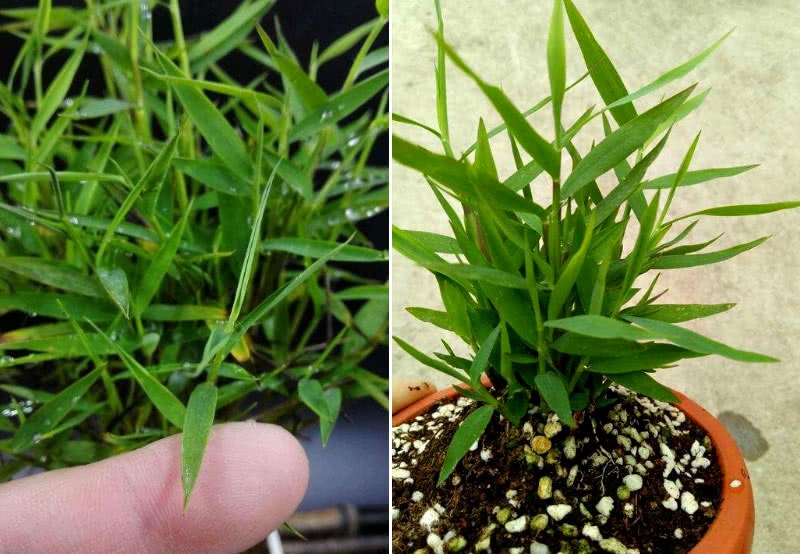
Ancient scholars had a saying: "One would rather go without meat than live without bamboo," which shows just how much people love bamboo. The bamboo discussed today is not the large bamboo we imagine, but a dwarf bamboo called Hime-sasa, a type of Sasa bamboo. It was originally a wild grass of the mountains and fields, and some small Hime-sasa plants potted up make the miniature bamboo bonsai that is popular today.
Why is Hime-sasa said to be a wild grass? If you have seen it, you know it is petite and cute in every way, looking exactly like little tufts of green grass. Yet this soft and adorable Hime-sasa is very well suited to being grown indoors in a pot. Placed on a desk, by a window, or in a bedroom, it looks fresh and lovely, and it survives as soon as it touches soil, making it very easy to grow.
Hime-sasa is not prone to pests or diseases, is easy to cultivate, and is not demanding about soil; any soil that does not easily become waterlogged will do, though sandy soil that drains well and is loose and airy is best. One important part of caring for it is that it must not lack water; even sitting in water is fine, and it can also be grown hydroponically.
Therefore, the soil in a Hime-sasa pot must be kept moist at all times. When watering, not only should the soil be watered thoroughly, but the leaves should also be watered to keep them moist, so the soil must never be allowed to dry out, as that easily causes yellow leaves.
If in a season with fairly good temperatures, such as spring or early summer, you encounter light rain, you can put Hime-sasa out on the balcony to get rained on for a short while, so that its soil and leaves absorb more water.
When caring for Hime-sasa, the suitable temperature is 5-35°C. It is a plant that greatly prefers shade, so normally it only needs to be kept in a place with scattered light. It must never be exposed to strong sun, and attention should be paid to ventilation. In winter, when the temperature drops below 5°C, simply keep it in a slightly warmer place.