Achieving Root-Fungus Balance in Orchid Care Makes the Blooming Period Longer
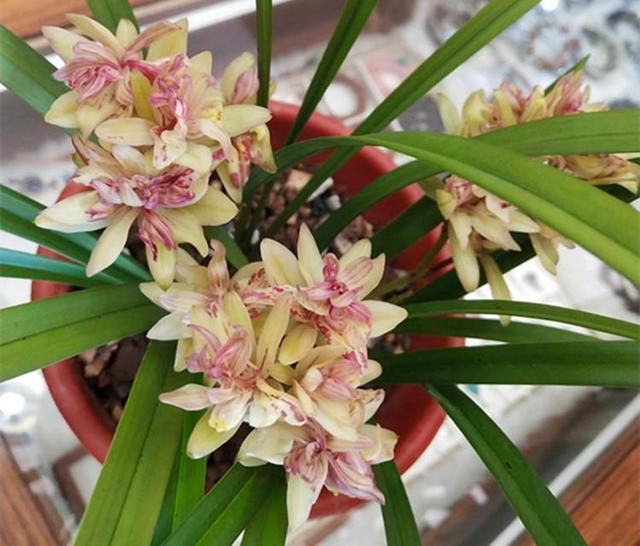
Orchids have fleshy roots and no fibrous roots. They rely on the orchid fungi living symbiotically inside the fleshy roots to absorb mineral nutrients from the soil solution and then supply them to the orchid plant. In turn, the fleshy roots of the orchid provide the orchid fungi with the necessary organic nutrients and water. They depend on each other and live together symbiotically.
Therefore, the key to growing orchids well is this: the orchid's "root-fungus" relationship must be kept in a stable balance, so that the orchid plant grows luxuriantly and the blooming period is also longer. So, how do you maintain the balanced "root-fungus" relationship in orchids? What fellow growers need to do is: provide the orchid with soil rich in humus and carry out the necessary fertilisation.
Generally speaking, use leaf mould rich in organic matter to plant orchids, and repot and change the soil once a year or every other year. The nutrients contained in the soil are already enough for the orchid's growth and development, so no additional base fertiliser is needed; a liquid fertiliser used as a top dressing is sufficient.
If the orchid pot has not had its soil changed for 3-4 years in a row, then the orchid needs to be fertilised. On the one hand, an appropriate amount of base fertiliser can be added when mixing the growing medium, such as fully fermented pig, cow or sheep manure, chicken manure, or soybean cake, oil cake crumbs, crushed horn shavings, bone meal, plant ash, etc. But the amount must be appropriate and should not be excessive.
On the other hand, a certain amount of top dressing can be supplied during the growth and development stage. Usually an organic liquid fertiliser specially made for orchids can be used, diluted 500 times. When applying it, it is best to use the spout of a watering can to apply it directly to the roots of the orchid plant, and not to splash it onto the orchid leaves. Nutrient solutions are mostly made from nitrogen, phosphorus, potassium and some trace elements, and the concentration ratio must be carefully controlled when using them.
In addition, fellow growers can also, according to the needs of the orchid's growth and development, apply fertilisers such as monopotassium phosphate to supplement elements such as nitrogen, phosphorus and potassium, but the concentration and frequency must be strictly controlled.
If the orchid is grown in media such as volcanic rock, expanded clay pellets, crushed brick and tile particles, or perlite, then base fertiliser and top dressing must be applied. The base fertiliser is mostly made from chicken manure combined with some mineral nutrients, formed into granules about the size of a broad bean. It can be used as a base fertiliser when potting the orchid, or spread flat on the surface of the pot at a spacing of 3 cm and used as a top dressing through constant watering and leaching.