Pothos leaves turning yellow and scraggly? The neighbor watered it with this kind of water and it turned glossy green
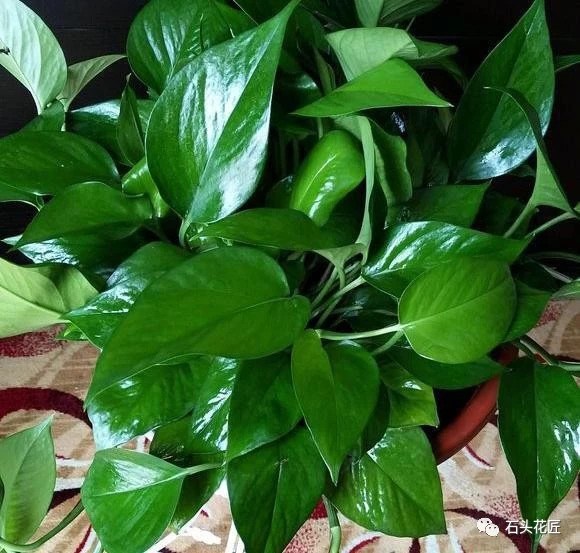
I wonder if you've noticed that more and more people are into growing flowers. Whether at home or in the office, they place some green potted plants around, and in their spare time they tend to the pots to relieve fatigue. Although some flowers and plants are very easy to grow, like pothos and spider plant, these common potted plants, although easy to grow, still require some flower-growing skills if you want to grow them well.
To grow them well, you still need certain skills and knowledge. Just like a few days ago when I visited a neighbor's home, I found the neighbor's pothos growing very lushly, with glossy green leaves. After asking for advice, I learned that the neighbor often pours a kind of "water" into the pothos pot. Every month they water the pothos with it once, and the plant not only overflows the pot, but the leaves also grow very robustly. So even though these are all very easy-to-grow flowers, to grow them well you still need certain skills and knowledge.
Today I'll share with you the water the neighbor uses to grow pothos: oil residue water!
The neighbor's pothos is "glossy green" and shiny, turns out they poured in "this kind of water" - no wonder mine has yellow, scraggly leaves
Actually, to grow any kind of flower, you need to understand its growth habits. Only then can you grow it robust and dense; only by understanding it can you grow it well.
The growth habits of pothos
Although pothos is a very common household potted plant, there are still many flower lovers who can't grow pothos well, turning it into a yellow, scraggly plant. Pothos is a plant that likes fertilizer and water. During cultivation, you not only need to water the pothos thoroughly, but also grow it in fertile soil, so it has sufficient nutrients and water. To make pothos leaves grow emerald green and lush, you also need to place the plant somewhere with scattered light, so it grows fast and has abundant branches and leaves.
Generally, household pothos needs repotting once a year. Because pothos absorbs nutrients very quickly, after a year the entire pot is filled with pothos roots. So to keep pothos growing robustly, you need to repot and change the soil in spring or autumn, but when caring for it at other times you also need to supplement fertilizer regularly. Pothos is a foliage plant, so it has a high demand for nitrogen fertilizer. Generally, supplementing with nitrogen fertilizer is enough to meet its growth needs.
Soaking waste oil residue in water and fermenting it to grow pothos makes the leaves glossy green and bright.
Because pothos is a foliage plant, it has a large demand for nitrogen fertilizer. So the neighbor found some waste oil residue, put it in a plastic bottle, added water and let it fully ferment for two weeks. After the oil residue water is fully fermented, dilute it with water at a 1:10 ratio, pour it into the pothos pot, and water the pothos once every two weeks. The plant grows very fast, sprouting new leaves constantly, and the leaves are glossy green and shiny.
Actually, the process of growing flowers is constantly discovering little life experiences. Many things in life can be used to grow flowers, like soybeans at home that can be cooked and used as fertilizer, buried at the bottom of the flower pot; eggshells from the kitchen can be dried and crushed, then buried in the flower pot, providing rich nitrogen and calcium for plant growth, and so on!
That's all for today's sharing. If you find it useful, please like, follow, and share it with more friends below.
I am [Stone Gardener], sharing little flower-growing tips every day, remember to follow me.