What does the dormant state of succulents look like, and do they need special care?
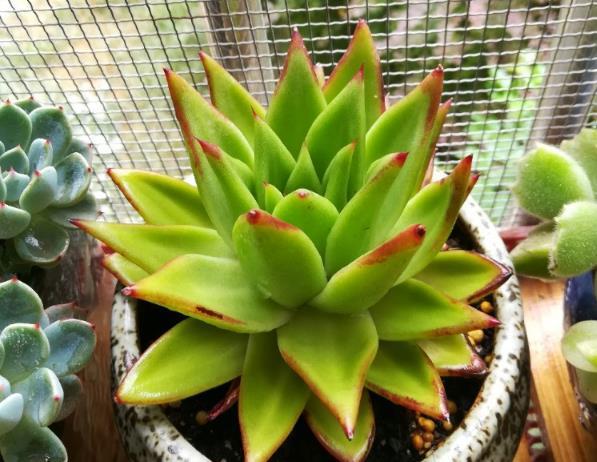
The dormant period refers to a self-protection measure that different plants adopt to adapt to extreme climates due to climate changes, such as hot summers and cold winters. Generally, there are two periods in a year, one in summer and one in winter, each lasting about two months. But not all succulents go dormant; it still depends on the variety and the growing environment.
Dormant succulents show stalled growth, and their leaves dry up, wrinkle and shrink. Some succulents, like Conophytum, also shed their skins. During dormancy, the dried old skin covers the new leaves, making them look as if they have already dried up and died. Only when dormancy ends and the rain arrives does the old skin fall off. The leaves are dull and lusterless, the leaf color of the whole plant is basically uniform, the lower leaves change color, or the whole plant changes color.
In summers with relatively strong sunlight, appropriate shading can reduce sunburn on succulent leaves, but the succulents are still in a high-temperature environment. Hobbyists can move the succulents directly into a cool and well-ventilated indoor space, letting the succulents spend the summer indoors. After autumn arrives, move the succulents outdoors for care. Although growing succulents indoors may cause some leggy growth, it can help them get through the summer safely.
Some succulents enter dormancy in summer, the outer leaves wither, and the plant itself has stopped growing. In this case, hobbyists should change their previous watering frequency and reduce watering as much as possible. Wait until the flower pot is found to be completely dry, then soak the pot slightly. Or use a spray bottle to sprinkle clean water beside the flower pot, which can also gently increase air humidity. Can succulents be repotted during dormancy? Repotting is not recommended, because at this time the succulents have already stopped growing, and if repotted, it will be very difficult for them to grow new roots.
The summer dormancy of the succulent Aeonium arboreum 'Zwartkop' is the same as that of general Sedum plants and requires extra attention. This is the time when the mortality rate of Crassulaceae is the highest. Care at this time requires slowly reducing the amount of water until cutting it off, no exposure to strong sun, and placing it in a place with good scattered light. You can moisten the soil at night, but make sure the soil can dry out by the next day. At this time, pay attention to ventilation. Generally, Aeonium arboreum 'Zwartkop' begins dormancy when the temperature exceeds 30 degrees or falls below 5°C. Artificially increasing the temperature difference and changing the temperature can help break dormancy.
The winter dormancy of Aeonium arboreum 'Zwartkop' is relatively late, and its summer dormancy is earlier. After dormancy ends, the leaves begin to grow. At first, the leaf edges curve toward the middle, looking triangular. This is normal, so there is no need to worry; it will gradually improve. Dormancy characteristics: the leaves gather toward the middle, and the leaf layers around the growth point increase. When the above phenomena appear, pay attention to reducing water and light. During dormancy, Aeonium arboreum 'Zwartkop' performs differently: some leaf rosettes fully close, some do not close at all, and some close and even rotate, but what they have in common is an increase in leaf layers.
This is a gathering place for succulent lovers, sharing succulent care tips. You are welcome to follow and exchange ideas.