Upgrade Hydroponic Spider Plant into a Fish-Plant Symbiotic Ecosystem for More Relaxing Plant Growing and Fish Watching
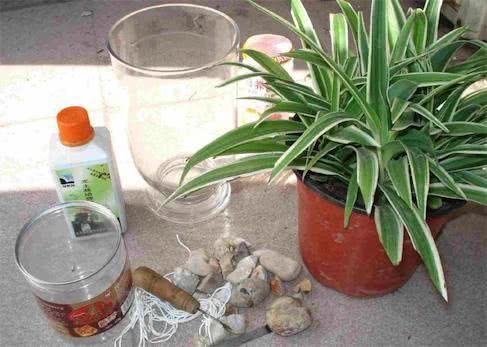
Our home greenery is generally divided into two types according to the cultivation method: hydroponic plants and soil-cultured plants. Of course, besides these two cultivation methods, there are others, such as: soilless cultivation of air plants (Tillandsia), some new misting cultivation techniques. These are used very rarely and only for specific plants, so they are not counted among the daily cultivation methods.
In our daily lives, spider plants (Chlorophytum comosum) are mostly grown in soil, and soil-cultured ones grow more vigorously and have stronger vitality. But soil culture has its benefits, and hydroponics has its benefits too. Spider plants can also be cultivated through hydroponics, and of course some flower enthusiasts do this. However, today we are going to upgrade the hydroponic spider plant cultivation method, letting fish and plants form a symbiotic relationship and creating a fish-plant ecosystem. This not only increases the ornamental value of the potted plant, but also lets the spider plant grow better. Growing plants and watching fish is so relaxing!
Materials needed to upgrade the hydroponic spider plant:
One variegated spider plant (Chlorophytum comosum 'Variegatum'), one fish tank, some stones, one awl, some hemp twine, one plastic food container. Of course, I am just providing one method here. If you can achieve the same effect, you can substitute the materials. As long as you are handy enough, pots, bowls, ladles and basins can all work.
Production process:
Step 1: First, cut off 3 to 4 cm from the opening of the food container, then cut the plastic part evenly, bend it outward in all directions, and fix it in place.
Step 2: Use an awl to poke some holes near the opening of the food container, thread the hemp rope through, and make it into a tennis racket shape, as shown in the picture.
Step 3: We take the variegated spider plant out of the flower pot. When doing this step, be careful not to damage the roots.
Step 4: Soak the spider plant together with the pot soil in water. Relying on the force of the water, slowly wash the soil clean. Try not to use your hands, to avoid damaging the roots. This way, the roots can also be washed cleaner.
Step 5: Prune the roots appropriately. Generally, a spider plant that has grown for a period of time will produce some fleshy tuberous roots. We need to cut off these roots and keep only some smaller roots.
Step 6: After pruning is complete, we soak the spider plant in a carbendazim solution for sterilization and disinfection. After soaking is complete, rinse it once with clean water and let it dry naturally.
Step 7: Place our prepared mesh food container on the glass container as shown in the picture. Then put the treated spider plant into the opening, and press some stones beside it to fix it in place.
Step 8: Pour the fish tank water into the glass container. Do not fill it too full; just enough to submerge 2/3 of the roots. After adding the water, put the small goldfish in.
Step 9: Add a little hydroponic plant nutrient solution to the culture water to increase the fertility of the culture water.
In this way, our fish-plant symbiotic ecosystem is complete. We can add a few pieces of activated carbon to the culture water to keep the water clean, and then change the water regularly. This way, the spider plant will grow more and more vigorously, and you can enjoy both the flowers and the fish. How relaxing!
The fish can clean impurities at the bottom of the water and also clean up the waste produced by the roots, while the fish's excrement can increase the nutrients in the water, providing them for the spider plant to absorb and promoting the spider plant's growth. Both sides benefit each other. This is a very good symbiotic relationship.
What do you all think about this fish-plant symbiotic cultivation method? If you find it interesting, you can try it at home yourself. It is also very simple to make.
That is all for today's plant-growing tips. If you are interested in potted plants, you can click to follow. We update articles of the same type every day, hoping to help everyone.
(Original by Home Flowers and Plants Pavilion. Plagiarism is strictly prohibited. Images are from the Internet. If there is any infringement, contact us for deletion.)