Can you put this kind of thing in a planted tank? Figure it out before you add it
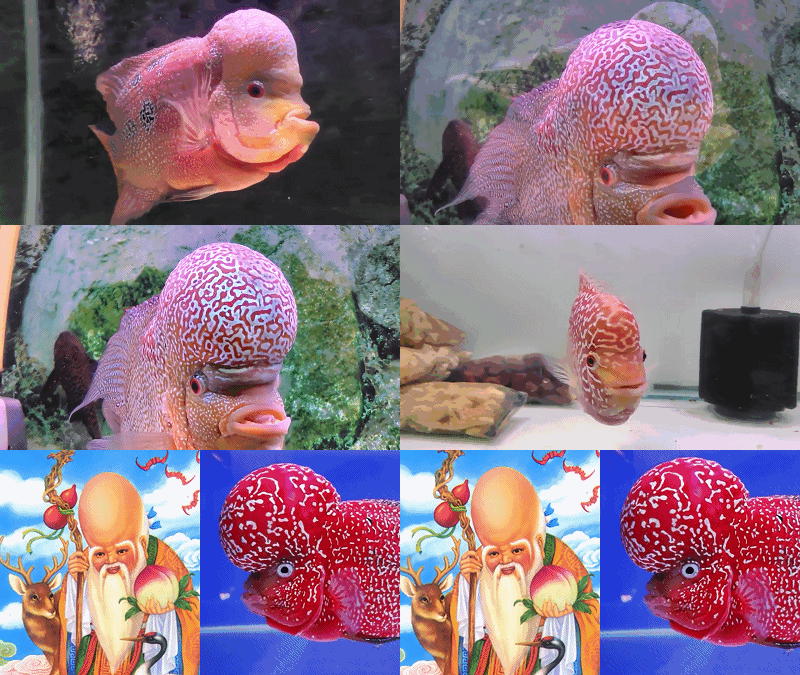
20 years ago, Malaysian aquarists, through repeated artificial crossbreeding and improvement, developed a brand-new fish species, the flowerhorn. With its round, bulging head, the flowerhorn once took the Chinese-speaking world by storm, its value doubling along the way, making it one of the top ornamental fish varieties. When the flowerhorn was at its hottest, some people even claimed that a flowerhorn had displayed divine characters and that they had made a windfall from it, which left people marveling.
Today, we take you to Ipoh, Perak, to visit 62-year-old Xie Yutang, the father of the flowerhorn, and get to know the flowerhorn all over again.
Xie Yutang, founder of the flowerhorn: "First-generation flowerhorn (competitions) didn't have so many requirements. Generally, you looked at its body shape, head shape and coloration, and chose based on its temperament. Lu Zhishen, the florid monk in 'Water Margin', was my idol. At first the flowerhorn started out from the florid monk, and later it became the flowerhorn, because it had become more beautiful. Back then it wore a kasaya, and afterward it became the flowerhorn; that's how the name came about."
Xie Yutang, founder of the flowerhorn: "Ornamental fish inevitably have highs and lows, but its current position is stable, and it has formed a trend worldwide. Many people know it, and it has a certain prospect and future. If a flowerhorn is extremely beautiful, it has something special about it, one in ten thousand. Flowerhorns have a certain price, depending on what price and direction the hobbyist pursues."
Xie Yutang's son Xie Jianhao: "Actually, if you want to properly keep a competition fish, it's really not simple. Beyond the time involved, you put a lot of pressure on yourself about that fish. If its condition isn't good and it doesn't perform well in competition, you worry that you won't win an award, or whether anyone will like it."