Sweet potatoes produce seeds when they flower, so why aren't seeds used to grow sweet potatoes?
Summary: Sweet potatoes produce seeds when they flower, so why aren't seeds used to grow sweet potatoes?
Sweet potatoes do have seeds when they flower, but sweet potatoes are not propagated by seed.
Sweet potatoes were recorded as early as the Ming Dynasty in Li Shizhen's "Compendium of Materia Medica": "Sweet potato tonifies deficiency, strengthens the spleen and opens the appetite." This shows they have a long history. When I was little, my family grew sweet potatoes, and Science Xingnong himself has also planted sweet potato slips. I remember very clearly that the adults in the family buried sweet potato seed tubers in the soil, and once they took root and sprouted and grew many vines, they used scissors to cut them into pieces 30-40 cm long, one by one, then buried them in the soil and just waited to eat sweet potatoes.
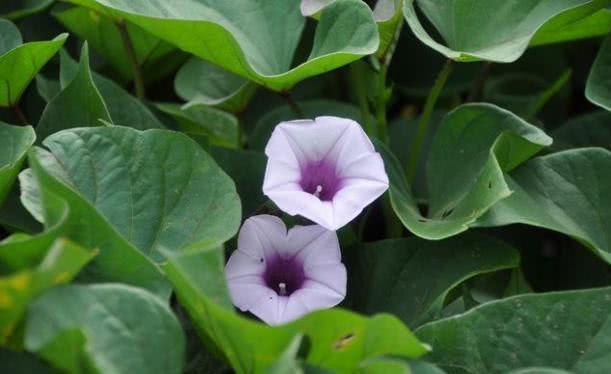
At the time I was also very curious why sweet potatoes were different from other crops - wheat, corn and so on all had to be sown from seed. The adults never gave a clear explanation either. But I had seen sweet potatoes flower, though it was very rare. Usually I would see the small purplish-red flowers in the morning, and when I went to look again in the afternoon they had withered, and I never saw seeds form, so I always thought sweet potatoes never produced seeds.
After growing up, by checking information and reading literature, I now understand that sweet potato flowers do bear fruit, which is to say the fruit also contains seeds. And the sweet potato we know and eat is the root tuber of the sweet potato, not the fruit of the sweet potato. The sweet potato flower, like the pumpkin flower, is a bisexual flower, with a stamen in the middle.
But sweet potato is a cross-pollinated crop, and self-pollination basically does not set fruit. The fruit of the sweet potato is very similar to that of the morning glory; it is a round capsule 5-7 mm in diameter, and the sweet potato fruit is withered yellow or brown. Sweet potato flowering also varies greatly by region. In our north, sweet potatoes rarely flower, and only do so when sunlight reaches certain conditions. In the autumn-winter sweet potato regions of southern China, that is, south of 23 degrees north latitude, sweet potatoes can flower naturally.
So why aren't seeds used for growing sweet potatoes?
Sweet potato seed coats are relatively hard and also very thick, so they do not absorb water easily and germination is relatively difficult. That is why sweet potatoes are not sown from seed. But sweet potato seeds are the source for breeding new varieties. Offspring with segregated shapes are selected to breed new varieties. Sweet potatoes rely on tubers for reproduction, which is asexual reproduction, so under natural conditions the probability of gene mutation is very low, and the probability of producing new varieties is extremely low. Breeding new varieties by this method is relatively difficult.
But this planting method also has an advantage: it can preserve the specific traits of a good sweet potato. And after sweet potato seeds have their seed coats nicked or are treated by soaking in concentrated sulfuric acid, then washed and placed in clean water to absorb water, and then kept under suitable temperature conditions, they can germinate.
This is Science Xingnong. You are welcome to follow, and let me take you along to grow your knowledge.