What does "it does not bloom until it meets a true friend" mean? Interpretation of the meaning and saying
I am like the sweet flag grass, let no young colt taste it.
Gladly meeting a fine festival day, it emerges from the valley to see the sunlight.
The rush grass is as tough as silk, the great rock does not shift.
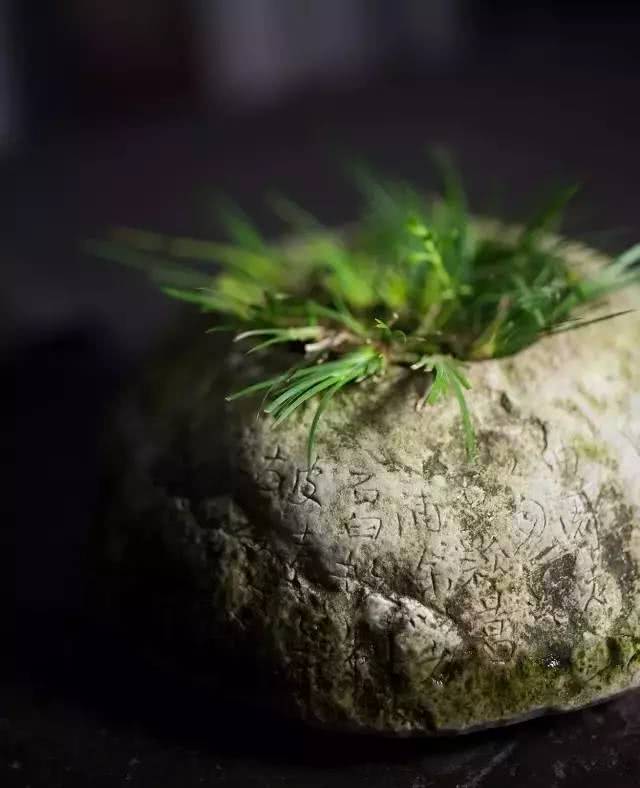
The earliest cultivation of sweet flag in China can be traced back to the Western Han dynasty; in the Tang and Song periods, scholars miniaturized the sweet flag from the garden into a landscape on their desks, planting it with secluded stones and companioning it with clear springs, merely to borrow a touch of green.
In a small studio, in a quiet and secluded hour, facing a pot of fine-leaved sweet flag, there is a trace of solitary, ancient feeling, as if for a moment one could commune with the hearts of the ancients. Drawing spring water and catching dew to grow sweet flag, the ancients revered this plant as a gentleman and kept it as a pure offering on their desks, admiring the sweet flag's secluded grace and valuing even more its noble and pure character.
On the slope of that marsh, there are rushes and lotus. The sweet flag carries a fervent air, in keeping with the lunar season. The fifth month, when the lotus gradually opens, is called the Rush Month; gathering sweet flag and mugwort to pin on the door is a custom of the Dragon Boat Festival. This kind of sweet flag is not the fine-leaved, secluded grass of the scholars' potted displays, the stone sweet flag; it grows long as a sword and tough as silk, and its broad, thick leaves have a more rustic flavor. Sweet flag, mugwort, pomegranate, cattail, hollyhock, and gardenia are all flowers planted in early summer; the seasonal flowers and grasses carry the breath of early summer, urging the sequence of seasons onward, falling into the brilliance and vastness of summer, and only then does one know the depth of the years.
The sweet flag loves clear water exceedingly, growing in mountain streams, taking root on white stones, and possessing the air of mountain forests. The sweet flag is also called "xī sūn," that is, the fragrant grass by the stream, and it is very secluded in charm. When the wind is gentle and the sun is bright, white clouds announce the secluded stones, and the eye is filled with verdant green; mist and clouds coil around the mountains, and few travelers pass. Where the stream water tinkles, there is sweet flag like green jade. Moss speckles like a painting; the sweet flag pillows on stone and rinses in the current, water vapor fills the air, and a clear fragrance strikes the nose. Playing with fragrant grasses, moving stone pots, accompanied by grey stones and clear springs, on the desk are secluded green names and categories, cold jade enters the heart, and one is endlessly delighted.
The sweet flag is suitable in all four seasons, exactly matching the plain heart of a recluse: suitable for bright tables and secluded windows, suitable when rain enters the green heights, suitable for talking of Zen on a snowy night, suitable when the moon sinks among green parasol trees, suitable when curtain shadows are quiet and still, with fine leaves lightly sketched, the room like orchids, the clear air faint and curling, a thin layer, dimly brushing the heart.
The Song dynasty was an era when sweet flag bonsai flourished; scholars greatly loved this emerald fragrant grass, and Su Shi was one of them. In the seventh year of the Yuanfeng reign of the Northern Song, when Su Shi left Huangzhou and passed through Cihu in Daye, Hubei, he once gathered several specimens of sweet flag and wrote "Praise of Stone Sweet Flag": "Only the stone sweet flag is taken together with its stone, washed of mud, soaked in clear water, and placed in a pot, where it can remain unwithered for several decades. Though not very luxuriant, its joints and leaves are firm and slender, its roots and whiskers interconnected, and it stands grey-green among the desk, and the longer it stays, the more delightful it becomes." Not only did Dongpo love sweet flag; his younger brother Su Zhe also greatly liked it. Su Zhe kept a pot of sweet flag for many years, and it suddenly bloomed with eight or nine flowers; people considered it auspicious, and Su Zhe at once wrote a poem to chant it:
With poor stones he piled up stones to grow sweet flag, in muddy sand springs the leek leaves spread.
The world says blooming is a rare encounter, Heaven will repay diligent toil with long life.
In the heart there is originally the medicine of long life, at the roots are secretly added infinite whiskers.
Moreover you coil and bend, adding leanness and hardness; in other years, old and ill, I will need you to support me.
Su Shi immediately wrote a poem in reply:
Spring shoots and summer blossoms are both but a moment; does the divine medicine truly exist in the human world?
Without a nose how could one recognize zhanbu; with flowers, only now do I believe in the sweet flag.
The fragrant heart is not yet sated with two butterflies; in the cold one knows how many cicadas cry.
Remember next year's twelve joints, little one, do not again
Related Articles
- How to prevent and control pests and diseases on desert rose? Ventilation and dryness are the key to prevention
- The three main causes of cotton diseases: climate, seeds and cultivation
- How to Grow Bird's Nest Fern in Water? Master Temperature, Light, and Water Change Techniques
- A Complete Guide to Identifying and Controlling Common Potted Flower Pests
- Do Carnivorous Plants Need Watering? Pot Watering and Wet/Dry Assessment Methods
- How to manage cotton during the flowering and boll-setting stage? Apply flowering and boll fertilizer heavily, use chemical regulation and pruning to prevent premature senescence
- How to Grow Chinese Hibiscus? Master These 5 Key Points for Blooms All Year Round
- How to Grow Tulips in Water? The Complete Process from Bulb Preparation to Blooming