How do you tell Fuding white tea and Anji white tea apart? Look at these three differences
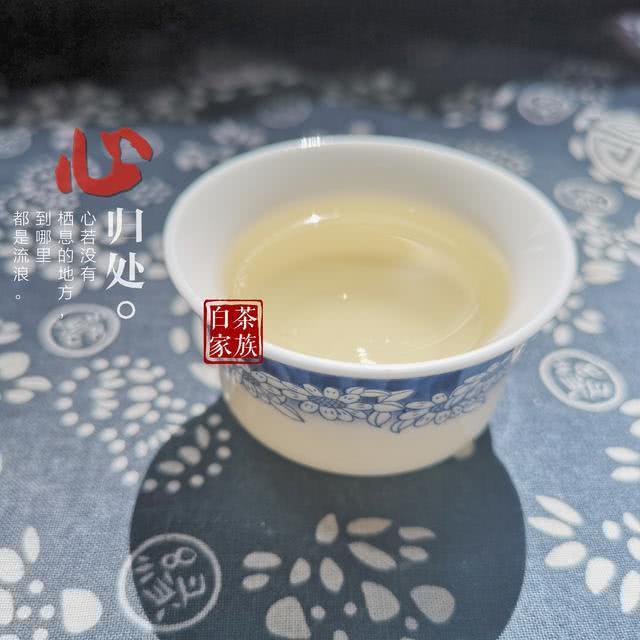
Both Fuding white tea and Anji white tea contain the words "white tea"
So do they belong to the same variety?
What is the difference between the two?
Perhaps you can take a look at this article
01
I remember not long ago, Xiao Bai helped a tea friend identify a Sichuan white tea. Not long after that, another tea friend raised a question with a puzzled look.
When he was choosing white tea, he suddenly came across two kinds, Fuding white tea and Anji white tea, but he did not understand what difference there was between them.
Could it be that they both belong to white tea, just different varieties?!
That is not actually the case!
Although these two share the same words, there is a very big difference between them. Tea friends must not be misled by these simple two words "white tea".
So today Xiao Bai will talk about exactly how Fuding white tea and Anji white tea differ. Remember to take notes!
02
Difference one: the place of origin and the category are both different
We know that Fuding white tea comes from Fuding, Zhenghe, Jianyang and other places in Fujian, so it can be said to be a tea product with local characteristics.
But tea friends who are new to white tea may not know that Anji white tea actually comes from Anji County in Zhejiang!
Although Zhejiang and Fujian are neighbouring provinces, the tea leaves grown there are still clearly different.
Fuding white tea belongs to the white tea category, and in terms of variety classification it has three kinds: Baihao Yinzhen, Bai Mudan and Shoumei.
And it is called white tea because the finished dry tea has silvery-grey white down on its appearance.
But Anji white tea is not like that at all. It is truly and genuinely green tea!
It is only because during its growth process it mutates due to environmental factors, making the tea leaves appear white, that it is called "white tea".
So compared with Fuding white tea, which has white down, there is still a very big difference!
Not only that, even their production techniques each have their own methods.
03
Difference two: different production techniques
The production technique of a tea can be said to determine its internal substances and quality, and Fuding white tea's processing emphasises what is natural and original.
Compared with other tea categories, the biggest difference lies in not rolling and not twisting; it is made through steps such as picking, withering, drying and sorting.
And among these, the two most important steps are withering and drying.
Relying on the method of natural withering, the fresh leaves are first sun-dried until they are seventy or eighty percent dry, and then dried by low-temperature baking.
In this way, the nutritional components in the white tea are preserved to the greatest extent, thus guaranteeing the most natural and most simple side of the tea!
While Anji white tea is made through the steps of fixation, rolling, re-frying and baking.
It is first sun-dried, then fixed according to a certain time and temperature, and then rolled, shaped and strip-arranged and dried, only then is it considered complete.
Therefore, its production process is certainly much more complicated compared with Fuding white tea.
04
Difference three: different appearance and taste
Since Fuding white tea has three different varieties, then their appearance and taste must also differ!
Baihao Yinzhen is made from plump, heavy and solid single buds, and its surface is covered with dense white tea down, giving people a feeling of being high above and looking down proudly on the crowd.
And the taste of Yinzhen is fresh and crisp, clear and sweet, just like freshly squeezed sugarcane juice. The down fragrance and fresh bamboo shoot fragrance that greet the nose can make a person feel relaxed and joyful.
The appearance of Bai Mudan has always been the most highly praised; one bud and one or two leaves look like a peony about to bloom, tranquil and elegant.
After brewing, the fragrant floral notes and the clear, elegant down fragrance rise curl by curl, and the tea soup entering the mouth is sweet, mellow and refreshing. That feeling is the most natural and pure essence of the tea leaves!
Shoumei, with one bud and three or four leaves, has both spring and autumn types. The spring Shoumei has a sweet, moist and refreshing taste, and the fragrance of green grass and the fragrance of flowers bring out the best in each other.
Compared with it, autumn Shoumei appears more steady, and in its full, mellow taste a rich fragrance lingers back and forth in the mouth.
This is the unique quality that Fuding white tea possesses!
While Anji white tea, as green tea, must belong to a single variety. With its elegant appearance, it looks like feathers in people's eyes.
Its colour is emerald green and fresh yellow, and the tea soup after brewing is clear and bright. Not only is the tea fragrance long-lasting, but the taste is even more fresh, crisp, soft and sweet.
It truly deserves to be called green tea. No matter what name it is given, the traits it carries are still clearly visible.
05
As tea categories, Fuding white tea and Anji white tea certainly each have their own unique points.
Otherwise, they could not have such a reputation in the tea world!
It is just that tea friends must recognise them clearly when distinguishing them, and must never mix the two together. One is white tea and one is green tea; in the eyes of people who know, it will make you a laughing stock!
Alright, that is the end of today's sharing from Xiao Bai. I hope tea friends can gain something and be inspired on this road of drinking tea~
To learn more about white tea knowledge,
Welcome to follow the WeChat public account [Riquan Tea Factory, public account ID: 15659252304]