How to Choose White Tea for Aging? Telling Spring Shoumei from Autumn Shoumei by Aroma and Taste
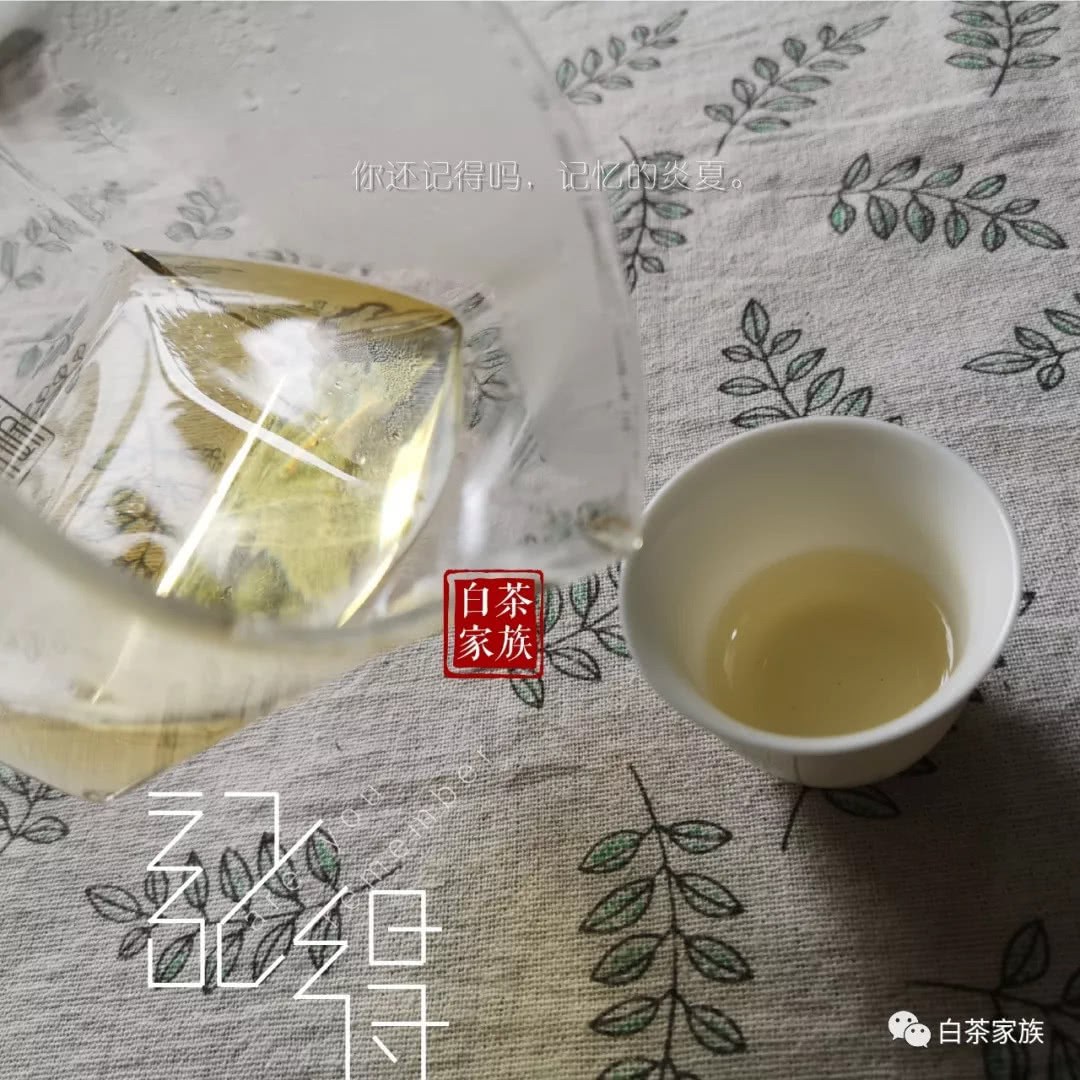
Ahem, are you still struggling over
whether to choose Spring Shoumei or Autumn Shoumei?
Is it really that hard to decide?
Maybe
you two should get up close and personal~
Text | Xiao Bai
01
When many tea lovers first come across white tea, they all know there is a young upstart among them called "Shoumei," but they do not know it is further divided into Spring Shoumei and Autumn Shoumei.
So, after seeing it, they kept asking Xiao Bai what exactly the relationship between the three of them was.
I immediately let out an auntie-like smile - they are the same white tea variety!
However, recently Xiao Bai received a question like this: if you want to age Shoumei, should you choose Spring Shoumei or Autumn Shoumei?
Seeing this really brought on a case of choice paralysis, but after thinking about it for a long time, I still need to give the tea lovers an answer.
02
Before deciding which one to age, you definitely need to first understand what exactly the differences are between Spring Shoumei and Autumn Shoumei.
Actually, from the names alone everyone can quickly tell them apart: one is picked in spring, and one is picked in autumn.
In addition, if you want to distinguish the differences between them, you can also do it by the color of the leaves!
Spring, as the season when all things revive, means all plants surely carry a sense of freshness. The Shoumei at this time, although born relatively late, still does not let down the word "spring."
The leaves of Spring Shoumei are a uniform green, and looking at them always gives people a particularly tender feeling, just like the young grass in spring.
However, Autumn Shoumei is not like this.
Previously, a tea lover said Autumn Shoumei looks particularly rough-and-ready, with leaves that are both large and thick, but its color is also very rich.
It is like a child's paint palette when drawing - dark green, grayish green, yellowish brown, light brown; whatever color they see, they just paint with it.
Therefore, before choosing, tea lovers need to confirm the look and see whether it is the right Shoumei~
Besides color, their aroma and taste are actually also different.
03
The Aroma of Spring Shoumei
For the iron triangle of spring white tea - Baihao Yinzhen, Bai Mudan, and Spring Shoumei - each has its own exclusive aroma.
However, some tea lovers always like to compare the aromas of these three, and then conclude that Spring Shoumei is inferior to the other two.
The facts are not like this at all.
The first time you smell the aroma of Spring Shoumei, it is a fresh pekoe fragrance, and after brewing, within the abundant fresh and crisp air, there is also a faint floral scent mixed in.
That kind of aroma is like the subtle fragrance given off by little wildflowers by the roadside after a spring rain.
The fresh, crisp, and sweet aroma is like a little five- or six-year-old sister; when she grins, she gives people a sweet feeling!
04
The Aroma of Autumn Shoumei
By comparison, after going through the high temperatures of summer, Autumn Shoumei has more aromatic substances in the tea leaves.
Therefore, when drinking Autumn Shoumei, you will feel the aroma is more uplifted and richly fragrant.
Although the aroma of Autumn Shoumei, when compared with Spring Shoumei, seems somewhat less intense.
But many different aromas appear in it.
Floral fragrance, pekoe fragrance, reed leaf fragrance, herbal fragrance - they all dart about all over it.
Amid those layered changes, it seems as if your nose is meant to get lost in its aroma.
05
The Taste of Spring Shoumei
Although by the time Spring Shoumei is ready for picking it is already near early summer, this does not affect its performance at all!
It is just like the top students Xiao Bai envied when in school: on ordinary days they seemed to idle about, but when the exam results came out, they always made everyone look on with envy.
Spring Shoumei is like this: after brewing, the tea soup has an obvious fresh and crisp feeling, and a refreshing breath comes right at you.
After it enters the mouth, you can experience the smoothness of the soup, and the tea soup on the tip of the tongue always lets people feel a kind of tenderness.
If you taste the tea soup carefully, you will also feel the clear sweetness of Spring Shoumei, just like biting into a fresh, sweet, and refreshing pear.
06
The Taste of Autumn Shoumei
Perhaps some tea lovers like the fresh crispness of Spring Shoumei, but some tea lovers have no resistance at all when faced with the mellow thickness of Autumn Shoumei!
The full, sweet, moist, thick, and smooth tea soup can let people feel a kind of joy like the autumn harvest.
They continuously release substances such as pectin and sugars into the soup, thereby making the tea soup thicker than that of Spring Shoumei.
So, when drinking Autumn Shoumei, you can feel as if the tea soup wants to tightly wrap around your tongue.
I do not know whether Spring Shoumei and Autumn Shoumei are competing with each other, but as far as Xiao Bai is concerned, neither Spring Shoumei nor Autumn Shoumei can be given up.
07
For tea lovers who like to judge by appearance, Shoumei may really not count as a "refined piggy girl."
But sometimes, beneath an ordinary appearance, there is a powerful inner self!
As for how to choose between Spring Shoumei and Autumn Shoumei, it completely depends on the needs of the tea lovers.
If you like a fresh, crisp, and refreshing feeling, choosing Spring Shoumei is not wrong; if you have a relatively high fondness for thick, smooth, and steady qualities, then of course choose Autumn Shoumei.
However, no matter which one you choose, only by paying attention to proper storage during the aging process will you truly experience the meaning of aging white tea.
So, have you now found the "style" you like from among Shoumei?
To learn more about white tea knowledge,
welcome to follow the WeChat public account of the same name [Riquan Tea Factory, public account ID: 15659252304]