Why the stems of desert rose grow thinner and weaker the longer they grow, and fail to bloom, plus solutions
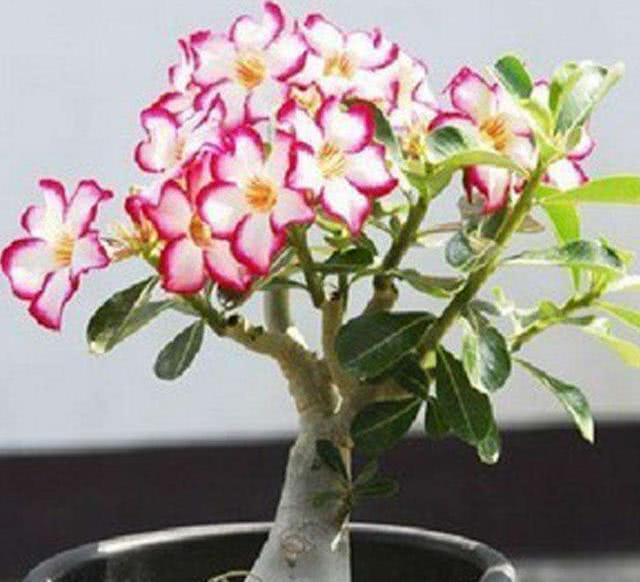
The desert rose (Adenium obesum) has an elegant plant form and a quaint, vigorous tree shape. Its blooming period runs from May to December each year, and when in flower its color is as red as a rose, making it much loved by many flower enthusiasts. When growing desert roses at home, flower enthusiasts often report that the stems grow thinner and weaker the longer they grow, and that the plant is also reluctant to bloom, asking what the cause actually is. In fact, growing desert roses is very simple; they do not demand much in the way of water or fertilizer and prefer ample light. Below we analyze in detail why a flower enthusiast's desert rose stems grow thinner the longer they are kept, and why the plant is also reluctant to bloom.
The desert rose has wine-bottle-shaped stems, and these stems store the water and nutrients the plant needs for its own growth. As the plant grows, the stems also grow larger and thicker. When water and nutrients are insufficient or there is a problem with the root system, the stems gradually become thinner and weaker, and the plant then lacks the strength to bloom.
The desert rose's original living environment is in the Kenya region of Africa, where it is very arid, and this is what gave the desert rose its habit of absorbing and storing water in its stems during the rainy season to supply the plant's growth during the dry season. Growing desert roses at home, especially as potted flowers, cannot compare with its original living environment, but during cultivation you must make sure not to water while the potting soil is still moist, and to water thoroughly once it has dried out completely. Long-term water accumulation in the pot easily suffocates the root system, making it unable to properly transport nutrients to the plant, causing thin, weak stems and wilting branches and leaves, and it will certainly not bloom either. If root rot has been caused by the potting soil being too wet for a long time, you must dig out the root system, clean off the rotted parts, and replant it in fresh soil. The new soil must be a loose, breathable medium with good drainage, such as decomposed leaf mold or pine needle soil mixed with a small amount of garden soil and river sand; you can also place some coal cinders or crushed brick pieces at the bottom of the pot to increase water permeability, while at the same time meeting its soil requirements.
The desert rose is very fond of a hot, dry environment and likes light. Even in the scorching summer, it needs no shading; the more sun it gets, the more vigorously the plant grows. Long-term shade or insufficient light easily causes thin, weak stem nodes or failure to bloom. When growing it at home, you must place it in the position with the best light, such as outside a window with good ventilation and direct sunlight, or in a small courtyard without shade.
Although the desert rose does not demand much from fertilizer, if the soil is too poor and the root system's nutrient supply is insufficient, it will also cause the stems to grow thinner the longer they grow and fail to bloom. The spring and summer rainy seasons each year are the desert rose's period of vigorous growth. Fertilizing should mainly use slow-release fertilizer, letting it release its fertilizer effect slowly and continuously replenish what is needed for growth. Fertilizing in the early stage before blooming should reduce nitrogen input and switch mainly to phosphorus and potassium fertilizers, otherwise it easily grows only branches and leaves without blooming. You can apply an appropriate amount of decomposed chicken manure fertilizer around the pot in advance, and combine it with potassium dihydrogen phosphate solution for root drenching and foliar spraying to promote flower bud differentiation. The desert rose has a relatively long blooming period, and during blooming you can apply a decomposed organic liquid fertilizer once every 15 days to ensure a sufficient energy supply during the blooming period.
To promote a beautiful plant form and more blooms in the desert rose, you should promptly remove the terminal buds while it is still a small seedling, to encourage more branches to grow. After the branches grow out, keep 3~5 main branches, trying to keep them in different directions, and after the main branches reach a certain height, shorten them. After the main branches grow side branches, select another 3~5 branches as main side branches to train, promoting a beautiful plant form. During the plant's growth, promptly prune away diseased and weak branches, concentrating nutrients to supply the strong branches, which benefits later blooming.