Daily succulent care tips that are simple and easy to learn, so you never have to worry about keeping them alive again
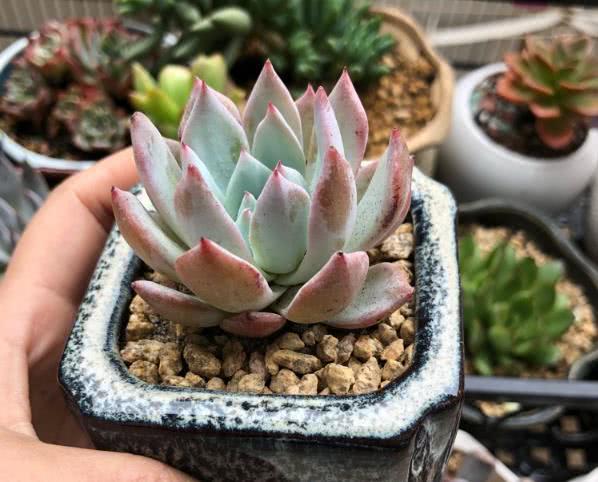
Choosing the right pot is very important for growing succulents. Looking at how the roots of these plants absorb water, the absorption rate is not fastest right after watering; rather, absorption is best when the surface of the potting soil is slightly dry while the inside of the soil is still moist. Therefore, using a zisha (purple clay) pot is the best choice, and the growing results are far better than with clay pots or plastic pots.
When growing in plastic pots over the long term, be careful to guard against the pot cracking due to plastic aging; if you do not pay attention, it will cause the plant to lack water. The size and depth of the pot should be determined by the plant's shape and root condition. Generally, after a spherical plant is potted, a space of 1-1.5 cm should be left around the rim. If a shallow pot can be used, try not to use a deep pot. It is best if, after the plant is placed in the pot, the root crown is slightly lower than the pot rim.
Fertilizing is generally done in spring and autumn, and stopped during the high-temperature period of midsummer. In winter, if heating is available, you can fertilize some species that continue growing or flowering in winter, but absolutely do not fertilize most species. For fertilizer concentration, remember to prefer weak over strong; it is better to apply it several more times than to risk applying a strong fertilizer all at once.
Newly potted plants should not be fertilized within one month. Do not use salty vegetable soup or fresh milk or soy milk. Before fertilizing, let the potting soil dry out as much as possible, remove any poorly growing plants whose roots may have problems and place them elsewhere, then loosen the soil before fertilizing. In winter, water at noon on clear days, and reduce the watering frequency somewhat, because plants do not need as much water in winter. When watering, if conditions allow, be sure to use the soak method; do not splash water and wet the plant.
In autumn, as the temperature drops slightly and the difference between day and night temperatures increases, succulents gradually resume growth and can be watered more. Because succulents have the trait of growing at night, you can water appropriately according to temperature changes. Watering in the early evening of early autumn and in the afternoon of late autumn is beneficial to plant growth. Water less on cloudy days, and stop watering on rainy days. When succulents are kept indoors for care in autumn, appropriately increasing air humidity is very beneficial for succulents native to high-altitude areas. During the autumn growing period, the relative humidity should be kept between 45% and 50%, and a few varieties can reach 70%.
In winter, succulents grow slowly, and some summer-growing types even enter dormancy. Most of them have limited ability to tolerate low temperatures, so moving them to a sunny indoor windowside is a top priority. In winter, plants have weak transpiration and soil moisture evaporates slowly, so be sure to reduce both the amount and frequency of watering.
This is a gathering place for succulent lovers, sharing succulent care tips. You are welcome to follow and join the conversation.