The easiest fruit to grow, it survives from cuttings, self-pollinates, and can bloom and bear fruit year after year even in a pot
Introduction
Potted green plants are a must-have decorative element for home life. Keeping some flowers and plants at home has many benefits - it beautifies the home and pleases the mood. "Huasheng Potted Plant Diary · Issue 1292" introduces you to the easiest fruit to grow.
Today's star
Growing flowers on the balcony is not as good as growing fruit, which can add greenery and also provide fruit to eat. In fact, many fruits can be grown on the balcony. The fruit introduced today may be relatively rare in the north. This fruit is called passionflower (Passiflora), and it is the easiest fruit to grow that the author has ever seen.
Passionflower
Passionflower, once very common in South China, but not many people liked to eat it, and it never really became popular. In recent years it was given a new name, "passion fruit," and became popular all across the country. Soaked in water with a little honey, it is sweet and refreshing and relieves summer heat, and is deeply loved by consumers. Today I will teach everyone how to grow passionflower.
It survives from cuttings
Passionflower is a herbaceous climbing plant, widely cultivated in tropical and subtropical regions. It is very robust and highly adaptable to the environment. In South China it can be grown outdoors through the winter. A flower pot of 5 gallons or more is fine. A nutrient-rich, well-draining potting soil is best, and it needs to be placed in a spot with ample light.
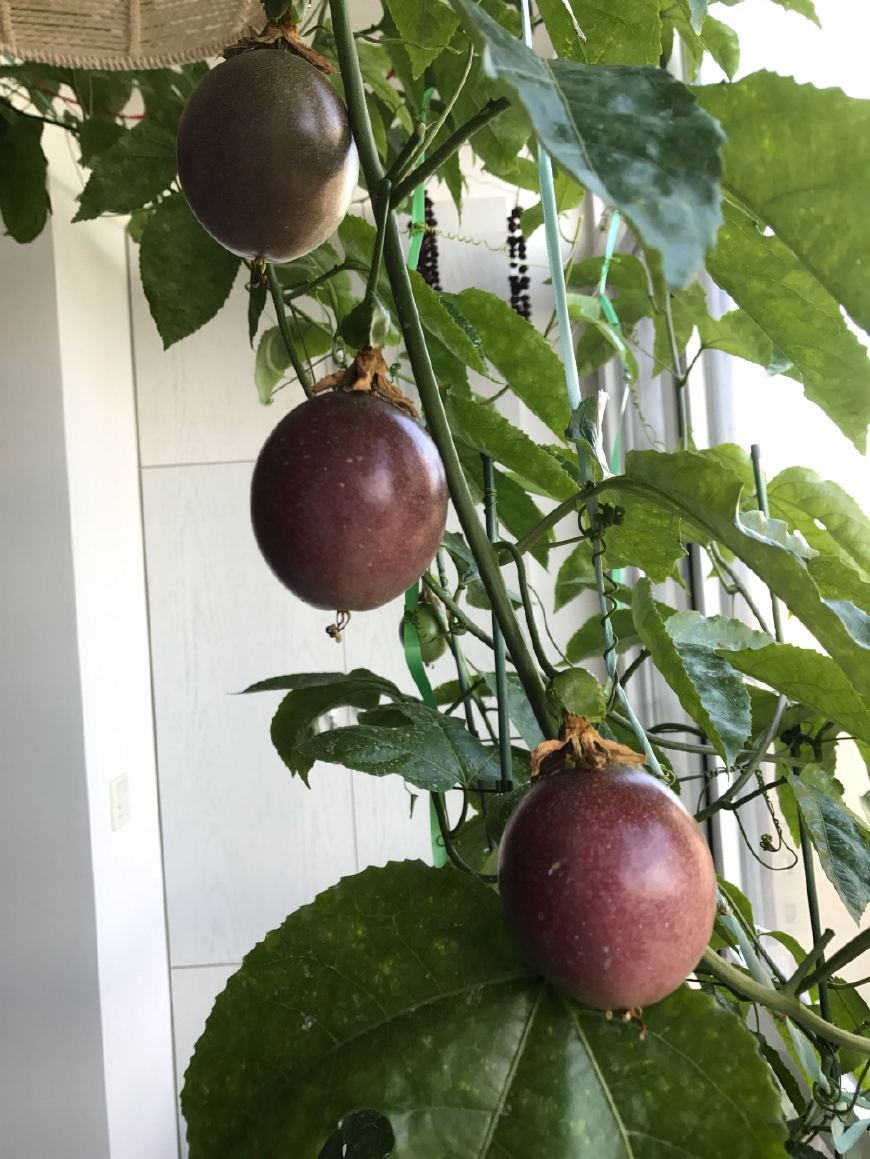
Passionflower grown by the author at home
Passionflower has strong vitality and survives from branch cuttings. In April last year I got a cutting seedling and planted it on my own balcony in a medium-sized foam box. In half a year it covered the security net, began flowering and fruiting in June, and continued until September. During this period it was managed completely extensively, watered once a week, with no fertilizer. Eggshells and such were simply buried in. The first fruiting period yielded 16 fruits.
It can also be grown in pots (photo provided by a gardener friend in the north)
Passionflower is a tropical plant and is not cold-tolerant. Below 0°C it will suffer frost damage, but many gardeners in the north still grow it successfully, and the method is very simple:
If growing it outdoors, it can be planted in spring, and by autumn you can harvest fruit 1~2 times (the flowering and fruiting period is spring, summer and autumn). Before winter arrives, cut branches and pot them as cuttings for backup, then move them outdoors again the following year;
For indoor pot cultivation, set up a trellis and pay more attention to pruning (as in the photo above), try to keep it from climbing the walls (once it climbs, it is hard to bring indoors in winter). Usually place it on the balcony. As long as there is light, flowering and fruiting are no problem, and it can also be enjoyed as a green plant.
Self-sufficient, well-fed and well-clothed
There are many varieties of passionflower. Most of its flowers are hermaphroditic and self-pollinating, and they can bear fruit normally without bees. Of course, hand pollination can increase yield by 30%. At present, the easier-to-grow and heavily fruiting varieties include Zixiang, Tainong, Mantianxing and others. Beginners can just choose these.
Passionflower can live up to 20 years. Plant it once, and it blooms and bears fruit year after year. Moreover, since it is grown by yourself, it tastes better than what is sold on the market, purely natural and pollution-free. The Tainong I grew myself is not sour at all, but sweet, which overturned my previous impression of passion fruit.