3 kinds of flowers whose leaves have withered; don't throw them away, keep them until the growing season and replant for a bursting pot
Click the blue button "Follow" in the top right corner to get flower and potted plant knowledge every day
In nature, many flowers and plants, like animals, choose to go dormant at different ambient temperatures. Some plants completely wither in both flowers and leaves after dormancy. This is the plant's self-adjustment to an unsuitable environment. Temperatures that are too high or too low will cause some flowers and plants to enter dormancy. After safely passing through dormancy, they will show a better state than before. Today I will introduce some relatively common summer-dormant flowers.
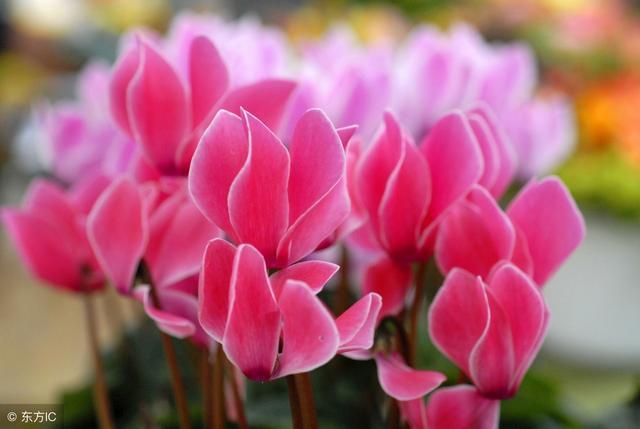
Cyclamen
Cyclamen is a perennial herbaceous plant with a flattened spherical tuber. Its leaves are heart-shaped. When the flowers are fully open, the petals turn upward, much like rabbit ears, so it is also called rabbit flower. The most suitable growing temperature for cyclamen is 15-20°C, so when the temperature exceeds 20°C, the flowers and leaves of cyclamen will gradually turn yellow and wither as the temperature rises. Many flower lovers mistakenly think this is a problem with cyclamen care and worry about it, but in fact this is a normal phenomenon and there is no need to worry too much. When it exceeds 30°C, its tuber will completely enter dormancy. At this time, it is necessary to cool the cyclamen as much as possible. With fewer flowers and leaves, the transpiration from the leaf surface of the cyclamen also slows down, so the watering frequency should be reduced so that the cyclamen can safely pass through summer.
Hyacinth
Hyacinth's short stature always gives people a sturdy feeling, and its neatly arranged, richly colored, elf-like flowers have also won countless fans. Yellowing leaves and fading flowers in hyacinth are signs of entering dormancy. This generally happens in early June when the temperature is between 18-28°C. At this time, the hyacinth bulb should be taken out of the soil or water, then the leaves and flower stalks should be pulled off and the grown roots should also be cut off. If there are rotten parts, the rotten areas should be removed and then rinsed clean. Places that cannot be rinsed can be brushed with a brush. Then soak in potassium permanganate solution or carbendazim solution for about 1 hour, take it out and let it dry. After that, wrap it with sawdust, toilet paper, old newspapers, or other relatively absorbent materials and store it in a cool, ventilated place. The refrigerator's cold storage compartment is a good place.
Narcissus
For narcissus generally grown at home, from buying the bulb and soaking it in water, the flowers will fade after about one month, and then it will no longer bloom. At this time, many flower lovers throw the narcissus away, which is really a pity. In fact, after the narcissus finishes blooming, it can be buried in soil with a deep soil layer to continue caring for it. Pile up a mound of soil 50cm high, take the narcissus out of the water and bury it in the soil. After the temperature rises and all the leaves wither, the narcissus enters dormancy. At this time, dig out the narcissus bulb, cut off the fibrous roots and dead leaves, and bury it in soil 10cm deep for care.
If you want to learn about the cutting or care techniques for other flowers and plants, you can write the flower names in the comment section below~ The editor will update in time!
Click the blue button "Follow" in the top right corner to get flower and potted plant knowledge every day
That's all for today's sharing. If you find it useful, save it!