This inconspicuous wild grass has been seen by few people, yet every part of it is a treasure
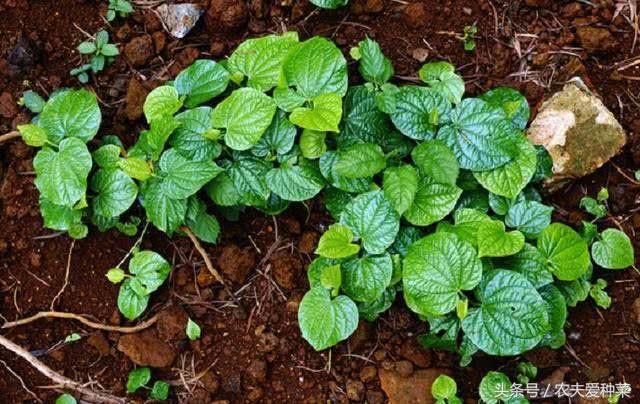
This wild grass is completely unremarkable. Many friends in the north may not have seen much of it. It is a wild grass that mainly grows in the south, called shanlou. It is generally seen more in rural areas, and perhaps its figure can also be seen on the outskirts of cities, but this grass is especially inconspicuous, and you might step on it while walking along the road.
The scientific name of this wild grass is halle, also called jiale, and it is mainly produced in Guangdong, Guangxi, Fujian, Yunnan, Guizhou and other provinces. It is commonly found on relatively moist ground under forests or beside roads, and also grows in some bamboo forests, mixed together with bamboo.
Shanlou is a perennial, creeping herbaceous plant that roots at each node. Some can grow very long, up to more than 10 m. Its leaves are very similar to pepper leaves, with a glossy, leathery surface and a distinctive fragrance.
In some areas of the south, its leaves are eaten as a spice and seasoning, with a flavor similar to the perilla we are familiar with. Especially in the Zhanjiang area of Guangdong, rice made with shanlou leaves is truly delicious, though they call it halle rice.
Besides being eaten, shanlou also has many medicinal uses. Every part of it is a treasure; the roots, leaves and fruits can all be used as medicine. The roots can treat bruises and injuries, rheumatic bone pain, wind-cold cough, and so on, while the fruits can treat abdominal bloating, poor appetite, toothache and stomach pain, and so on.
Shanlou has the traits of a wild grass and extremely strong vitality. It generally reproduces and spreads naturally by seed. After the seeds mature, they fall into the soil, lie dormant through the winter, and germinate in the second year between March and June when temperature and humidity are suitable. It needs no fertilizer and no watering, and grows vigorously and stays evergreen all year round.
The leaf stalk of shanlou leaves can grow up to 10 cm, and the leaves are also relatively large. Besides being used as a seasoning, they can also be boiled in water and drunk as tea. If it is grown as a potted plant at home, it is very easy to keep alive, and you can also pick it for use at any time.