A Detailed Explanation of the Basics of Compositional Rules in Chinese Bonsai Styling
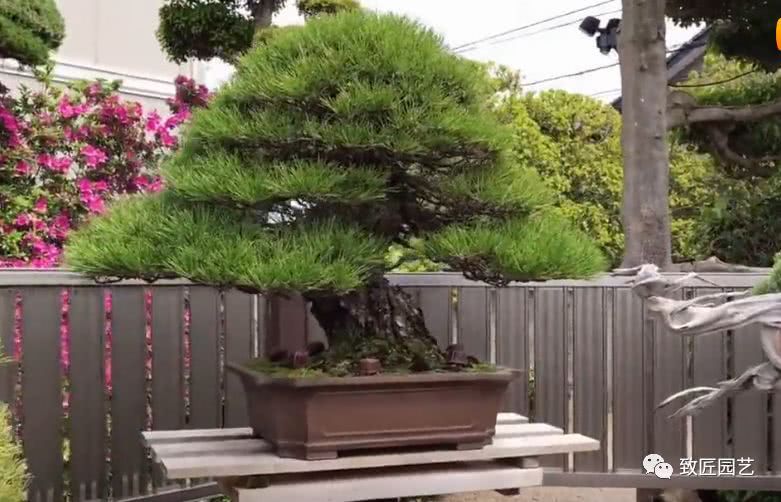
Explanation of Compositional Rules
Compositional rules originally referred to the techniques of opening, developing, turning, and concluding used in writing essays, and were later extended to the structural layout of calligraphy, painting, and seal carving. In Chinese bonsai, compositional rules are used to handle the relationships between structures: care and echo, straightness and curvature, sparseness and density, gathering and scattering, form and momentum, hardness and softness, cleverness and clumsiness, thickness and thinness, lightness and heaviness, addition and reduction, repetition, contention and concession, interweaving, veiling and revealing, separation and union, transformation, realism and negative space, and smoothness versus damage.
This article divides them into major compositional rules and minor compositional rules. In the application of Chinese bonsai art, "major compositional rules" can be described as the "placement of white space" for the entire work. Why do we not use the word "layout" from the game of Go here, but instead use the term "placement of white space" from calligraphy and painting? We often say that "bonsai is a three-dimensional painting." A pot of a foot's size, a tree of a foot's size, can contain heaven and earth. Man follows the earth, the earth follows heaven, heaven follows nature. Bonsai is a little pastime through which ancient literati expressed their feelings, but a little pastime can contain great meaning. Laozi said: Without going out the door, one can know the world. The ancient way of bonsai is the way of the unity of heaven and man. A single pot of scenery expresses one's inner feelings. This pot of a foot's size is the paper, and this tree of a foot's size is the brush and ink. When the ancients discussed painting, they had the saying "count white as black." The tree is the brush and ink, and the empty space in the pot is the negative space. How to handle the relationship between this brush-and-ink and negative space should of course be called "placement of white space."
In Chinese bonsai, the relationship between the tree and the pot; the planting position of the tree; the size, color, style, and texture of the matching pot and stand; laying moss, placing stones, adding grass, and positioning display objects all belong to the category of "major compositional rules."
In Chinese bonsai, the relationship between the roots and trunk of the landscape tree; the relationship between the trunk and branches; the relationship between branch and branch; the relationship between branches and leaves; and the relationship between the whole tree and its flowers and fruit are called "minor compositional rules."
I have never seen a finished bonsai without compositional rules. Dong Qichang once said: "The ancients discussed calligraphy and regarded compositional rules as a major matter, which is what is meant by dense spacing between lines. I have seen Mi Fu's small regular script, in which he wrote 'Record of the Elegant Gathering in the Western Garden'; it was on a round silk fan, and its straightness was like a bowstring. This must not be due to any other principle, but simply to his daily attention to compositional rules. Wang Xizhi's 'Preface to the Orchid Pavilion' has the finest compositional rules of any work ancient or modern; its characters all arise with mutual connection, some small and some large, following the hand as it goes, yet all entering into method, and that is why it is a divine work." Chinese calligraphy and painting and Chinese bonsai are inherited from the same principle.
This article is devoted specifically to "minor compositional rules." Once minor compositional rules are understood, major compositional rules will also be mastered. These two ways of speaking are two yet one, and one yet two.
Whenever one creates a landscape tree, the large branches must look after and echo one another (in multi-trunk trees, read this as the trunks), the small branches must settle between the large branches according to momentum, the front branches and back branches must alternately set each other off, and the left branches and right branches must extend, contract, shift, and yield. In this way, it can naturally be complete in spirit and smooth in breath, exquisite and harmonious, producing the effect that "essence is born among the branches, and moisture is present among the leaves." Only with essence and breath does spirit arise.
For the whole tree, regardless of whether the branches are arranged large or small, many or few, they must be threaded through with a single continuous breath. The relationships expressed, such as lightness and heaviness, emptiness and solidity, and sparseness and density, must each be appropriate: within lightness there is heaviness, within heaviness there is lightness, and lightness and heaviness balance each other; within emptiness there is solidity, within solidity there is emptiness, and emptiness and solidity generate each other; within sparseness there is density, within density there is sparseness, and sparseness and density give form to each other. It is like an ancient famous general deploying troops and arranging formations: head and tail respond to each other, the orthodox and the extraordinary generate each other, advance and retreat follow method, gathering and scattering keep proper measure, orders are carried out and prohibitions are obeyed, and all is harmonious and unified. Yet within harmony there is also change: form gathers without being clogged, and momentum spreads without becoming chaotic. Male and female interlock, and veins and arteries mutually infuse. Laozi says in the Dao De Jing: "The Dao produces the One, the One produces the Two, the Two produces the Three, and the Three produce all things." The Two is yin and yang, so it is said, "One yin and one yang are called the Dao." The relationship of yin and yang is contrast and unity. The theory of yin and yang is the foundational theory of all traditional Chinese disciplines. It is also unique to China and serves as the general guiding theory for Chinese bonsai styling. Chinese bonsai made under such guiding theory, whether large or small, long or short, near or far, are all well-proportioned in bone and flesh and full of vitality: strong but not obese, thin but not crippled. They seem naturally formed, not artificially made.
In "Wang Xizhi's Inscription on Lady Wei's Brush Formation Diagram," it says: "If it is flat and straight and similar throughout, shaped like counting rods, square and neat above and below, and evenly aligned front and back, then it is not calligraphy." Applied to Chinese bonsai, this means that if the landscape tree one makes has every branch similar in horizontality, like an array, with regular lengths, or radiating and turning like the spokes of a wheel, and if the tree's outline is an unchanging straight line, then it cannot be called bonsai; that is potted planting. One must achieve faces turning toward one another and branches succeeding one another, each with its own bearing and attitude, like hosts, guests, and friends seated together in mixed company, responding to one another with proper measure; or like a great chorus (Master Lu Xueming's large hand-branches are of this lead-singer type), in which one leads and all voices harmonize, and though there are many, they are not chaotic. In painting theory this is called "managing position," and it is the essential point of the Six Laws of painting. The angle of branch emergence, the position of branch emergence, the length of branch emergence, and the changes and directions of the branch veins are all arranged well, and naturally there will be vivid spirit and rhythm, without becoming rigid, clogged, or dull. Although it is said that the sparse should allow a horse to pass and the dense should not allow a needle to be inserted, the lightness and heaviness and emptiness and solidity and sparseness and density within must each contain one another; then the empty places will not dissipate, and the solid places will not be blocked. It is like opening a viewing window in a whitewashed wall in garden scenery: this is emptiness within solidity, and one must seek the feeling of "transparency" and "leakage"; planting flowers and bamboo along a winding secluded path: this is solidity within emptiness, and only then can one obtain the interest of "borrowing" and "shifting." Solid places are set off by emptiness, making them free, scattered, sparse, and bright; empty places are supported by solidity, making them stretch out and gather in.
Arranging branches is like wielding the brush. Specifically, there are ten taboos and ten suitable practices.
Ten Taboos:
1. For a plain, robust tree with a straight trunk, the branches must not be rigidly stereotyped;
2. For a soft and graceful tree with a curved trunk, the branches must not be slick;
3. A clear and sparse tree style must not be diffuse and undisciplined;
4. A dense tree style must not be chaotic;
5. A charming and clever tree style must not be delicate and fawning;
6. An ancient and unadorned tree style must not be wild and bizarre;
7. A literati-style thin tree must not be thin and feeble;
8. A sturdy, short, and fat tree must not be bloated;
9. In branch forms, turns must not reveal sharp corners;
10. The starting branches and the endings of branch veins must not be pointed and sharp.
Ten Suitable Practices:
1. For a tree with many and luxuriant branches, branch arrangement should be serene;
2. For a tree with few and elegant branches, branch arrangement should be steady;
3. Hard branches and vigorous trees should be full (softness within hardness);
4. Curved branches and soft trunks should be upright and vigorous (hardness within softness);
5. A single branch on a tree with nothing to rely on should be upright with a slight roughness;
6. Identical or similar branches should be compact yet arranged with variation;
7. Branches with many changes and turns should be lively;
8. Horizontal branches or ridge branches with few changes should be rich and thick;
9. If one favors the thin-branch style, it should be used with elegant vigor;
10. If one favors thick branches, they should be used with plain simplicity.
A bonsai may lack a stand, but it cannot lack a pot. The pot of a bonsai is like the walls of a house, the paper and silk of calligraphy and painting, the border of a seal stone, the metrical rules of poetry, and the go board of the game of Go. When planting a tree in a pot, where should it be placed? Where should white space be left? How large or small, how much or how little should the white space be, and should the pot be round or square, deep or shallow? These matters especially require careful consideration.
If the tree has an expansive, grand, and upright spirit, then the white space must be large; if the pot is narrow, then the momentum will be cramped and constrained. If the tree has a compact, leaning posture, then the layout should be small; if the pot is broad and large, then the charm will scatter and be lost. One must certainly make the empty portion between the pot and the landscape tree meaningful and worth savoring. Do not make it pressing and cramped, do not make it diffuse, do not make it too fragmented, do not make it lonely and desolate, and do not make it repetitive and redundant. Then this white space also becomes the overall breath and pulse of the bonsai, perfectly fused into one body and impossible to separate. The Qing dynasty writer Da Chongguang said in "Huacquan": "It is excellent when there is no layer yet there is layer, and clumsy when there is layer yet there is no layer. If the form is flat and narrow, then even with many hills and valleys it is not skillful; if it looks deep and weighty, then even with few forests and peaks it can be enjoyed. When true scenery appears, how can it depend on many brushstrokes? Where the eye gathers, it is not in the whole picture. Gather scenery within obscurity, and its flavor is endless; command wind and light in veiling and revealing, and the more it is viewed, the newer it becomes. Within density there is naturally openness and distance; within casual ease there instead appears grace." These words have a strong sense of Zen. Especially this line: "When true scenery appears, how can it depend on many brushstrokes? Where the eye gathers, it is not in the whole picture." In Chinese bonsai, this should be taken as "where the eye gathers, it is not in the scenery and the pot." Not in the scenery, not in the pot, then where? Everyone of us who studies Chinese bonsai must seriously ask this question of ourselves.
A stone of a foot's size can present the Five Great Mountains and Mount Taihua; a spoonful of water can reveal a thousand miles of rivers. "A vertical stroke of three inches can stand for a height of a thousand ren; horizontal ink of several feet can embody a distance of a hundred li." Chinese bonsai is an art of "the concrete in miniature," with a high degree of refinement and a high degree of condensation. The ancients painted landscapes for "armchair travel," so that while lying down and unfolding them to view, the spirit could enter the mountains, rivers, and lakes within the painting and play there. When we make bonsai, we should achieve a similar effect by different means: only where "armchair travel" is possible is it a true bonsai.
A bonsai for "armchair travel" is often covered with moss and dotted with grass. This has several major uses: 1. It covers and protects the pot soil (especially for trees planted in shallow pots with mounded soil), beautifies it, and prevents the pot soil from being washed away and lost; 2. It uses green moss to imitate a lawn and thereby set off the height of the tree; 3. It uses different kinds of moss to express artistic conception. The color of the moss may be so green it seems about to drip, or so dark it seems intoxicating, and it can wonderfully capture the four seasons and clear or rainy weather. The method of planting moss may be mounding, flat spreading, or undulating, all arranged according to the intended terrain of the design. Sometimes it is interspersed with Selaginella uncinata, Hydrocotyle sibthorpioides, Acorus gramineus, Adiantum, and other small flowers and delicate grasses (this can also remedy the defect of appearing stiff and monotonous from too much moss). There are also cases such as old plum trees and withered peaks gradually stained with dark moss, and when it produces spores, the moss filaments float, reaching as long as a cun or so, which is most worth enjoying. But today's pines and cypresses often have shari and divine branches made on them; if they are invaded by moss, their color will be completely concealed, so they must be washed clean and then coated with lime sulfur mixture to remain bright and preserved for a long time. In a bonsai, one may place a fist-sized stone: some resemble a lone peak and sheer summit, as if facing an abyss without fear; some resemble a secluded ravine and stream, with deep and quiet woods; some resemble the long Yangtze or great lakes, where a lone boat moors and a bell is heard; some resemble a thoroughfare in the middle of a road, broad and level. Or one may enjoy it accompanied by fantastic cliffs and strange rocks. In the method of placing stones, one must not let them stand dryly on the pot surface; cover them with soil, as if they had roots emerging from the soil, and this is called burying stones. The essential point of burying stones is like exposing the roots of a potted tree: it explains where it comes from. Placing display objects is like adding an inscription to a small painting; this is called a freehand finishing touch. Display objects in bonsai are like dotting the eyes of a painted dragon; if the dragon already has eyes, then there is no need to dot them. Therefore, whether to use display objects is determined by the needs of the design. Display objects in bonsai may be towers or houses, pavilions or terraces, bridges or boats, reclining oxen or drinking horses, old men holding jars, beautiful women playing the qin, scholars holding scrolls, woodcutters carrying loads, people playing Go, or children playing with bamboo horses; they should be chosen according to the bonsai's title and used as the spirit of the whole pot. The finest are naturally stone carvings; the middling ones may still be acceptable if purchased as finished ceramics; the lowest, made of metal or plastic, are the least usable and utterly lifeless.
In the method of matching bonsai with stands, tall ones become even taller (a tall vase paired with a high stool), broad ones become even broader (a low table holding a shallow tray), and clumsy ones become even clumsier (a natural pot matched with a raw wood mat). This is broadly the pattern. As for the materials of stands, most are hardwoods (using their smooth and beautiful grain and natural texture). There are those with mortise-and-tenon joints, incised lines, and carved flowers; those made from raw wood planks; those assembled from natural root art; and then the rarely seen stone stands and seldom-used porcelain stands. Other materials are all unusable.
The compositional rules of Chinese bonsai emphasize the distinction between host and guest, primary and secondary. Taking tree bonsai as an example, the landscape tree is the host, while the moss, grass, stones, display objects, matching pot, and stand are all guests. One must never let the guest overcome the host; host and guest should each promote and harmonize with the other. Generally, when making bonsai, one must have a main idea in mind; this is called "having self." If one has no personal view, viewpoint, or design plan, and simply does whatever comes to mind, that is the method of a pot mender, adding here and piecing together there, so that in the end all the elements in the pot do not look after one another. This is the greatest taboo, and how could one possibly make anything good that way? In taking momentum and arranging scenery, what is valued is taking in the whole situation and having a feeling of completion in one breath. When observed and enjoyed in detail, its spirit, mechanism, principle, and method all come together and fit. In forming a design, what is valued is "beyond expectation, yet within reason." The line of reasoning should be perfectly clear, moving from near and high to far and low; the preparation of scenery should proceed from light and simple to dense and detailed. Only when there is scenery in the chest can one begin to make the tree; only when there is a realm in the mind can one settle the source in advance. The ins and outs, the layout and the finish, must all be explained clearly and distinctly. Flying eaves among the mountains let one know there is a tower or observatory; red apricot beyond the wall must mean a garden. Where something is revealed, there must be a foreshadowing; there can be no lack of beginning and end. What is hidden is all content and must be fully calculated.
By the methods of the sages, in the most dense and solid places one can glimpse a little ethereal spirit; in the most empty and void places one can read a great deal of content. When people today arrange a single corner in a pot, it already appears overly ornate. When solid places are made empty, the whole pot becomes lively; when empty places are made solid, the entire body becomes full of vitality. Those masterpieces handed down through generations never grow tiresome no matter how long one enjoys them, and one can imagine the wonder of the sages' painstaking management. In compositional rules and layout, it is only these four words, "painstaking management." (End of previous text)
Wonderful content