Should potted plants be repotted? Stop agonizing over it
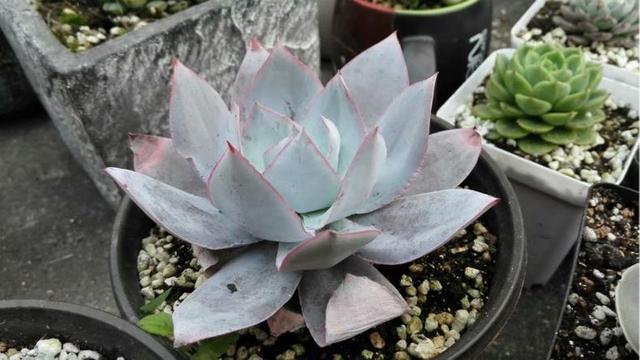
Generally, we choose to repot succulents about once every two years, and it is of course even better if you can repot them once a year; the specific number of repottings still depends on the plant's growth conditions.
During the growth process of succulents, not only does the fleshy appearance change, but the roots in the soil also grow; over time, the roots will fill the entire pot, and at this point the pot soil's air permeability worsens, which in turn affects the succulents' respiration and, in severe cases, may even cause more roots to die off.
Then you will notice that many fibrous roots grow on the stems of the succulents to replace the dead roots and perform the function of absorbing water; we usually call these fibrous roots "aerial roots."
Apart from certain succulents that particularly love growing aerial roots, once you find that a succulent has grown many aerial roots, it indicates that the pot soil environment at this time is not very good. And growing aerial roots is precisely the succulent's "application" to us for repotting; if not dealt with for a long time, the succulent's stem may gradually dry up, and eventually the whole plant will die.
Moreover, after the soil has been used for a long time, the media inside will also become powdery, affecting the pot soil's air permeability; at the same time, the nutrients in the soil are almost used up, so repotting at this time is very necessary.
Furthermore, as the succulent grows bigger and bigger, the pot will seem smaller and smaller, and the roots grow and absorb nutrients within a limited range, making it very difficult for the succulent to grow larger; if you want to grow a big succulent, you have to change to a bigger pot. Of course, those who like thumb pots for controlling the shape of succulents are another matter.
To summarize the several situations in which succulents need repotting:
1. The succulent does not grow for a very long time;
2. The succulent shows obvious problems such as wilting, dropping leaves, and root rot;
3. The succulent has grown larger, and the original small pot no longer has enough space;
4. Also, succulents that have been grown for 1 or 2 years without ever being repotted, with well-developed roots that have never been root-pruned;
5. You want to give the succulent a beautiful new "home."
Generally, the best seasons for repotting succulents are spring and autumn, because there are fewer pathogens in spring and autumn, and the climate is suitable for succulent growth, so the succulents will adapt to the new pot quickly.