If you want to raise koi big and fat, feeding is very important - Hangtai Aquarium
What koi fish eat is a subject in itself. Friends who keep koi all know that koi are omnivorous fish with very broad tastes. Sometimes hobbyists just feed koi casually - amusing examples include feeding koi sunflower seeds or cabbage, all sorts of things. So the question of what koi fish eat can actually be rephrased as: what is good for koi fish to eat? Take yourself as an example - what you eat is not the issue; what is good for your own physical development is the real question.
Now that is where the real knowledge comes in. You should no longer feed koi casually. These days giant koi are all the rage - if you don't feed them properly, won't you be left behind!
Koi food is truly important. It not only plays a key role in the growth of koi, but also has a certain influence on their color development. Whether koi grow well depends, besides water quality, on what they eat.
If we want to feed koi scientifically and healthily, we must pay attention to the types of bait, the feeding amount, the number of feedings, and the feeding method. Think back - have you done all of this yourself!
1. Types of bait
As mentioned earlier, koi are omnivorous fish, so there are many types of bait. For example, natural baits include plant-based ones such as green vegetables, bean sprouts, and melons and fruits, and animal-based ones such as water earthworms, bloodworms, and crayfish and shellfish. Artificial bait mainly uses fishmeal as the primary ingredient, combined with flour, soybean powder, vitamins and a small amount of minerals, etc., made into various types and specifications of feed according to the koi's own needs. For example, color-enhancing feed with added spirulina can significantly increase the fish's color, while some high-protein feeds can promote bone growth in the fish. When feeding, it is best to provide comprehensive nutrition, and ideally mix multiple feeds together. Of course, here we suggest that fellow hobbyists choose DIY koi fish food - it is not only nutritious but also lower in cost.
2. Feeding amount and number of feedings
We humans tend to focus on three meals a day, each meal at seventy percent full. So what about koi! Feeding koi is generally best at eighty percent full. The usual standard is that large fish finish eating within thirty minutes and small fish within five minutes. Feed according to the pond structure, fish body size, quantity, water temperature, etc. Generally, after a few days you will know how much the fish need. But if the fish are in poor health, or the weather is unusual or the water temperature drops suddenly, the fish's appetite will decrease, so you must adjust the amount up or down according to their feeding condition. In summer when the temperature is high, koi have a strong appetite, while in winter they eat little or not at all, so the feeding amount should be determined according to different environmental factors. But one important point: make sure there is no leftover feed in the pond, and decide entirely according to the koi's own metabolism. It is best to feed two or three times a day.
3. Feeding method
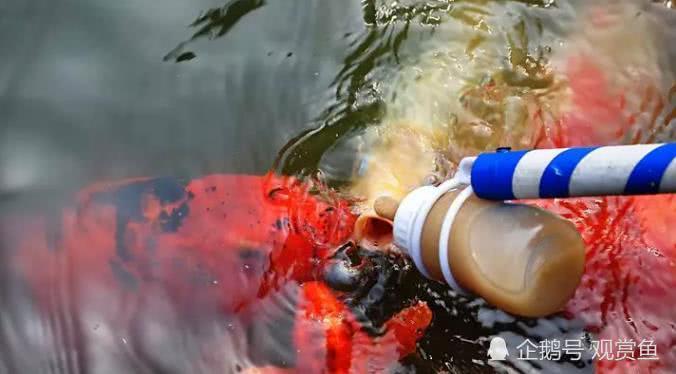
Here we emphasize that when feeding koi, it is best to "fix the time, fix the location, fix the quality, fix the quantity." For example, choose a fixed spot near the house and feed at fixed times, so that after the fish form a habit, as soon as they hear the owner's footsteps they will automatically gather to beg for food. You can also use a bell to train the fish - play a piece of music before each feeding, and once the koi form a conditioned reflex, they will gather at the fixed spot. Common feeds come in two types: floating and sinking. Feeding floating feed lets you watch the school of fish competing for food, which can increase the fun of feeding koi. Koi are easy to tame and can be trained to take food from their owner's hand. Some people even hold the feed in their mouth for the fish to take, or use a milk bottle for the fish to suck from, like children playing. It can be described as endlessly varied and full of interest.
Note: if you want your koi to one day become a giant koi that everyone loves, you need to feed more koi food, choosing small amounts and multiple meals each day. This requires special attention to the water quality conditions and the health of the fish. Here we suggest everyone do good filtration and maintain water quality. Also note that koi feeding is generally chosen to be done during the day; at night it is best not to feed koi.
Search on WeChat for the mini program: Hangtai Aquarium Service. After logging in, you can see more articles on fishkeeping knowledge points as well as aquarium equipment, fish tanks and other equipment. Lots of discounts - don't miss out~