Italy's ancient towns are full of charm: restored ruins and historic buildings, and a people who guard their history
Why are Italy's ancient towns always so charming? It comes from a contemplation of beauty; buildings seem to grow out of the land, as if made by nature itself. Italians stubbornly protect their deeply rooted old houses, and even when the branches are broken, they must be reborn in place.
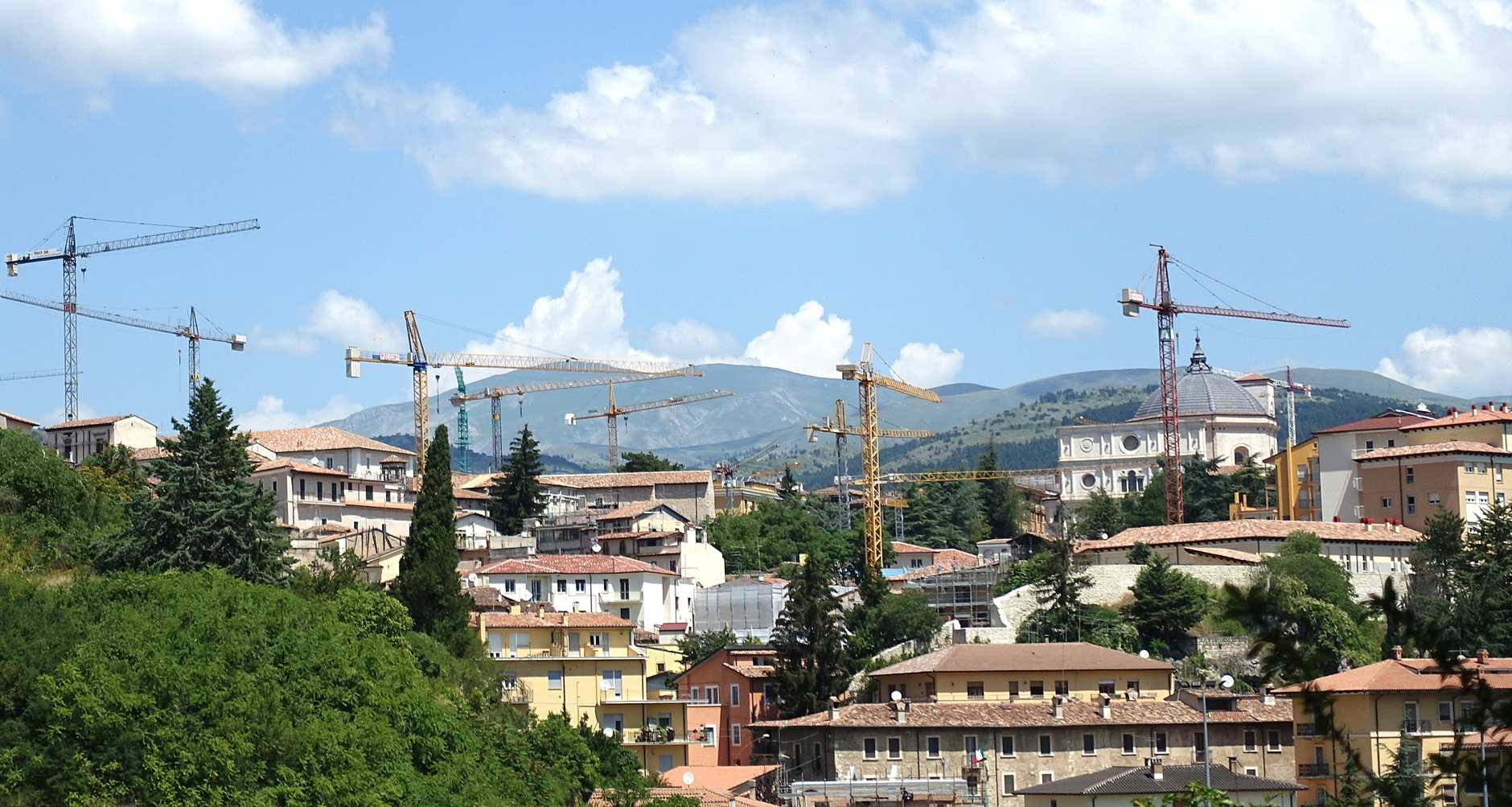
On Highway 24, L'Aquila can be recognized from afar. Countless slender crane arms crisscross the skyline; this city, built in the 13th century by Holy Roman Emperor Frederick II, is now an open-air operating room for the plastic surgery and rehabilitation of historic buildings.
Heading east from Rome, the round, rolling hills look like a group of cats lounging on the ground, and the olive trees packed one beside another on the hilltops resemble the thick curly hair of ancient Roman statues; as the terrain rises, jagged rocks gradually appear, yet the lush grass makes it look like a rice ball sprinkled with seaweed powder. The loveliness of the green mountains makes people forget the cruel side of nature. Just like Taiwan, China's Central Mountain Range, the Apennine Mountains running north to south are the backbone of the Italian peninsula, but a lazy cat will occasionally turn over.
A powerful earthquake late at night on April 6, 2009, killed more than 300 people and injured over a thousand in the central mountain city of L'Aquila, leaving a beautiful ancient city of more than 700 years unrecognizable.
Countries extend a helping hand, supporting one another after trauma
The loss of L'Aquila is not only Italy's regret but also a loss to human history. Not only did France help restore churches, the United States also extended a helping hand. The Italian energy company Eni sponsored American landscape artist Beverly Pepper to plan the reconstruction of "Sun Park." Pointing to the blue sky and green fields surrounded by mountains, she said, "This space has its own meaning. The artist's task is to comprehend the meaning within it, not to presume to be omnipotent." The artwork is not just for viewing from afar, but part of residents' daily lives. In summer it is an open-air theater, in winter an ice rink. "This is the neighbors' gathering place, where everyone comes together again in nature."
After the trauma of landslides and shattered ground, the people of L'Aquila carried on the wisdom of their predecessors, combined it with modern technology, and supported one another in finding a way to settle down and live in peace. The mountain city's charm remains as enduring as heaven and earth.