Orchid Appreciation Training Manual Part 4: Learning to Appreciate the Beauty of Orchids
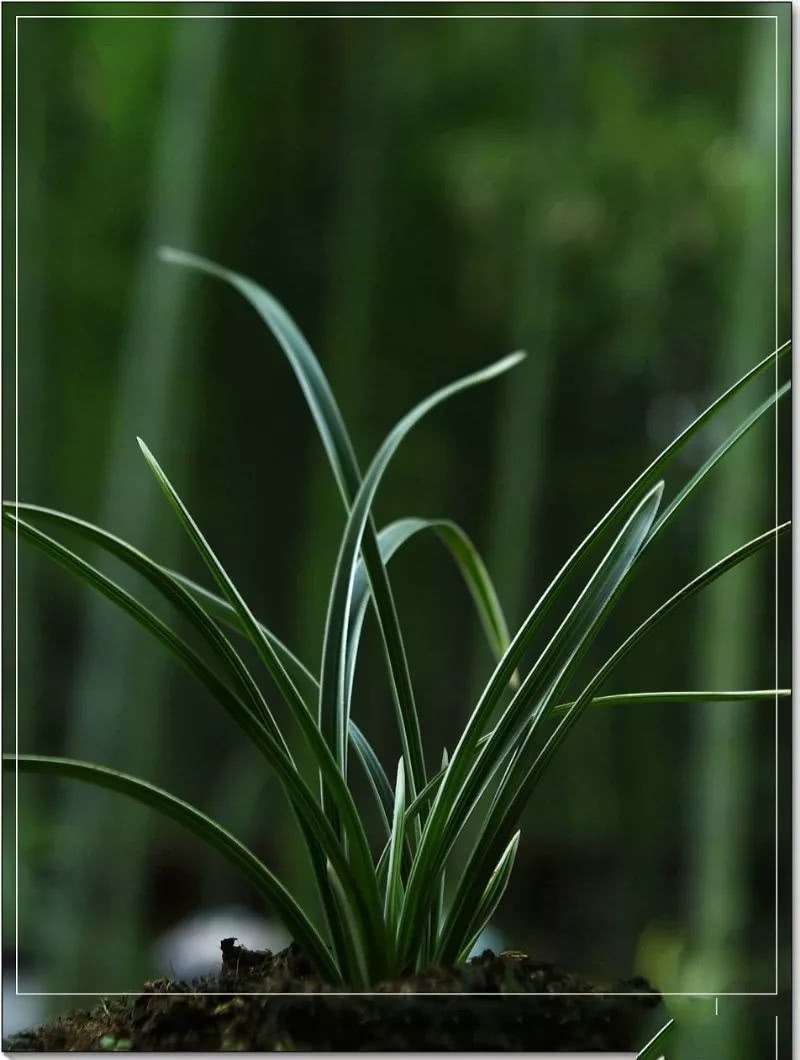
We have chatted roughly about orchid culture and written three chapters. Those interested can check out the previous articles; I will not attach links here again. Today we can finally talk properly about orchid appreciation.
Of course, as said before, orchid appreciation is mostly appreciation of Chinese orchids (guolan), so here we also focus mainly on appreciating Chinese orchids. But if we go straight to flowers, it may still be quite complicated, so before appreciating the flowers, we might as well take leaf variegation as the foundation and talk about orchid leaf variegation.
Leaf variegation has not been popular for long; it should have been around the 1980s. After Japan bred a variegated-leaf orchid, another variegated-leaf orchid was found in Taiwan, China, and sold to Japan at a very high price. From then on, variegated-leaf orchids officially began to become popular. Because orchids do not bloom for a long time after starting, and some do not bloom all year round, most of the time we can only look at their leaves, so the popularity of leaf variegation does not seem accidental.
There are now many types of orchid leaf variegation, but today we will talk about a few representative ones: claw (zhua), full rim (fulun), stripe (gao), tiger spot (huban), and center transparency (zhongtou).
Claw
Claw: At the tip edge of the orchid leaf there is a ring of white or yellow, which we call a claw.
Full rim
Full rim: The entire edge of the leaf has a ring of white or yellow edging, which we call full rim.
Stripe
Stripe: A stripe means there are white or yellow stripe-like markings in the leaf. If the central line in the middle is white or yellow, we call it a center stripe.
Tiger spot
Tiger spot: There are irregular markings in the leaf.
Center transparency
Center transparency: There are wide white or yellow lines on both sides in the leaf.