Orchid buds turn black, shrivel, drop off and fail to bloom - veteran orchid growers point out the reasons
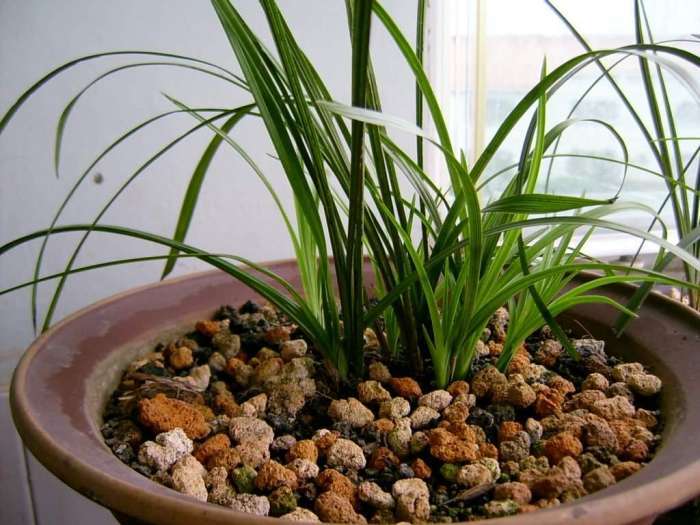
Recently an orchid grower asked me why the buds of orchids grown on a balcony turn black, shrivel, drop off and fail to bloom? Here I would like to share with you a bit of my experience in growing orchids on this issue.
Generally speaking, flowering-period care is inseparable from everyday care. The flowering periods of different varieties differ. For Cymbidium goeringii (Spring Orchid), Cymbidium faberi (Faber's Cymbidium), Cymbidium sinense (Chinese Cymbidium), Cymbidium kanran (Cold Orchid), Chun Jian and Lianban Lan, from the bud emerging from the soil there is a relatively long process of growth, bud development and vernalization. This process takes at least 5-6 months at its shortest, and 7-8 months at its longest. For Cymbidium ensifolium (Four Seasons Orchid), Xia Han Lan and others, the time from the bud emerging from the soil to blooming is not long - 20 days or so at its shortest, and 30-40 days at its longest. Care during this period is very important.
But in both the vegetative growth stage and the reproductive growth stage, attention must be paid to fertilizer and water management and light management! The orchid grower said the buds turned black, scorched, dropped off and died; the causes are also many-sided, mostly caused by excessive moisture, excessive fertilizer, and stuffy, unventilated conditions. Generally, if flower buds can emerge, it shows that nutrition is sufficient, and there is no need to keep applying fertilizer to the roots - only foliar feeding is needed.
Before flowering, water and fertilizer must be controlled, and more sunlight should be given appropriately. Attention must be paid to withholding water 1-2 times. For Spring Orchid and Faber's Cymbidium, after the buds emerge from the soil there is a bud-swelling period; from the Beginning of Autumn to before the Winter Solstice, topdressing with phosphorus and potassium fertilizer should be strengthened. This promotes the buds to swell and grow to full size. Whether applying fertilizer to the roots or spraying a dilute fertilizer, the interval must be controlled to 7-10 days. During the vegetative growth period of new shoots, multi-element fertilizer based mainly on nitrogen fertilizer should be used to promote robust growth and achieve the goal of disease resistance and drought resistance. Therefore, buds failing to bloom normally is inseparable from earlier care.
Fellow orchid growers, have your orchids ever turned black, shriveled, dropped off and failed to bloom? If you also like growing orchids, you are welcome to follow and share, and thank you for your comments and likes, thank you!