Specific care methods for Podocarpus macrophyllus bonsai: green leaves purify the air and give off fragrance
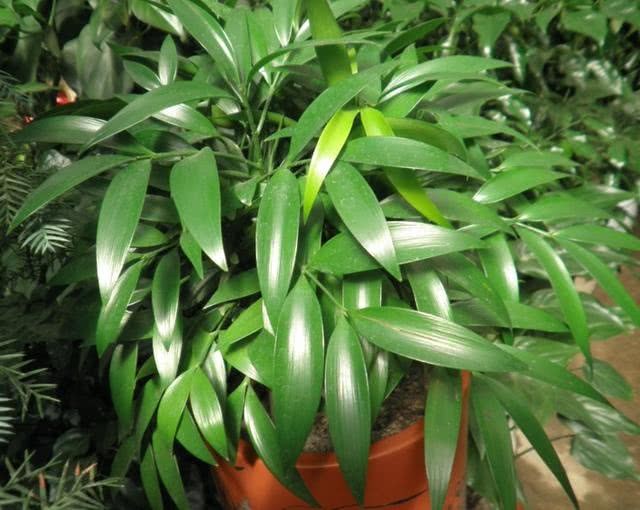
Podocarpus macrophyllus is often also called mountain fir by people. Because its leaves are emerald green and beautiful, and the plant often gives off a faint delicate fragrance, it also plays an important role in purifying the air and repelling mosquitoes. Therefore, people today place a pot of Podocarpus macrophyllus in their homes, in the bedroom or living room, which is an excellent choice; secondly, it also has important applications in the landscaping of roads and some important venues, such as in front of hotels and clubs.
I. Cultivation of Podocarpus macrophyllus
For potted Podocarpus macrophyllus, the cultivation methods are mainly divided into seed propagation and cutting propagation. If Podocarpus macrophyllus seeds can be obtained relatively easily, choosing the sowing method to plant Podocarpus macrophyllus is a relatively good choice. The seeds of Podocarpus macrophyllus can be obtained from the fruit of its plant around October each year. The seeds obtained after certain measures cannot be sown directly into the soil immediately; they must be placed in a ventilated, dry place for a period of time, about one week to ten days or so.
Choose a suitable flower pot as the container for Podocarpus macrophyllus, and scatter the seeds into the pot with soil. Note that when sowing, the seeds should not be placed too deep in the soil; they are usually placed at the surface layer of the soil, at a depth of about three cm; secondly, after watering an appropriate amount of water, place the flower pot in a cool place and wait for the seeds to germinate. At this time, they should not yet be exposed to sunlight. When the seeds grow to the seedling stage, the potted plant can then grow under conditions with good light.
II. Care of Podocarpus macrophyllus
1. Soil requirements
For Podocarpus macrophyllus, if it grows in relatively ordinary soil, its growth rate is not only relatively slow, but it is also easily affected by pests and diseases during its growth period. Therefore, when choosing the culture soil for Podocarpus macrophyllus, leaf mold soil with good drainage and relatively high fertility is usually used. If you mix the soil yourself, you can also use garden soil and sandy soil plus a small amount of river sand as a substitute. Regardless of which type is used, a certain amount of decomposed cake fertilizer or manure fertilizer must finally be added to the soil to ensure its fertility.
2. Light requirements
Podocarpus macrophyllus does not have a high demand for light. Under normal circumstances, it grows in semi-shaded places, and it is enough to ensure that it receives an appropriate amount of diffused light. Therefore, in summer, the plant must absolutely not be exposed to the scorching sun, otherwise the plant will not only easily wither, but may also die. If there are few choices for the location of the potted plant and it cannot grow in a cool place with diffused light, then shading measures must be taken for the potted plant to block the light.
3. Water requirements
As for watering the potted plant, usually watering about twice a week is enough. Do not water excessively each time; as long as the pot soil is kept somewhat moist, stop watering; if you are unsure whether watering is needed, then try not to water, otherwise when water accumulates in the pot, the growth of Podocarpus macrophyllus will be greatly affected, and it often also brings the trouble of changing the pot soil.
4. Fertilization requirements
Compared with the above three factors, fertilization is the least necessary for Podocarpus macrophyllus. Its growth rate is not fast, and even applying more nutrients cannot speed up its growth, and its demand for nutrients is not high. Therefore, fertilize Podocarpus macrophyllus only once every one month or even several months, so that its leaf color becomes even more emerald green.