How to grow the golden barrel cactus? Pay attention to these 4 points for a plump, robust body and bright blooms
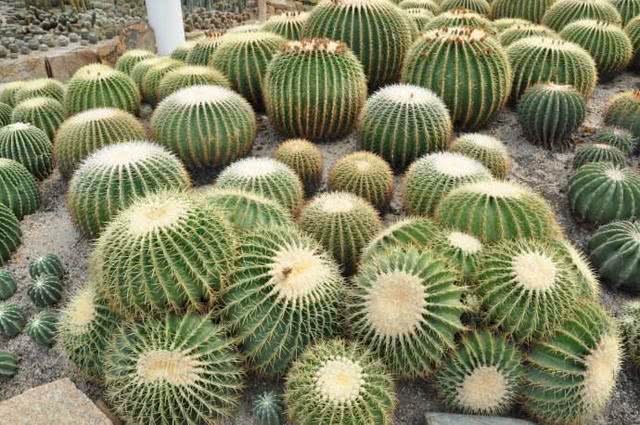
The golden barrel cactus (Echinocactus grusonii) is one of the most charming of the globular cacti. Originally brought out of the Mexican desert, it is grown across vast areas of China. From the regions where it grows, you can see that it prefers places with plenty of sunlight, but no matter how much it loves the sun, you must not let it stay in direct sunlight for long periods, lest the body be scorched by intense light.
I. Morphological characteristics
The stem of the golden barrel cactus is spherical, dark green, and covered with dense yellow hard spines. When the flowering season arrives, yellow flowers bloom on the body, growing at the top among the hard spines, giving it a very beautiful appearance. Its seeds are smooth-surfaced and black.
II. Propagation techniques
There are two propagation methods for the golden barrel cactus. The first is sowing, using seeds harvested in the same year, which gives the highest germination rate. The best time to plant each year is between May and September, and germination generally takes about a month or so. The seedlings are very small spheres, slowly growing from the size of a red bean, and once the body reaches the size of a red bean it can be transplanted.
The second is the offset transplanting method. On bodies that have grown for more than three months, small offsets will appear; remove these small offsets from the mother plant and transplant them onto sandy soil or brick-and-wood. Seedlings potted up require soil that is sufficiently loose. Seedlings that have not been transplanted grow very quickly; after potting, be sure to avoid strong light, and if they do not wither within a week, they have basically survived.
III. Cultivation management
1. Flower pot. It is best to choose one with strong air permeability, such as a clay pot, ceramic pot or tile pot. The size of the pot should be changed according to the growth of the cactus; once you find that the body has grown to the rim of the pot, promptly change to a larger pot. Do not let the body grow pressed against the pot, as that will affect the shape of the body and reduce its visual appeal.
2. Repotting. Cacti are generally repotted once every one or two years. First prepare a pot larger than the original, take the body out of the old pot, remove part of the soil ball from the roots, and cut off part of the rotten roots, dead roots and other damaged roots, then pot it up again. When the body has grown large, repotting becomes more difficult; you can remove part of the old soil from the surface, fill in some new nutrient soil, spread a layer of coarse stone on the surface, and there is no need to water.
3. Pests and diseases. The golden barrel cactus has strong growth ability and decent disease resistance, but in the hot summer environment it is easily harmed by small insects such as red spider mites and scale insects, so for the health of the body, step up the prevention and control of pests and diseases. For red spider mites, chemical spraying is generally used, while scale insects and other small pests can be eliminated by manual removal.
4. Planting. The best time to plant is when the cactus has not yet started growing; the so-called non-growing time is the dormant period, which generally occurs in the hot summer. First cover the hole at the bottom of the pot with a tile, then add some dead branches, coarse sand, etc., fill in nutrient soil, plant the prepared cactus in the very center of the pot, then bury soil up to the root collar of the body.
The golden barrel cactus has a very long lifespan and is very easy to cultivate. Once mature, its body is plump and its flowers are bright and large, giving it high ornamental value, yet its volume is not large and it takes up little space, making it an ideal green plant for urban home landscaping.