Growing flowers in autumn and winter, watering: these 2 kinds of water must not be used, they easily cause root rot and yellow leaves
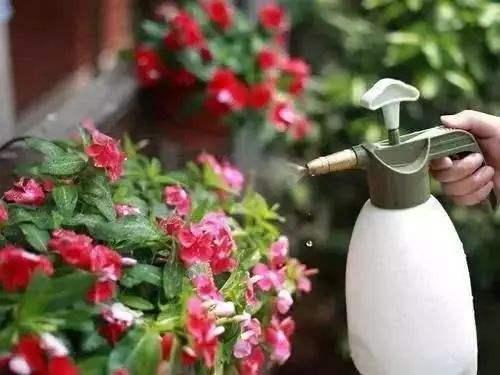
There is a lot of knowledge and many tricks to growing flowers, such as the common practice of watering flowers with rice-washing water, watering flowers with beer diluted in water, and watering flowers with vegetable-washing water, and so on. If you study it carefully, you will find that most of the tricks for potted flowers are related to "watering". Why is that? Actually it is very simple. This fully shows one thing, and that is "watering is very important". The facts are the same; as the saying goes, "growing flowers needs three parts fertilizer and seven parts water", meaning that watering is far more important than fertilizing or other factors such as light and soil. So how should you water correctly? Especially now that autumn has arrived, which is exactly the peak growing season for flowers, how should you water, what kind of water can be used, and what kind of water cannot be used?
Growing flowers in autumn and winter, watering is the key; these "3 kinds" of water must not be used, do not ignore root rot and yellow leavesBefore talking about the water that cannot be used for watering flowers, we must first understand the basics of watering. Do not underestimate this watering; there is a lot of know-how in it! For example, what does "water when dry, stop when wet" mean for watering flowers? It means that once the top 5 cm or more of the potting soil surface has dried out, you should start watering, and when watering, once you see that the water on the soil surface will not soak in any further, you must stop. Many people think that it is enough to water only after the whole potting soil has dried out, but that is a misunderstanding. Another example is whether it is better to water at noon or in the morning and evening? Actually, it is not that you can never water at noon in all situations. In autumn and winter, you can water at noon, so do not simply assume that you can only water in the morning or evening. Next, let us share the "3 kinds" of water that cannot be used for watering flowers.
Unfermented rice-washing water must not be used to water flowersMany flower lovers like to turn waste into treasure and directly use the water left over from washing rice in daily life to water plants such as pothos and spider plants. Actually, this practice is incorrect. Why? Because although rice-washing water contains potassium element left on the surface of the rice, which is good for flower growth, if it has not been fermented, the residual rice particles in it will ferment again after being poured into the flowerpot. When fermentation occurs, it produces a large amount of heat, instantly raising the temperature of the potting soil, and this very easily burns the roots of the flowers. The correct method of use is to seal the rice-washing water and leave it outdoors for two weeks, wait until it has fully fermented, and then use it to water flowers.
Freshly drawn tap water must not be used to water flowersOn this point, perhaps most flower lovers will begin to question it: why can tap water not be used to grow flowers? First, tap water contains trace amounts of chlorine gas, especially tap water in cities, and some of it is even polluted and slightly contains impurities, which makes it even less suitable for watering flowers. This is also why everyone installs water purification devices. Freshly drawn tap water is best left in the sunlight for one day before use. Of course, flower lovers may ask, what other kind of water can replace tap water for watering flowers? Next I will rank them for everyone; the quality of water for watering flowers decreases in this order: pond water, rainwater, mineral water, purified water (tap water).
For the two kinds of water shared above, you need to pay attention to some things when using them to water flowers. Especially for those flowers with high water requirements, such as clivia, spider plants, lucky bamboo and other plants. That is all for sharing the knowledge about watering flowers; thank you for reading! If you have any questions during the process of growing flowers, you can leave a comment below, and I will reply one by one, thank you.
Remember to like and share it~