How to increase the sprouting rate of orchids? These little tips are very practical
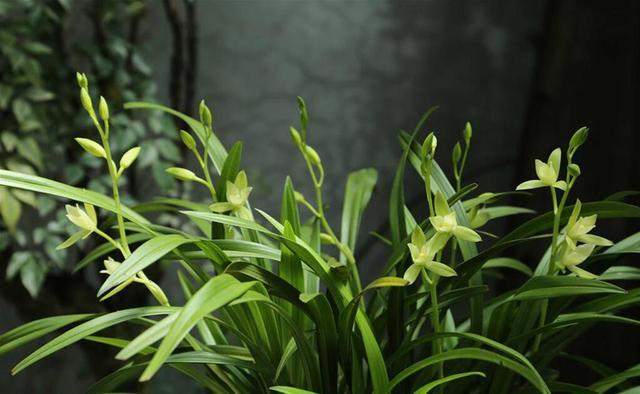
On the question of how to increase the sprouting rate of orchids, the important thing is still to first do the most routine care work for the orchids. On the basis of the most routine care work, then slowly try some new scientific methods. Before some new sprout-forcing methods have been mastered, do not apply these immature methods to forcing sprouts on a large number of orchid seedlings. Especially for some rare and precious varieties, ensuring the safety of the plants is the most important thing.
I. The most routine care work for orchids
On this question, we do not need to go through it one by one in a lengthy discussion; we will just give a brief review. Whether leaf buds or flower buds, both count as sprouting in orchids. To make orchid plants sprout more and sprout strong shoots, the first thing is to have a good growing medium suitable for orchid root growth, also called orchid potting medium. Choosing the orchid potting medium is the beginning of successful orchid growing. Many people fail to grow orchids well, and the problem usually starts here first, because orchid roots are aerial roots, different from the root systems of other plants. So we should choose a granular potting medium that is water-permeable and breathable, drains well, and is rich in a large amount of organic matter. Do not directly use pure garden soil for planting, or use solely relatively attractive orchid stone, expanded clay pellets, fired soil granules, or other culture materials with no organic matter. Generally, using pine bark and perlite in a 1:1 mix for planting gives good results. Before planting, to be safe and avoid infection by pathogens, it should be disinfected.
Next, in the supply of water and fertilizer, and in the adjustment of light, temperature, humidity, and ventilation, as well as the prevention and control of pests and diseases, the choice of flower pots, and the selection of the orchid placement site, everything must be done reasonably.
II. Reasonably dividing orchids
At present, Chinese orchids are mostly propagated by division, a form of asexual propagation. When there are too many orchid plants in a pot, the nutrient supply cannot keep up, which inevitably leads to fewer and weaker sprouts. Therefore, the ancients said about growing orchids: "When extremely weak, combine; when extremely strong, divide." When there are too many orchid plants in a pot, they must be divided in a timely and reasonable manner. This is the most important and most basic method for increasing the orchid sprouting rate.
III. Twisting the pseudobulbs of orchids
In late autumn or mid-spring, in conjunction with repotting during division, take out the orchid plants, use both hands to pinch the middle-upper part of two pseudobulbs respectively and twist them in opposite directions by 90 degrees to 180 degrees, so that the connecting stem is in a half-separated state, but it must not be completely twisted off. Apply fungicide promptly to the twisted area to avoid wound infection, then plant the orchid back into the pot. In this way, the pseudobulbs of the grandfather generation, father generation, and child generation in the half-separated state can each send out new sprouts. However, this method is only suitable for Cymbidium goeringii, Cymbidium sinense, and Cymbidium ensifolium, which have relatively large pseudobulbs. It is not suitable for Cymbidium faberi and Cymbidium tortisepalum, which have relatively small pseudobulbs and short connecting stems and grow in clumps.
IV. Using plant growth regulators
The use of orchid sprout promoters can multiply the sprouting rate of new shoots and old plants, and can achieve two to three generations, or even four generations, of shoots in one year. But the forced sprouts can only grow into mature plants in a particularly superior modern greenhouse with the use of various nutrient solutions to promote growth; in a natural or semi-natural environment, only robust large buds can grow normally. At the same time, because the new plants forced out by hormones have already been overdrawn, after introduction and cultivation in a natural environment, they often cannot sprout normally the following year, and generally need a year of rest and recuperation before they can sprout normally.
Finally, there is another important factor, which is the thinning and pruning of flower scapes and flower buds. To make orchid plants sprout more and sprout strong shoots, the thinning and pruning of the flower scapes and flower buds of orchid plants is essential. Do not crave a spectacular display of many flowers. Appropriately reducing the flowering amount of orchid plants, or cutting off all flower scapes shortly after they emerge from the soil so they do not bloom, reducing the nutrient consumption of the plants, and letting them conserve energy, is also an important means of promoting orchids to sprout more and sprout strong shoots. Author: Mei Fei, founder of the Orchid Bar forum, secretary of the Orchid Association of Jingshan City, Hubei Province, and an orchid industry influencer on major self-media platforms! I publish orchid knowledge and pictures every day, taking you to understand orchids in depth and teaching you how to grow orchids easily. If there is anything you do not understand about orchids, you can ask me anytime or leave a message below. If you like it, you can follow me or bookmark and forward it to help others!