Prune your kalanchoe like this in autumn, and it will bloom profusely with thick leaves and masses of flowers
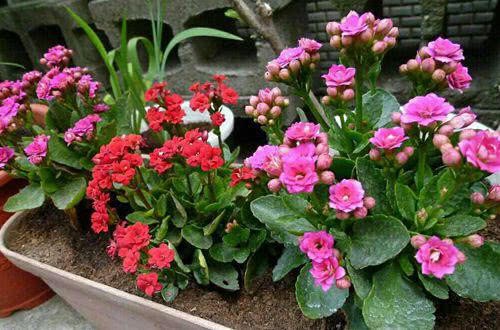
The kalanchoe has a particularly lovely name, symbolizing health and longevity, with bright and beautiful blooms and thick, jade-green leaves. Its flowering period is also fairly long, making it very suitable to keep a pot of kalanchoe at home, and you can also propagate more kalanchoes yourself at any time; the propagation process is very simple.
When growing kalanchoe, give it a prune in autumn, and it will bloom profusely again, with emerald-green leaves and masses of flowers!
A kalanchoe that has been grown for a certain amount of time may no longer be in the best condition or growth state, especially when the autumn growing season arrives, and that is when it needs a prune. The best method of pruning is pinching, which means cutting off the topmost branches to encourage more lateral buds to sprout; more branching means more flowers, and the whole plant shape becomes fuller and more attractive. If the kalanchoe's branches grow to more than twelve centimeters, they need to be pruned and pinched in time, cutting off part of them and leaving a length of about seven or eight centimeters, which will not affect its growth and flowering.
When pruning and pinching, also remove any dead branches, spent flowers and withered leaves along the way; once winter comes, do not prune any further.
There is another pruning, which is after the flowering period has ended; pruning at this time is also very important. After the flowers fade, cut off the branches, leaves and spent flowers above the second pair of leaves, so that they do not take up nutrients.
At the same time, take these cut-off branches and replant them as cuttings, and you can propagate many new kalanchoe plants without spending a single cent; the cutting medium can be sand, vermiculite or similar.
After pruning, place the kalanchoe in a well-ventilated spot with indirect light, water it promptly with some fertilized water, supplement plenty of phosphorus and potassium fertilizer, and regularly spray it with monopotassium phosphate; in autumn it will send out many new shoots again and can also produce many flowers.
If your kalanchoe loses leaves and looks unwell, then it is possible that there is a problem with its root system. If it drops a particularly large number of leaves, you can pull the kalanchoe up by the roots, check whether the roots have rotted, cut off the rotten roots, let the wounds dry a little, and then replant it and it will be fine.
At the same time, when growing kalanchoe, the soil used must not be too sticky; it must be a loose, fertile, breathable sandy soil. When the temperature is too high, above 30 degrees, it should be placed in a relatively cool and well-ventilated position. Only in this way will it grow more and more vigorously, with large leaves and a profusion of blooms!