Can you believe that a single branch grown from a cutting can bloom into a waterfall of flowers?
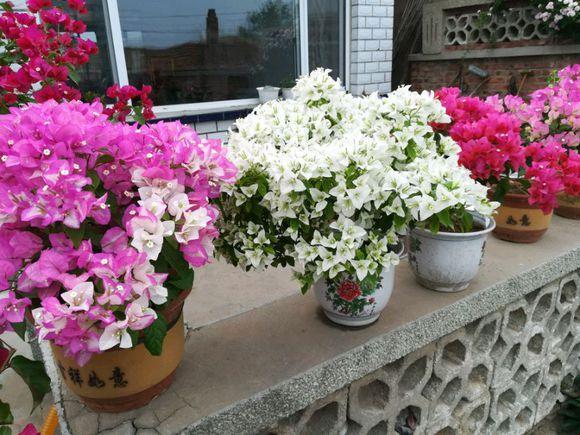
In the green belts and parks of the south, we often see a cascading waterfall of brilliant red flowers. This flower is called bougainvillea, also known as paper flower. It is extremely heat-tolerant, drought-tolerant and tolerant of poor soil, making it a darling of flower growers in the south. In the north it can also be grown in flower pots, and in winter it must be placed indoors to overwinter. This flower can bloom continuously from spring to winter, and you can see it at any time.
What's more, this flower can also be propagated from a single branch by cutting, rooting in just 20 days, and it is also quite tough and easy to grow. Let's take a look at how to take cuttings and the key points for care afterwards.
Cutting season: do not choose winter
Throughout the year, except for winter, cuttings can be taken in any season, even in summer as usual, because bougainvillea is very heat-tolerant. But the details of taking cuttings are indispensable.
The best seasons for cuttings are March and April in spring, and these months in autumn. The branches must certainly be chosen from relatively robust ones free of pests and diseases; generally, older branches have stronger sprouting ability. Generally, it is more suitable to cut branches on cloudy days or in the morning, because at this time the branches are full of water, the cut heals relatively quickly, the rooting ability is strong, and the survival rate is high.
However good the medium, disinfection is indispensable
Generally we should use coarse sand or a combination of coarse and fine sand for cuttings, and at the same time use carbendazim diluted 1000 times with water to disinfect, spraying it directly into the potting soil, then letting it dry, and it is ready. This can avoid root rot during the cutting process.
After taking the cuttings, water the potting soil every day with a spray bottle to keep the medium moist, but it must not become waterlogged. At the same time, make sure the potting soil is relatively breathable. At the beginning, do not expose it to the sun, otherwise it is easy to cause high temperature and high humidity, and black rot of the roots.
Because sand itself is a drainage medium, in order to ensure humidity, you can put a plastic bag over the surface of the pot to ensure humidity, add diffused light, and it will be easier to ensure rooting. However, you should also properly poke a few small holes in the plastic bag to ensure ventilation without breeding bacteria. Keep it like this for about 20 days, and it will slowly take root; after rooting, it can be potted and transplanted.
Water rooting: prevent rot and mold
Bougainvillea, like Chinese rose, can also be placed directly in water, but the water should be changed about once every 3 days, otherwise water left too long and the branches are prone to bacteria. Slowly you will see small white roots grow out. At this time, put it into peat soil for cuttings, which can greatly reduce the occurrence of black rot. Pay attention to shading and moisture retention, and new branches, leaves and roots will soon grow. After that, it is a matter of potting and transplanting.
For bougainvillea to burst into bloom, you must hold back on watering
If you want bougainvillea to produce more flower buds, we must usually control watering well, properly control the amount of water, not water for a few days, and after the leaves wilt, then water thoroughly once. This can very well promote the sprouting of flower buds and produce more flowers.
Of course, besides these little tricks, if you want bougainvillea to bloom abundantly, nutrient supplementation is also indispensable. Usually, supplement more with organic nutrient solution rich and balanced in nitrogen, phosphorus and potassium. Rich and balanced in nitrogen, phosphorus and potassium, with various organic matter, minerals and amino acids added, it promotes the plant to grow vigorously, with countless flowers.