What to do when azaleas drop their leaves? Care for them this way and the problem is easily solved
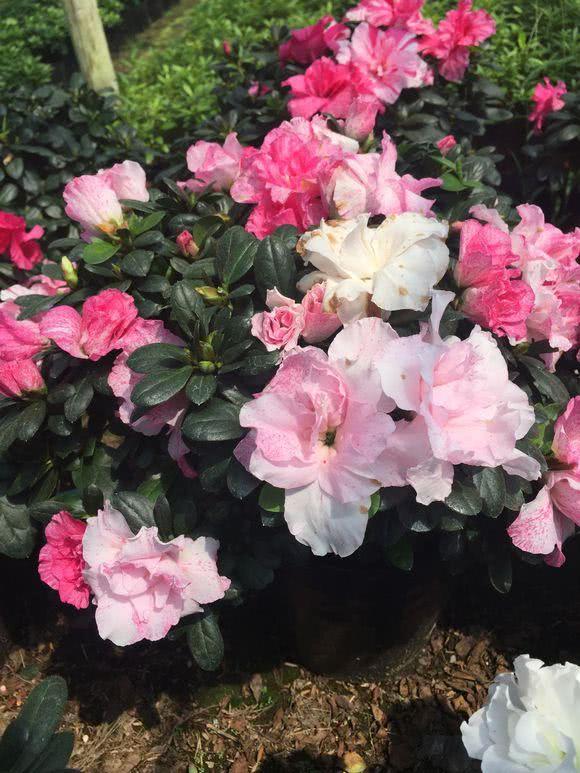
Momo loves growing flowers, and the balcony is packed full. Dead branches, withered leaves, and fallen blooms are a common sight. Especially when care is done poorly, the balcony ends up in a mess and there are no flowers to enjoy. Every time Mom cleans up, she grumbles about it several times, and when the azaleas drop their leaves, she feels both heartache and worry.
Azalea flowers are brilliantly colored with deep green leaves, giving a very grand impression. When azaleas bloom on the mountain, they cover the slopes and keep blooming nonstop. When a potted azalea at home blooms in a full mass, it has an even more special charm. So how exactly should these azaleas be cared for?
Potting has its particular requirements
A newly bought azalea must first be placed in a spot with not-too-strong light to acclimatize for about a week. After it has acclimatized, it is best to pot it into a relatively large pot. Never remove the soil ball around the roots, and there is no need to trim the roots either; otherwise, if the roots are damaged, it becomes quite difficult to grow. After potting, still pay attention to letting it acclimatize for 1 week, then move it to a spot with ample sunlight depending on its condition.
The soil for potting azaleas should be acidic soil rich in humus. At the same time, add some ferrous sulfate. When watering to settle the roots, you can appropriately supplement some acidic organic fertilizer. This can improve the soil's acidity and alkalinity, provide nutrition for the azalea's growth and blooming, and also make the flowers bloom more vigorously and the plant more robust.
Watering must be measured
Watering azaleas requires more care than any other aspect, because azaleas are plants that greatly love water. If there is not enough moisture, the root system will not develop well, and yellowing leaves and drying out easily occur. If there is too much moisture, yellowing leaves, leaf drop, and drying out also easily occur. So during care, be sure to wait until the potting soil is dry before watering, and water thoroughly when you do.
In summer, when temperatures are relatively high, while watering the azalea, also provide appropriate shade. After watering, do not keep it in a stuffy, enclosed environment; make sure there is ventilation. If accumulated water evaporates slowly, the roots cannot absorb oxygen, and leaf drop easily occurs.
In spring and autumn, when temperatures are a bit lower, watering should also be appropriately reduced, but you should spray water on the leaves. At the same time, open the windows for ventilation so the azalea grows in a relatively comfortable environment, avoiding a stuffy, enclosed situation or leaf wilting caused by dry air.
If the winter temperature is especially low, below 10°C, do not leave it outdoors to overwinter. Move it indoors and keep the indoor temperature above 10°C. Otherwise, azaleas are very prone to cold damage. Losing all their leaves would still be a mild outcome; in severe cases, it can also cause the plant to dry out and die.
Fertilizing has its patterns
Azaleas have a very strong ability to grow and bloom, which means they should be appropriately supplemented with nutrients. The seasons differ, and the growth stages differ, so the way azaleas are fertilized should also follow patterns.
Fertilize according to the seedling
At the seedling stage, generally no fertilizing is needed if the potting soil contains a relatively large amount of nutrients. During the growth period, supplement enough liquid fertilizer, but try to apply thin fertilizer frequently. When seedlings grow to the second spring, more nitrogen fertilizer and potassium fertilizer need to be used. Generally, plants that have grown for about 2-3 years are mature, and phosphorus-potassium fertilizer can be added, which can promote blooming and also make the flower color more brilliant.
Fertilize according to timing
In the early spring germination period, generally use nitrogen fertilizer and potassium fertilizer. In spring and autumn, use phosphorus-potassium fertilizer to promote lush branches and leaves, applying about once every 1 week. In winter, apply cake fertilizer as a top dressing once every half month, with the dilution ratio doubled compared with usual. In winter, azaleas can still grow as normal.
Combine water and fertilizer
Do not water before fertilizing azaleas. Especially when applying liquid fertilizer, it is best to keep the soil dry. Otherwise, applying liquid fertilizer diluted with water is equivalent to watering again, and it is easy to accidentally cause the plant's roots to become waterlogged, leading to problems such as root rot and yellow leaves.