A top-tier delicacy that leaves Americans helpless, China cannot get enough of it and still has to farm it in large quantities
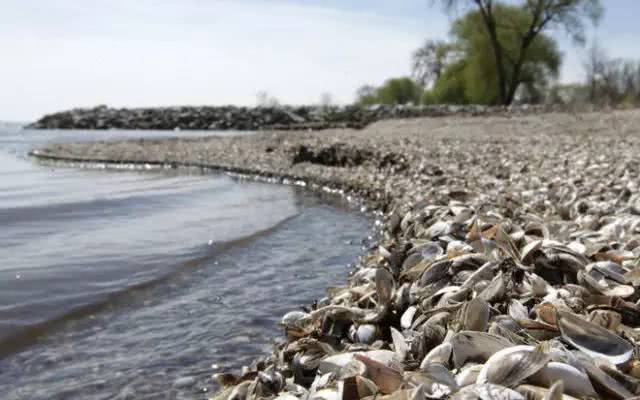
In our natural world, there are many strange creatures whose names we do not even know. Their existence brings both benefits and harm to humans, and this requires us to view this mode of coexistence more rationally. In some waters of the United States, countless wild creatures live, relying on their own tenacious strength to grow and reproduce in the wild. But there is one such creature whose survival ability is beyond human imagination. In the wilds of the United States, it reproduces and grows excessively, and has even harmed people's normal lives. This is the mussel we are introducing today.
Mussels are divided into many kinds, among which the zebra mussel is a creature that is very small in size but extremely strong in growth ability. In some waters of the United States and Canada, mussels grow very densely. It can attach itself to almost any object, then grow wildly in dense clusters. Many people with obsessive-compulsive tendencies would probably cry out that they cannot stand the sight! The mussel's place of origin is near the Black Sea. Because of its strong adaptability, it travels with passing cargo ships to all parts of the world, such as the major lakes of the United States today. The excessive reproduction of mussels prevents other creatures in the waters where they exist from growing normally, seriously disrupting the biological balance. The U.S. government has come up with many ways to control it, but the effect is not obvious.
In the United States, it is a "trouble" that leaves people helpless, while in China, it is truly an absolute delicacy of the world. In China, mussels are mainly distributed near the Yellow Sea and Bohai Sea, and there are also many of them, but our people love its taste very much. Therefore, large quantities of mussels are harvested and then processed into various seafood food products, which sell very well and are extremely popular. In fact, the nutritional value of mussels themselves is very high. They contain rich nutrients such as protein and carbohydrates. In traditional Chinese medicine, it is mild in nature and can regulate and replenish qi and blood, and treat conditions such as high blood pressure and anemia. Eating more of it is greatly beneficial to the human body.
The mussels on our market now are all farmed by farmers. Because mussels do not tolerate transport well, there are generally not many fresh ones on the market; most are processed into dried products after the meat inside is removed and then sold. The yield of mussels is very high, so its price is not expensive. The price per jin is around 10 yuan, basically affordable for everyone. In China, there is also no need to worry that this kind of shellfish will become overrun, because when the tide goes out, there are more people at the seaside than seafood. There is no problem of overrunning at all; it is simply not enough to eat. If the United States also had this many food lovers, there would be no need to worry about the excessive reproduction of mussels.
Because of people's fondness for them, wild mussels can no longer meet the needs of the public, and many people have begun to artificially farm mussels to make a profit. However, everything has an appropriate limit. The growth and reproductive capacity of mussels is astonishing. If the farming method is even slightly wrong, it may disrupt the local ecological balance, affect the growth of other species, and the consequences are very serious.