What Should You Do When Your Flowers Keep Getting Sick? Find the Cause and Even Gardening Beginners Can Treat the Problem Correctly
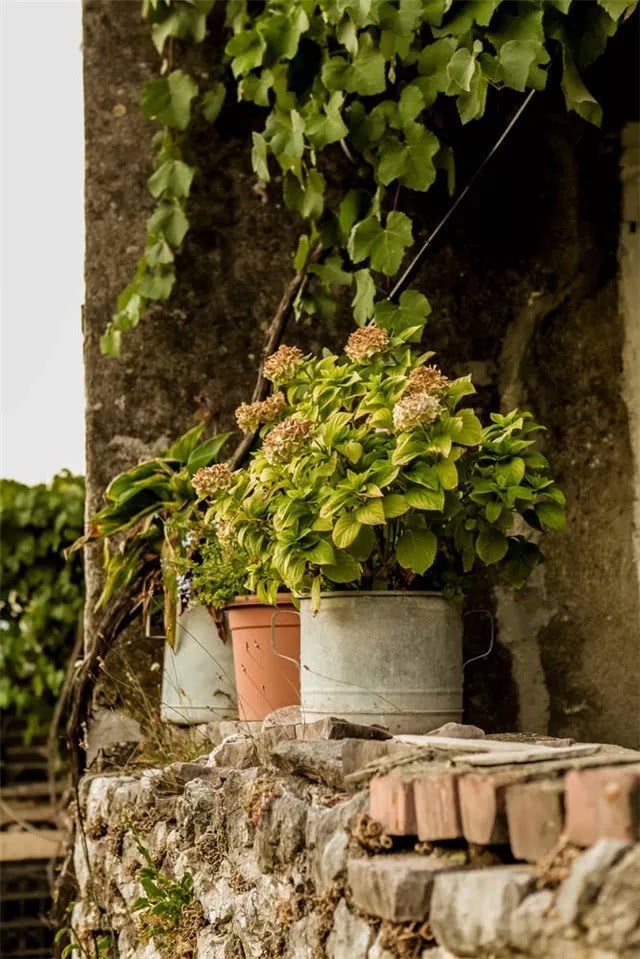
In the plant world, almost every plant will contract pests and diseases; it is just that some show fewer obvious signs and suffer lighter damage from pests and diseases.
This is the same principle as countless bacteria living in our bodies.
Oh... as soon as you mention pest bacteria, it feels a little creepy. In fact, effective management and control are all you need; whether for your daily life or for the growth of your flowers, they will not bring any negative effects.
The editor has studied quite a few articles on pest and disease control, and it feels like they share one thing in common: they all directly explain to gardening enthusiasts how to handle the problem.
Well, the technical methods may differ, but most are effective. Yet when gardening enthusiasts put them to use, many techniques mysteriously stop working, or become useless...
What is the reason?
If you do not understand why flowers contract pests and diseases, then how to deal with it is even less clear! Mechanical gardening, even if it temporarily solves the problem, is not good for the cyclical growth and continuous flowering of flowers.
Returning to the original question, let us first talk about the main reasons flowers become infected with pests and diseases!
What Causes Flowers to Become Infected with Pests and Diseases
One
Because the surrounding environment or the flower plants themselves carry pathogenic bacteria and pests, the plants are always in a state where they may at any time be Two
Two
When flowers grow under poor environmental conditions, their growth vigor is weak, they have no resistance, and they cannot prevent invasion by pests and pathogens, so they very easily show symptoms of disease and damage.
Three
When flowers grow in a poor environment, pathogens and pests spread very easily.
Therefore, in the process of flower production and cultivation, you cannot wait until the flowers have already become diseased before applying pesticide. You should always keep pesticides on hand and apply them regularly. In this way, you will promptly eliminate pathogens and pests and greatly reduce the probability of flowers becoming infected with pests and diseases.
Once you find that flowers have been infected with pests and diseasesyou must promptly take rescue measures
First, cut off the branches or leaves on the plant that have severe pest or disease damage, in order to cut off the source of infection.
Then spray an appropriate pesticide on the plant to prevent and eliminate the pests and diseases.
In addition to timely pesticide application for prevention and control, good management of plants infected with pests and diseases is also very important.
It is worth noting that the affected plant has very weak growth vigor at this time, and its internal metabolism is often out of balance. Therefore, do not place the plant in strong light or a high-temperature environment. It is best to move the plant to a shaded place and maintain a suitable temperature.
At the same time, watering must be done very carefully. Reduce the amount of watering, and do not fertilize at all.
After a period of careful management, wait until it grows new branches and leaves again and shows signs of complete recovery, then carry out normal care and management.
Let out a breath. The editor believes that friends who have carefully read this article will definitely gain something from it.
To be truly sincere, no one can solve all the planting technique problems of home gardening and balcony growing all at once. These all need to be slowly understood and accumulated through mutual exchange and mutual discussion...
The editor sincerely hopes that we can keep each other company "on the balcony," so that every friend with a pastoral dream can have a piece of paradise of their own.
Grow on the Balcony
All right, that is all for today. If friends still have any questions they hope the editor will answer, leave a message in the comment section below.
I also do not know whether the editor explained it clearly and in detail. For friends who did not understand, the editor has specially written an acrostic poem for you. It may not be well written, but it can help you find the editor.
More wonderful articles are all in an acrostic poem:
A gentle breeze lightly brushes, flowers remain ever present
Wandering in spirit with leisurely steps on the sunny south side of the mountain
Searching for wonders and seeking clever finds at Copper Sparrow Terrace
Planting red and growing green above the blue clouds
--Come take the challenge: four lines of an acrostic and tail-hidden poem. Connect the first characters and connect the last characters to obtain an eight-character motto and summon the editor's true form! When you come, remember to say: "Editor, your secret has been cracked by me!"
Growing on the balcony, learning has no end.