Reasons and Solutions for Shriveled Leaves on Haworthia cooperi (Yulu) Succulents
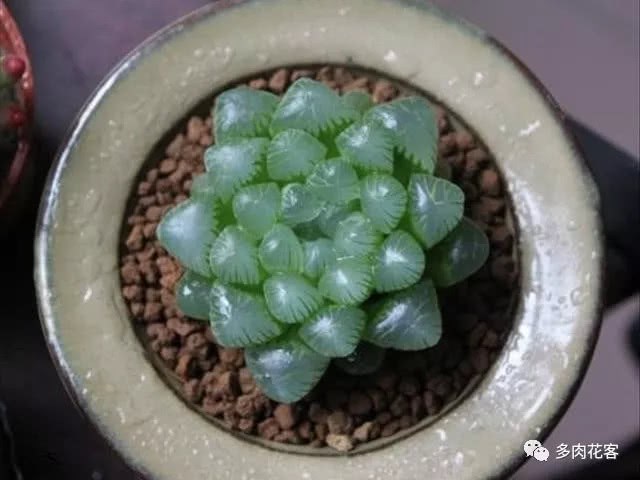
Introduction: Yulu is a soft-leaved variety among succulents. There are many varieties of this type, and the most common ones are Haworthia cooperi, Haworthia cooperi var. pilifera, and the spiny Yulu. They are small and exquisite, rich in variety, and their leaf color is crystal clear. In recent years, they have been one of the succulents that many people like to grow.
Scorching sun causes shriveled leaves on Yulu
Yulu likes light, but it must not be exposed to direct blazing sun; you can give it diffused light. If you see its leaves lose their luster and become shriveled, do not blindly water it, as this will cause root rot. Simply spray a mist of water on the leaf surface. This can increase the transparency, plumpness, and translucency of the leaves. When the temperature is low, put a plastic bottle over a string to form a greenhouse effect.
Caused by potting soil
In spring and autumn, the temperatures of these two seasons are... If you observe that it is starting to grow, it means the roots are not strong at this time. You can wait until the potting soil is dry, then water the potting soil thoroughly, and place it in a ventilated place for care, removing excess water from the potting soil. In the hot and stuffy summer with high temperatures, Yulu stops growing.
Temperature
Yulu is native to South Africa. It likes to grow in a warm, dry, semi-shaded environment. It is afraid of water. The most suitable temperature for its growth is 12 to 28°C. It is suitable for growing in a climate with warm winters and cool summers. In summer with high temperatures, the plant will go dormant or semi-dormant, growing slowly or stagnating. You can place it in a ventilated, dry place for cultivation.
Watering
When watering Yulu, you must grasp the principle of not watering until dry, and water thoroughly when you do. Avoid water accumulation again, and do not let it be exposed to rain. This is to avoid root rot. Also, do not let it remain waterlogged for a long time; the plant will not die, but the leaves will break and the leaf color will become dull.
Caused by disease
The main disease of Yulu is root rot. This is caused by poor permeability of the soil and pot used to grow it, which leads to long-term water accumulation in the soil. At this time, you should choose loose soil with good permeability for planting, and do not allow long-term water accumulation in the pot.
Conclusion: If the Yulu you are growing develops shriveled leaves, then it is caused by the above reasons. I have also explained the solutions above. As long as you follow the doctor's methods, you can easily solve the problem of shriveled leaves on Yulu.