Nature is inherently colorful, and "sissy" males are quite common too.
It's the back-to-school season again, and a TV program specially prepared for "the start of school" has sparked a lot of controversy. Some viewers took aim at the "pretty boys" in "The First Class of the New Semester" - the actors who "sing and dance" were criticized as "sissies" lacking "masculinity," and the criticism even escalated to the level of the temperament and very survival of the nation.
Setting aside the problems caused by the marketization of entertainment, how did the word "sissy," the opposite of "masculinity," come to be given its meaning? Do wetie certain positive qualities to appearance and link them to a specific gender? Is there any sense in that?
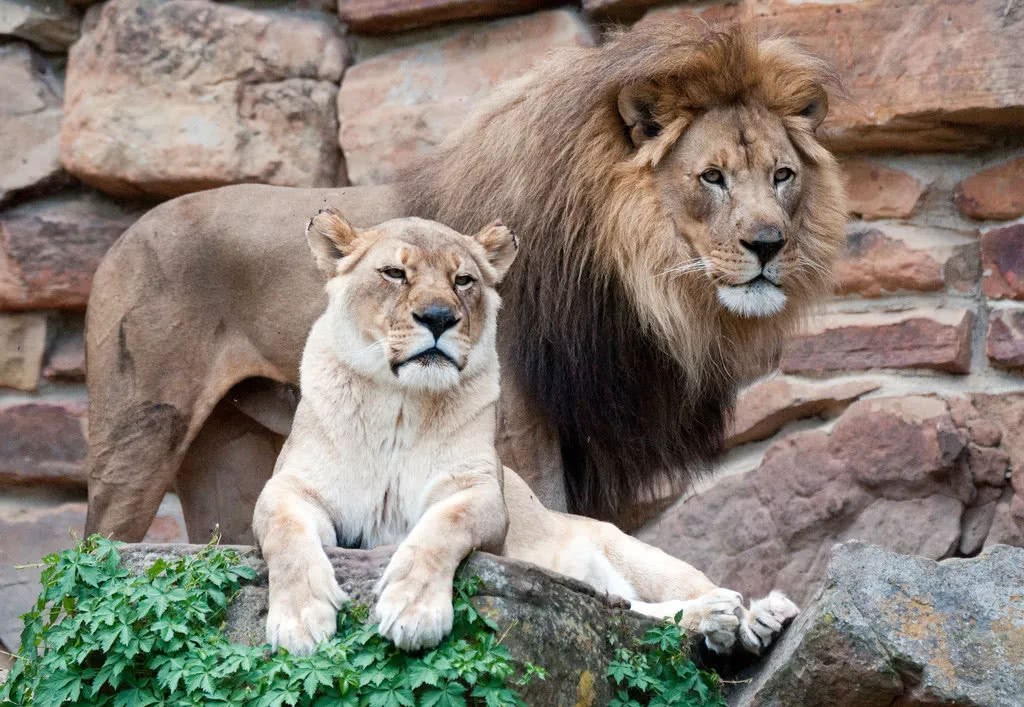
When talking about "masculinity" and "manliness," the descriptions we often see are "resolute," "virile," "courageous," and so on. Traits like "competitive," "aggressive" and "combative" seem to be the exclusive patent of males, and they also tend to make us think of virile male animals full of "masculine energy" - the combative rooster, the impulsive bull, the majestic male lion, and so on.
Wait! Did you know that in a pride of lions, the hunting is mainly done by the lionesses?
So what do the male lions do? Image: Eric Kilby / wikmedia
It's a difference, but also a division of labor
Differences between the sexes are not rare. In nature, differences in appearance and behavior between the two sexes are calledsexual dimorphism(sexual dimorphism), and there are many examples among mollusks, arthropods and various vertebrates.
Interestingly, sexual dimorphism is not simply "male = strong and combative." In evolutionary terms, its form and degree vary widely from species to species. For example, the malemallard(Anas platyrhynchos) has gorgeous metallic green plumage, while the female is a plain tawny brown; yet in another species of the same genus,the mottled duck(A. fulvigula), it's almost "two ducks swimming by the water, how can you tell which is male and which is female?"
Male and female mallards (left) and male and female mottled ducks (right). Image: Richard Bartz & DickDaniels / wikmedia
Among species with sexual dimorphism, the roles of the two sexes are also diverse and follow no fixed pattern. Thegroup huntingof the African lion is quite distinctive among the mostly solitary felines, and is usually carried out bylionesses working together; aside from occasionally hunting alone, the male lion spends most of his timeprotecting the pridefrom the threat of intruders - his larger, stronger build and majestic mane compared with the lionesses are also meant to guard his harem and to intimidate and show off to competitors.
Four lionesses cooperating to hunt an African buffalo. Image: Caelio / wikmedia
The male lion spends most of his time resting and guarding the territory. Image: Suzi Eszterhas
The special strategy of the "sissy"
Another male that uses body size and appearance to intimidate rivals is thebull-headed dung beetle(Onthophagus taurus). As the name suggests, they have two large horns on their heads that the females lack. When they run into other competitors in the underground tunnels where they keep their mates, male bull-headed dung beetles, in order to guard the female in the tunnel, will face the intruder head-on with their horns, trying to push him out of the tunnel and win the chance to mate with the female. The length of the "bull horns" and body size are the decisive factors in the outcome of the duel. Interestingly, however, there also exists ahornless"sissy" male。
Both the male bull-headed dung beetle (top) and the male of another species in the same genus, O. nigriventris (bottom), come in horned/hornless forms. Image: Teiya Kijimoto et al./Developmental Biology (2012)
The "sissy" male's strategy is not dueling, but slipping into the female's chamber while competitors are out and about or fighting. Compared with the combative males that expend energy growing giant horns,the "sissy's"offspring have a higher success rate of development, and he also has more sperm for post-mating "competition". Whether hornless "sissy" or horned "warrior," both are accepted by females and persist in the population as mutually substitutable evolutionary strategies.
A male ruff showing off its plumage at a lek. Image: M. Watson / ardea.com
Similarly, the Australian giant cuttlefish (Sepia apama)uses its talent for changing color to master "feminization". Smaller males will pretend to be females "passing by" a strong competitor to avoid being attacked, and only after meeting a female do they reveal their male "true colors." When both males and females are present, a "cross-dresser" can even achieve"feminization" on one side of the bodywhile keeping the male coloration unchanged on the other side, managing both disguise and courtship at once. The female cuttlefish happily accepts this too.
Male Australian giant cuttlefish showing off to each other. Image: John Lewis / Auscape International
The Australian quacking frog (Crinia georgiana), meanwhile, adjusts its strategy according to the state of the fight. Males usually wrestle each other with their strong forelimbs during the breeding season, competing for territory and females. But when there are too many male frogs in one habitat, males insteadquietly reduce their energy investment in "building muscle", biding their time and increasing their sperm count.
Male quacking frogs engaged in a philosophical wrestling match. Image: Jean-Marc Hero / wikmedia
Selection by the opposite sex and rivalry within the same sex
Besides the examples above of some males being "feminized," the painted snipe has even more distinctive sex roles.The painted snipe practices polyandry: during the courtship season, the female actively calls to court the males, then lays a clutch of eggs for each male in her harem in turn, with each male responsible for incubating them. After the chicks hatch, it is also the male who protects and raises his young.
Similarly,in spotted hyena groups, females rank higher than males, and they even have external genitalia as prominent as the males', with the female deciding whether mating happens.
Diagram of the reproductive systems of a male (left) and female (right) spotted hyena. Image: Anatomische Gesellschaft / Anatomischer Anzeiger (1922)
Liu Cixin's sci-fi epic "The Three-Body Problem" depicts a trend toward feminization among men in future human society, attributing it to prolonged peace and rapid development, with the pressures of survival increasingly eliminated. But is it "survival of the fittest" natural selection that maintains "masculinity"?
In fact, among animals with sexual dimorphism, linking body size and behavior to sex is, in most cases, probablythe result of sexual selection。
. In birds, many males have brightly colored feathers, while male stalk-eyed flies compete for mating rights by comparing the length of their eye stalks. These appearance traits are reallyhard to associate with "higher, faster, stronger", and in facthave nothing to do with a particular sex- for example, in the painted snipe it is the female that is brightly colored, while the male's body color closely resembles that of a female mallard, not to mention the miserable male mantises and spiders that get eaten.
The female painted snipe (right) is more colorful than the male (left). Image: Nick Garbutt / NPL / mindenpictures
A stalk-eyed fly that grew long eye stalks because of sexual selection. Image: Rob Knell / wikmedia
In evolution,selection between the opposite sexesandrivalry within the same sexultimately produced stable yet diverse sex roles and mating strategies in different species.
The "war" between males can even last from before mating to after mating. For the bull-headed dung beetle mentioned earlier, how much energy and resources an individual obtains during development is an important factor determining which strategy it adopts -well-nourished individuals become horned "bruisers", trying to shut competitors out before mating; while individualslacking nutrition during development give up their horns and produce more sperm, so they can "drown out" their rivals inside the female after mating.
Sexual selection leading to sexual dimorphism may also be due tothe preference of the opposite sex. The immunocompetence handicap hypothesis holds that masculinity comes from androgens (testosterone) that suppress immune function, so a strong masculine trait declares, "I don't care if my resistance drops."
What is it that evaluates a person
Coming back to us humans, sexual dimorphism does indeed indicate the existence of sexual selection. Interestingly, research has found thatthe presence of stress hormones (a type of glucocorticoid) makes androgens "half as effective", weakening the masculinity that is popular with the opposite sex. Other research suggests that, compared with less developed regions, women in developed regions prefer male faces with lower stress levels and care less about androgen-related facial features. It seems that the pursuit of "manliness" is undoubtedly something that changes along with social progress.
In the final analysis, against the backdrop of modern technology and civilization,there is probably no fixed logical connection among appearance and physique, gender, and positive qualities. In a pluralistic society, there is certainly no shortage of resolute and brave girls, and as for male compatriots who have a sense of social responsibility and strive earnestly, why would they need rough, rugged lines to contribute to the prosperity and strength of the nation?
In fact, more than two thousand years ago, the sages already discussed the brute courage of "fighting a tiger bare-handed and crossing a river on foot," which is far removed from the "courage of King Wen" that "brings peace to the people of the world." Qualities like "self-improvement" and "courage" have even less to do with gender, body type or manner.
As mainstream media commentary put it: "Appearance is not the key to the issue; it is inner substance that more profoundly determines how people evaluate a person." As for the label "sissy," shouldn't it be done away with?
This article is a special contribution to Species Calendar, from Species Calendar author @Lu Ping.
If you like him, you can also follow
Lu Ping's Amazing Creatures
id: magic_bio
The magic of evolution creates amazing billions of organisms
Great content you might have missed
Calendar Girl's avatar for today
Scolopacidae, common redshank