Autumn is here, and seeds begin their journey
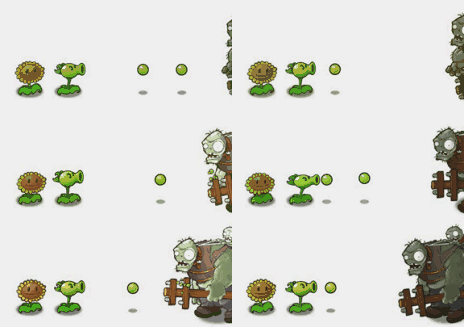
Homemade "launchers"
Some plants don't need cars or planes at all; they come up with a particularly amusing way to travel: once the seeds are ripe, they fling them into the air. Examples include the squirting cucumber, impatiens, and violets.
Squirting cucumber
The squirting cucumber, known as the most powerful fruit and the "cannon gourd" of the plant kingdom. It is called the squirting cucumber because its fruit can spray out its seeds when it reaches maturity.
Unlike the common melons we know, the seeds of the squirting cucumber are not buried in soft flesh, but soaked in a thick, sticky liquid that swells the rind until it is taut. When the fruit ripens, at the slightest disturbance the stalk detaches naturally from the fruit, a small hole appears in the fruit, and the tightly stretched rind shoots the liquid and seeds out through the small hole, spraying them several meters away; this is how the seeds are dispersed. The force of this squirting cucumber is so fierce that it can eject the seeds and sticky liquid 40-50 chi away. Because its power is like that of a fired cannon, people also call it the "cannon gourd."
Impatiens
Impatiens seeds like to lie inside fuzzy capsules (shuò). During the capsule's development, the cells on the inner and outer sides of the fruit wall do not grow at the same rate, so powerful tension builds up inside the fruit wall. When the fruit ripens, the slightest disturbance causes the fruit wall to split along the seams, and the tension is instantly released, making the fruit-wall segments curl inward while the seeds are "leveraged" and flung out. At this moment, all the seeds naturally fly out along their trajectory.
For this reason, impatiens is also called "don't touch me." The Latin scientific name of the genus Impatiens comes from this trait; Impatiens means impatient. Coincidentally, impatiens seeds are called "acute seed" in traditional Chinese medicine.
Geranium
The seeds of geranium (guàn) sit on small spoon-like platforms. These "little spoons" function like catapults, flinging the ripe seeds in all directions.
Violet
The violet has a cool "way of traveling." After its seeds mature, the pod gradually contracts, exposing the seeds on the surface of the pod. At this point the tension in the pod increases, and the seeds are launched like "bullets."
Pilobolus
Pilobolus is the collective name for a genus of fungi, and in contrast to its fresh-sounding name, this type of fungus likes to grow on animal dung. Pilobolus has a little-known "superpower": it can eject its sporangia with an acceleration exceeding 20,000 G.
The tip of the Pilobolus sporangiophore swells and is filled with a large vacuole, and the turgor pressure formed by this large vacuole is the source of power for the ejection. After sensing light, the Pilobolus sporangium launches itself toward the light, and the sporangium can fly as high as 1-2 m. Although this seems like a short distance, relative to the size of Pilobolus itself, it counts as an extremely long distance.
Wood sorrel
Wood sorrel (zuò) is a very ordinary wild weed, bearing small yellow or small red flowers, and after flowering it produces five-angled capsules; when ripe, the fruit splits along the back of each locule, the fruit shell curls up, and the seeds are ejected.
2
Soaring through the air with "parachutes" on their backs
Birds can glide a long distance simply by spreading their wings and riding the wind. We have found that many plants can do the same when reproducing their seeds; they travel through the air as if carrying parachutes and land all over the world. Examples include dandelions, maples, and willows and poplars.
Dandelion
Dandelion seeds have evolved a special structure, growing fluffy pappus; once the seeds mature, the pappus unfolds like a parachute and flutters with the wind, so the seeds are spread into the distance, and a spontaneous journey begins.
Maple
The maple can grow winged fruits that rely on the wind to fly farther. Maple fruits come in pairs, and each one has a "wing" developed from an extension of the fruit wall, so the paired fruits together have a pair of "wings." Even more marvelous is that the angle of this pair of wings is exquisitely designed; when the maple fruit falls, it can make the fruit itself spin, greatly extending its time in the air and allowing the wind to carry the fruit to even more distant places.
Star fruit vine
The star fruit vine also forms this kind of "helicopter"-like fruit. Its six "wings" can also make the fruit rotate, which helps it spread over longer distances.
Corn poppy
The corn poppy's capsule has many small openings. When the wind blows, the corn poppy's stem bends, and its seeds shake out of the shell. In this way, the corn poppy's seeds can be scattered evenly around it.
Willow and poplar
Willows all belong to the Salicaceae family and have caterpillar-like inflorescences (catkins); these inflorescences are either male or female, and when fully mature they fall off entirely. The fruit in the female inflorescence splits into two valves, and the seeds with white down drift out with the wind. This is the result of natural evolution and is beneficial for seed dispersal and reproduction.
Maple
Maple seeds have double wings, like birds with wings, and can take advantage of the wind to carry the seeds into the distance.
In nature, many plants do everything they can to reproduce their offspring in order to survive and develop. Over the course of hundreds of millions of years of evolution, every plant has its own special ability to let its seeds "travel," which allows the seeds to spread widely and keep growing endlessly. This magical phenomenon is truly astonishing!
If you also like growing flowers, then follow us!