The name of the pocketbook plant implies bringing in wealth; how should it be cultivated and cared for as a bonsai?
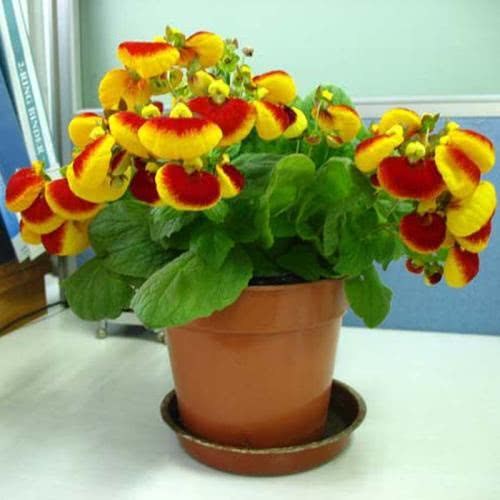
The pocketbook plant is also called the yuanbao flower (Calceolaria). It is mainly distributed in South America. Its corolla is quite distinctive, resembling human lips, and its flower colors are quite varied, including red, white, yellow, and some varieties bear multiple colors. As one of the flowers of the late winter and early spring period, because it is more suitable for cultivation in a greenhouse, it is mostly used to decorate balconies or as an indoor ornament, and is less often used in gardens or flower beds and similar places.
I. Cultivation of the pocketbook plant
For the cultivation of the pocketbook plant, it is mainly divided into division propagation and seed propagation. In actual production applications, due to convenience and availability, we often choose the seed propagation method to cultivate the pocketbook plant. The seeds of the pocketbook plant can generally be obtained from the plant. It should be noted that choosing the right time for sowing is very important, as this directly relates to the success rate of sowing. It is usually chosen to be carried out in the late summer and early autumn stage, that is, in September and October each year. At this time, the temperature is relatively warm, which is very favorable for seed germination.
When sowing seeds, the number of seeds to sow should be determined according to the size of the pot, and the quantity should be moderate. Second, the seeds generally need to be soaked in warm water so that they "break dormancy," which can greatly shorten the seed germination time. After sowing, the pocketbook plant seeds can germinate in about three weeks.
II. Care of the pocketbook plant
1. Light requirements
The growth of the pocketbook plant requires appropriate light, especially in spring and autumn. At this time, the temperature is relatively warm, and it is best to ensure about 8 hours of diffused light exposure per day, which is very beneficial to the growth of the pocketbook plant's branches.
In summer, the light intensity is too high, so the pot is usually placed in a shady area for growth; otherwise, the plant's leaves will wilt and turn yellow due to prolonged sunlight exposure. In addition, the temperature in winter is relatively low, so the temperature of the plant's growing environment must be kept above 12 degrees; otherwise, the pocketbook plant is easily frostbitten.
2. Watering requirements
If the pocketbook plant grows in moist soil, its plant shape is often more attractive, its branches are more robust, and its leaf color is fuller. Therefore, the pot soil should maintain a certain degree of moisture, but there must not be water accumulation. Generally speaking, the pot needs to be watered about twice a week, and the soil should be watered only when the pot soil is dry. Under normal circumstances, keeping the soil somewhat dry is also no reason to water excessively.
3. Fertilization requirements
The pocketbook plant usually needs an appropriate amount of chemical fertilizer applied. In addition to nitrogen, phosphorus, and potassium fertilizers, the plant often also needs to take in some trace elements, such as iron and zinc, which can prevent the occurrence of some diseases and increase the plant's disease resistance. Fertilize about once every month. Each time, the concentration of the fertilizer added needs to be adjusted before it can be applied to the soil; otherwise, if the concentration is too high, it is easy to cause burns to the plant body.