How to grow verbena? The right care method makes the flowers bloom beautifully
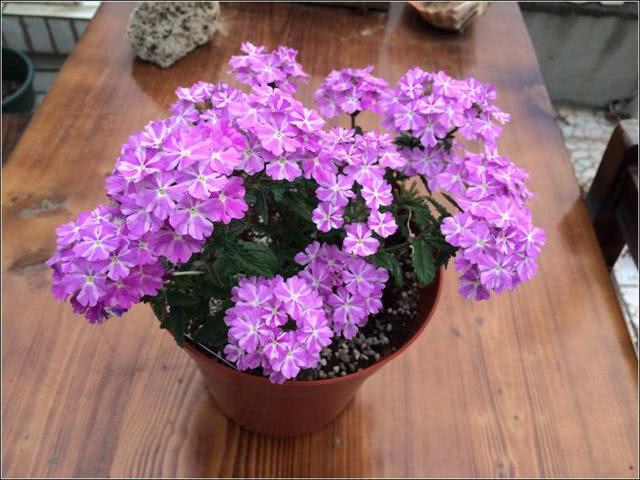
Verbena, also known as garden verbena, is a fairly well-known plant from South America. Its flowers are umbel-shaped and come in many colors such as white, red and blue, and a mature verbena has a moderate height of around 35-50 cm, making it a highly ornamental potted plant. For this same reason, its rather short stature means it is often used as ground cover; for example, in road landscaping, gardens and large-scale flowerbed plantings, it has high ornamental value.
I. Cultivation of verbena
Cuttings and seed propagation are the common planting methods for verbena. Because seed cultivation has a success rate of less than 50 percent and a fairly low germination rate, potted verbena is usually grown from cuttings. For verbena cuttings, it is best to do this from May to June each year. From a robust, healthy plant, choose semi-lignified and relatively tender branches, keep a few leaves at the tip of the branch, and cut off the remaining leaves. The length of the branch should be about 8-10 cm; too long or too short is not good for rooting the cutting.
When taking cuttings, you also need to water them with an appropriate amount of water and keep them in semi-shade. After one to two weeks, the plant can then grow under light. Note that when the seedlings have grown about five to seven leaves, the potted plant needs to be transplanted for further cultivation.
II. Care of verbena
1. Soil requirements
Good soil is a necessary condition for ensuring good plant growth. Sandy soil or humus soil with good drainage and water permeability and good fertility is most suitable. If a potted verbena grows in relatively poor soil or soil of average quality, its growth rate will be much slower, which may delay its flowering period or affect the quality and quantity of its blooms. In addition, the soil must be kept slightly acidic; otherwise, growing in alkaline soil makes the plant prone to poor development and even death.
2. Light requirements
Only when grown in an environment with sufficient light will garden verbena have a better plant shape and ornamental value. Good light conditions can make the plant's branches and leaves lush, reduce trouble from pests and diseases, and also make the flowers bloom more vividly. If the plant grows under conditions of insufficient light, the leaf surface often shows signs of yellowing, and the flowering period may fail to arrive normally.
3. Water requirements
Watering is one of the more demanding aspects of garden verbena. In addition to keeping the potting soil moist, the amount of water and the frequency of watering often need to be strictly controlled, and the principle of "rather dry than wet" should be maintained when watering. It often also needs to be applied flexibly according to the actual situation; for example, in hotter weather the amount of water can be appropriately increased, while in winter when temperatures are lower, try not to water or water only sparingly.
4. Nutrient requirements
The seedling stage and the flowering period of verbena are the two stages with higher nutrient needs, so fertilizing about once every half a month should be ensured. At the same time, fertilizing should have emphasis: for example, during the seedling stage, in order to make the branches and leaves more lush, apply more nitrogen fertilizer; while during the flowering period, in order to make the flowers more brilliant, apply more phosphorus fertilizer to promote the growth of flower buds and extend the flowering period.