Plant carnations in the yard, and with these few points in mind they will easily grow into a little sea of flowers
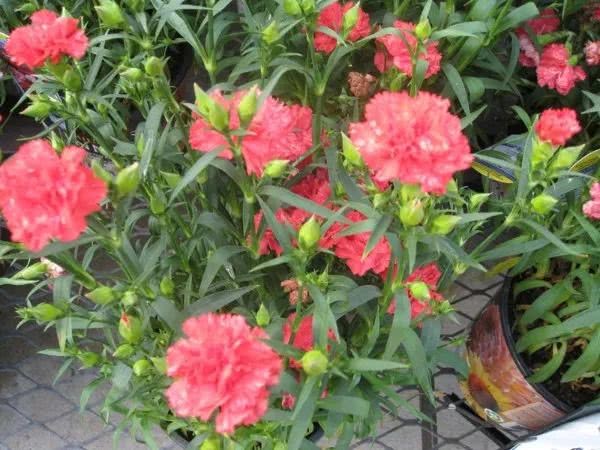
Carnations are a very popular ornamental flower, with bright and charming cut flowers that hold their ornamental value for a long time and have many fragrances. Although their flowers are not very large, they are very charming, and they come in many different colors, including the common pink, red, white, pink-purple, and so on.
Carnation petals are very large and the flower colors are very intense. Growing carnations is very simple, and it is also relatively easy for beginners.
Carnation petals are all edible and can be made into salad, or used as a garnish on a dinner plate, and can also be used as a decoration for desserts.
Carnations are also very suitable for making dried flowers; just hang them upside down near a windowsill and let them air-dry naturally.
Carnations are suitable for planting in the yard and can easily fill a large area. Their plants are relatively short, making them especially suitable for planting at the edge of a flower bed. You can also choose some taller varieties and plant them behind herbaceous plants.
Caring for carnations requires plenty of light. The environment where carnations are grown needs more than 8 hours of light each day. If you are growing carnations in pots, then you need to place them on a south-facing or east-facing windowsill or balcony, keeping more than 6~8 hours of light each day.
Carnations are very cold-tolerant plants, with excellent adaptability to the environment, and in southern regions they can all be grown outdoors.
Carnations are not picky about soil either, but do not grow them in soil with excessive fertility. You only need to keep the soil well-drained. Do not use soil that easily becomes waterlogged. The soil should not be too acidic; it is best to grow them in neutral or slightly alkaline soil.
Carnations are very drought-tolerant plants, but during the peak growing season it is best to keep the soil moist and avoid long-term drought in the soil. The environment for growing carnations should not be too hot either. After carnation flowers fade, promptly cut off the flower heads, but do not cut off the flower stems; after a few weeks the carnations will bloom again.
Carnations can be propagated by stem cuttings in autumn, which can produce carnations identical to the original variety. Of course, you can also choose to propagate by division in autumn.
Many people who grow carnations in pots do not keep the environment ventilated, and when the air does not circulate, black rot or other fungal diseases easily appear. If it is rainy weather, be sure to increase ventilation, and when watering avoid pouring water on the leaves, otherwise they easily rot.