Want your Phalaenopsis orchid to bloom again after flowering? Master this care secret
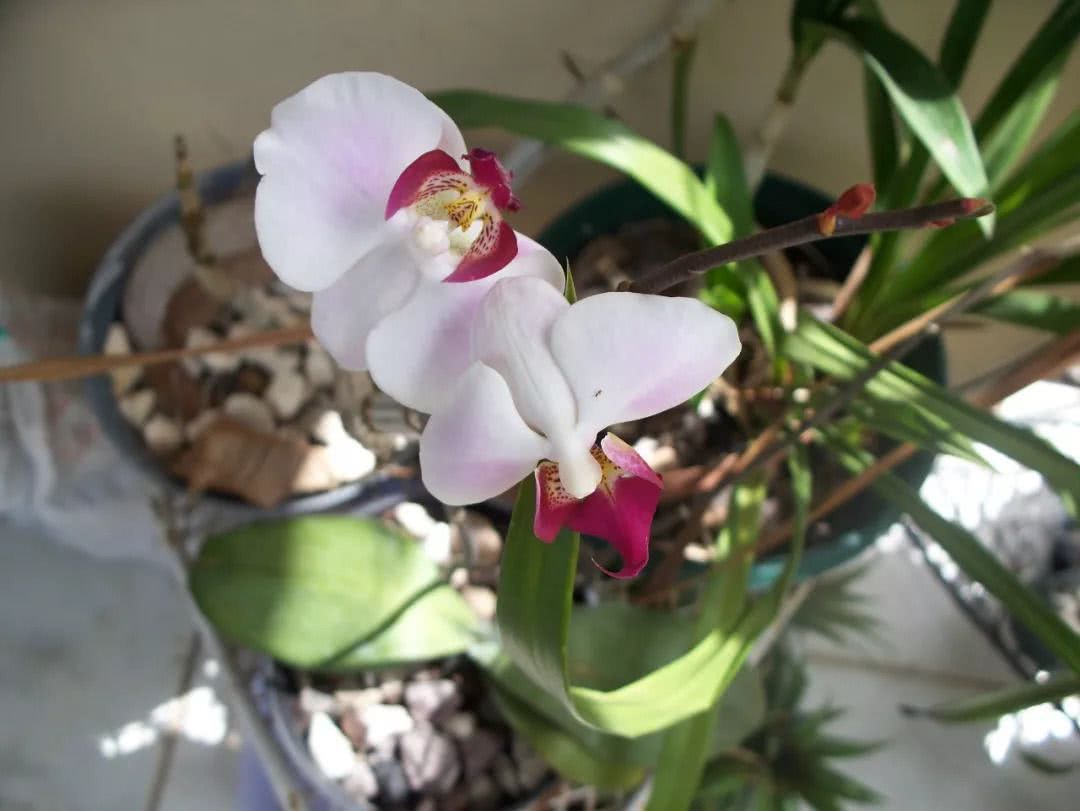
Many people buy a pot of Phalaenopsis orchids around the Spring Festival, and once the flowers fade they throw them away, which is very wasteful. In fact, Phalaenopsis orchids can bloom again after flowering; you just need to make sure they get the right sunlight and water, prune them properly after the flowers fade, and give them regular fertilizer once they resume growth, and your Phalaenopsis orchids can bloom again.
Phalaenopsis orchids are very easy to grow. With proper care, their flowers can stay in bloom for several months, giving you a long viewing period. As long as you master the care secrets below, your Phalaenopsis orchids can bloom every year without any problem. Let's take a look at the care tips.
If you often stroll through flower markets, you will find that Phalaenopsis orchids actually bloom in all four seasons. Most Phalaenopsis orchids today are grown in greenhouses and can bloom year-round, while winter and spring are their normal blooming time.
1. Pay attention to watering and humidity
You must not be too lazy when caring for Phalaenopsis orchids. You need to water and mist them regularly to keep the growing medium from drying out. While keeping the growing environment ventilated, you also need to maintain high air humidity and avoid dry air, otherwise the stems and leaves will easily dry out.
You can place some small pebbles on a tray, add some clean water, and set the potted Phalaenopsis orchid on top, which will continuously provide humidity for the orchid. During cultivation, be careful to avoid waterlogging, as standing water easily causes root rot.
2. Placement location
The spot where you keep your Phalaenopsis orchid needs to receive appropriate indirect light every day, but you must avoid scorching sun or excessive direct sunlight. The growing environment should stay ventilated and bright, not in a closed space, and not in a dark spot, otherwise there is no way to encourage blooming.
If you keep it in an environment without sunlight, then you need to supplement with lighting or a grow light. You can place the potted Phalaenopsis orchid about 30 cm away from the grow light; it cannot be placed too far, otherwise it will have no effect.
3. After-bloom care
If you want to encourage your Phalaenopsis orchid to bloom every year, then after the flowers fade you must promptly cut off the spent flowers. Once the flowers of the Phalaenopsis orchid fade, cut from the base of the flower spike up to a position 3~4 growth nodes from the bottom, and avoid cutting too low.
4. Day-night temperature difference
Phalaenopsis orchids need to stay cool at night; avoid too high a nighttime temperature, and also pay attention to maintaining high air humidity. The nighttime temperature is most suitable between 12~15 degrees, while the daytime temperature should stay between 18~25 degrees. Maintaining an appropriate temperature difference between day and night makes it easier for the Phalaenopsis orchid to bloom.
5. Replenish nutrients after blooming
After the flowers of the Phalaenopsis orchid fade, you can supplement with a slow-release organic liquid fertilizer about once every 2 weeks. This can effectively replenish the nutrients the orchid used up blooming and encourage a second bloom.
In fact, after a Phalaenopsis orchid finishes blooming for the first time, as long as it is handled properly, it can still bloom a second time. However, blooming twice a year consumes a great deal of nutrients, so it is recommended to let it bloom just once a year.
Caring for Phalaenopsis orchids requires wrapping them in sphagnum moss, with some bark or wood shavings added as appropriate, which improves air permeability and water retention.
If your sphagnum moss turns green, you need to replace it promptly; green sphagnum moss has spoiled. After removing the old sphagnum moss, if you find rotten roots, cut them off too, and then replace the sphagnum moss.