Temperature management for Lithops seedlings and daily care experience with Aizoaceae succulents
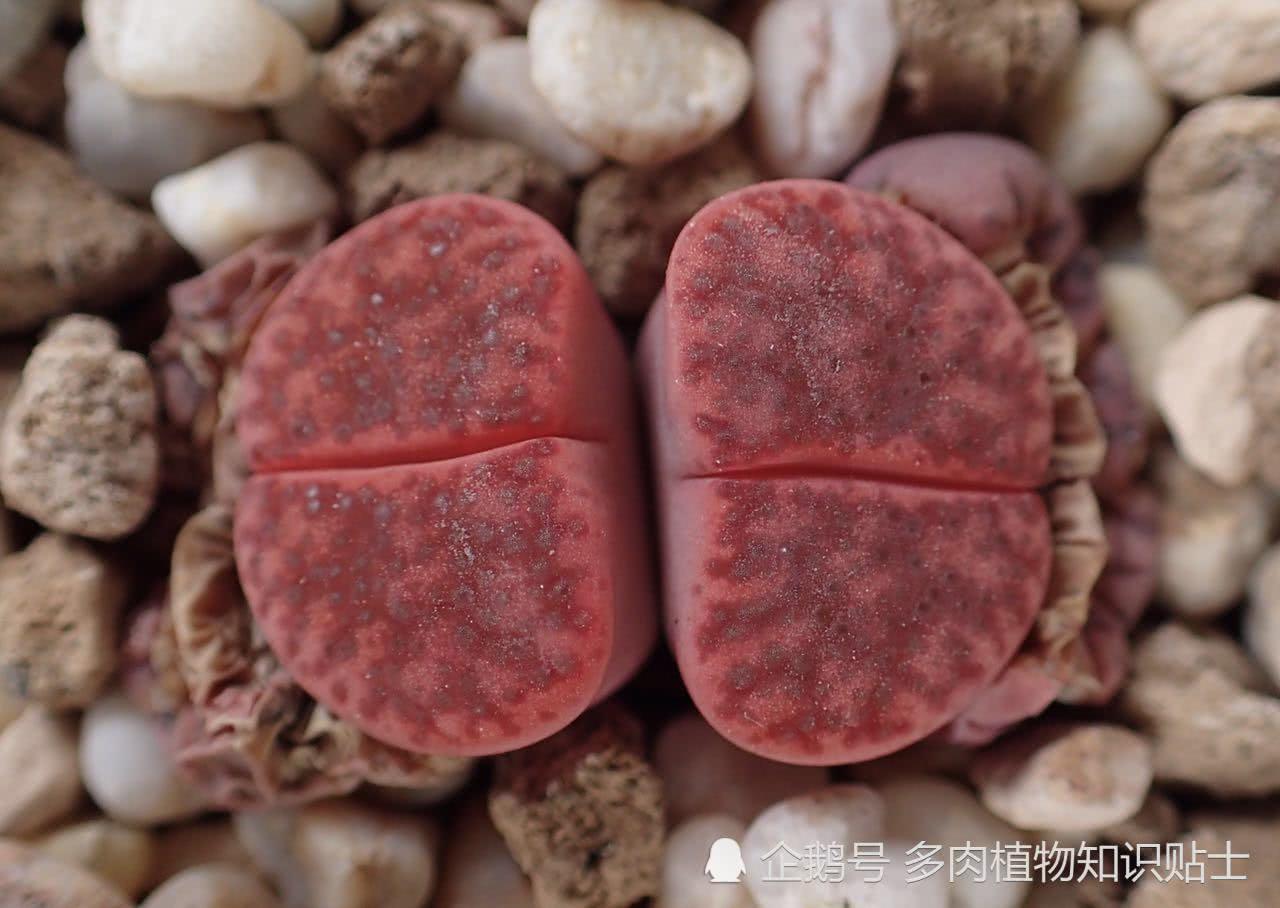
When I was exchanging experience with a friend, he was amazed at how big the seedlings I grow are. I had never thought of them as especially big, because this is just how they have grown whenever I sow them over these past few years. And when I thought about it, I do not have any special conditions either. After thinking it over carefully, it should be temperature. First, here is C189 Lithops pseudotruncatella sown in autumn 2016 (around September 15). It is now more than 4 months old. You can all get a sense of the size; the pot is an 8 cm square pot. (Thanks to Shuihan for the material)
Photo from last week of C15 Lithops lesliei sown at the same time by a friend in the neighboring city. (I want to emphasize that this expert really takes care of his seedlings very thoroughly: south balcony, 24-hour fan ventilation, and 24-hour ultraviolet lighting)
Now to the main point. I will now use facts to verify the effect of temperature on Lithops seedlings (I feel it is mainly the temperature during the winter and spring growing season and the molting season, so the comparisons I make are basically all changes in winter and early spring). [September 20, 2015] 50 Lithops pseudotruncatella seeds were sown, and they were repotted after the first molt in [April 2016]. Two of the pots were used for a comparative experiment. [Appearance after the first molt]
[Appearance after repotting and adjusting to the pot] -- taking one of the pots as an example; there are no photos of the other pot, and the sizes were about the same.
1. Apartment: from early May to mid-August, sunlight cannot reach inside; in spring, autumn, and winter there is all-day sunlight. In winter, the indoor average temperature is 15-20, and it may be lower in front of the glass, but in winter when the sun shines, the area by the window can reach 34°C. If the sunlight is good, the soil dries quickly, and I give a little water according to how dry it is. 2. Bay window: on sunny days all year round, sunlight can shine in, and the window is often opened for ventilation. I did not measure the average temperature of the bay window in winter, but in the winter in Jiangsu, Zhejiang, and Shanghai, if there is no heating and no air conditioning, it should basically be 4-12. From memory, I only gave water twice in autumn. From April 2016 to January 25, 2017, the size comparison is as shown below:
[Placed on the bay window]
The size difference is 1.5 times, but in terms of color and body shape, the latter is still better.
Environment: 1 pot was placed in a 50 sq m south-facing apartment on the 23rd floor without north-south ventilation, placed in front of a floor-to-ceiling window behind glass (the window is a glass curtain wall); 2 pots were placed on the 3rd-tier flower rack of the bay window of a 130 sq m south-facing master bedroom on the 3rd floor with north-south ventilation.