Environmental groups rank county and city energy transition: New Taipei, Pingtung, Tainan top three, Taichung regresses
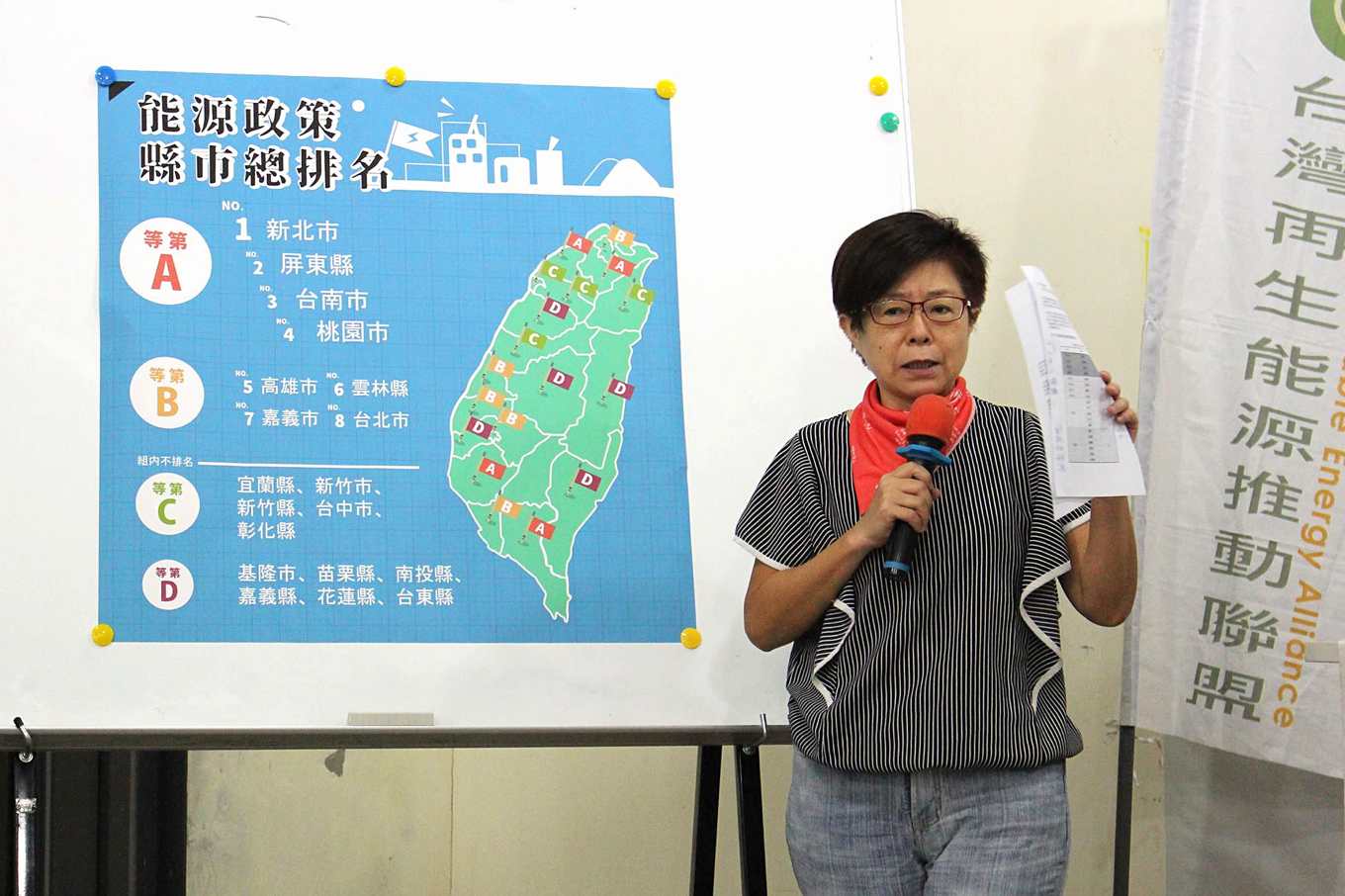
The Energy Transition Promotion Alliance announced on the 12th the "2017-2018 County and City Government Energy Policy Ranking," with the top three being New Taipei City, Pingtung County and Tainan City. Among them, New Taipei City and Pingtung County also ranked first and second in the 2015 electricity-saving evaluation. Yang Shun-mei, secretary-general of the Mothers' Watch Nuclear Power Plants Alliance, said that the six special municipalities are rich in resources, so it is no surprise that they lead the rankings, but Pingtung being able to take second place is due to its efforts to promote electricity saving and the recycling of agricultural waste. "Non-six-special-municipality areas can also outperform the six special municipalities."
Green energy must be integrated into daily life and expand public participation
Hung Shen-han said that in the past, the push for green energy still focused on grabbing large areas for installation, with profits all in the hands of big companies, but citizens actually also need to invest in green energy so that it can be integrated into city life. In addition, past green energy controversies arose because of a lack of citizen participation and coordination mechanisms, and localities must improve this phenomenon. County and city efforts to promote green energy are not only about boosting quantity, but also require comprehensive integration of resources through organization, regulations, policy planning and resource input.
The report's conclusions also give recommendations for local governments. Hung pointed out that localities should have regular funding arrangements and should not rely excessively on relevant subsidy funds from the central government, "stopping once the money runs out." Localities should increase funding and budgets for energy governance. There must also be an overarching plan to integrate resources scattered in various places, "otherwise the effects will not show, and it will just be random shooting."
At the same time, more citizens should be encouraged to participate in renewable energy in cities, and concrete participation plans should be designed, such as citizen power plants. Hung Shen-han stressed, "Green energy must be further combined with city life; this is the most core meaning." It should not just be publicity and filming videos, as this method has limited impact. To get everyone to change their participation, big data must be combined and presented so that the public feels it more strongly.
Regarding recommendations for the central government, Hung explained that the central government should provide regular resources and guidance, and in resource subsidies, the scope of plans must not be too rigid, otherwise it will affect local planning tailored to local conditions. Subsidy resources should better meet local needs, and when setting the resource scope, it should help integrate energy saving, green energy and carbon reduction into overall performance-oriented energy transition governance.