FDA amends pesticide residue standards, adds new tea pesticide and lowers carbofuran tolerance
On the 12th, the Food and Drug Administration of the Ministry of Health and Welfare issued amendments to the "Standards for Pesticide Residue Tolerances," adding pesticide residue limits for the pesticides "cyflumetofen" and "cyantraniliprole" for use on tea plants, at 20 ppm and 1.5 ppm respectively. At the same time, taking public dietary intake risk into consideration, it tightened controls on the pesticide "carbofuran," lowering residue standards for use on root and stem vegetables, melons and fruits, coarse grains, and others. A total of 10 pesticides and 43 residue tolerance items across various agricultural products were added or revised.
Trivia: Cyflumetofen is a new type of contact acaricide with selectivity, having no effect on beneficial insects. It inhibits succinate dehydrogenase activity and is recommended for controlling various mite pests on crops such as fruit trees, vegetables, citrus, and tea plants. Cyantraniliprole activates the ryanodine receptors of insects, causing depletion of stored calcium ions within cells, which leads to muscle paralysis and death. It is suitable for lepidopteran pest larvae, thrips, aphids, and others.
Carbofuran, commonly known as Furadan, is a carbamate and a systemic pesticide. Due to its highly toxic nature, farmers, in order to prevent sparrows and bird damage, soak rice grains in Furadan and scatter them along field edges to poison birds. In 2017, the Council of Agriculture announced a full ban on the sale and use of three highly toxic pesticides: "40.64% carbofuran aqueous suspension," "44% carbofuran aqueous suspension," and "37.5% carbofuran water-soluble bagged wettable powder." Only "3% carbofuran granules" were retained, which are of moderate toxicity.
Outside concerns that cyflumetofen is a Group C carcinogen; FDA: it has been carefully evaluated
Regarding outside concerns that cyflumetofen is classified as a Group C carcinogen yet is being approved for use on tea plants, Wei explained that both cyantraniliprole and cyflumetofen were applied for and approved for registration by pesticide companies. Because controlling spider mites requires spraying pesticides, but many are very early-era pesticides, and after long-term use of the same pesticide, resistance develops, causing farmers to continuously increase dosages, threatening public health and the ecological environment. Therefore, relatively safe new active substances are needed to avoid continued use of old pesticides and the emergence of resistance problems.
As for toxicity, Wei Renting stated that neither the U.S. Environmental Protection Agency nor the International Agency for Research on Cancer has listed cyflumetofen as a carcinogen. However, the FDA, referring to its toxicity data, found that it may pose a risk of uterine tumors in female rats, but the risk to humans is very low, so it approved its use and set residue standards.
Japan's residue tolerance for cyflumetofen in tea is 60 ppm; Taiwan sets 20 ppm
However, only Japan worldwide has approved the use of cyflumetofen on tea plants; neither the United States nor Europe has approved its use. Should Taiwan evaluate more cautiously? Wei responded that if a crop is not grown, the use of that pesticide would naturally not be approved. Under different production environments, various crops have different pest control needs, and each country sets pesticide residue tolerances according to its own needs.
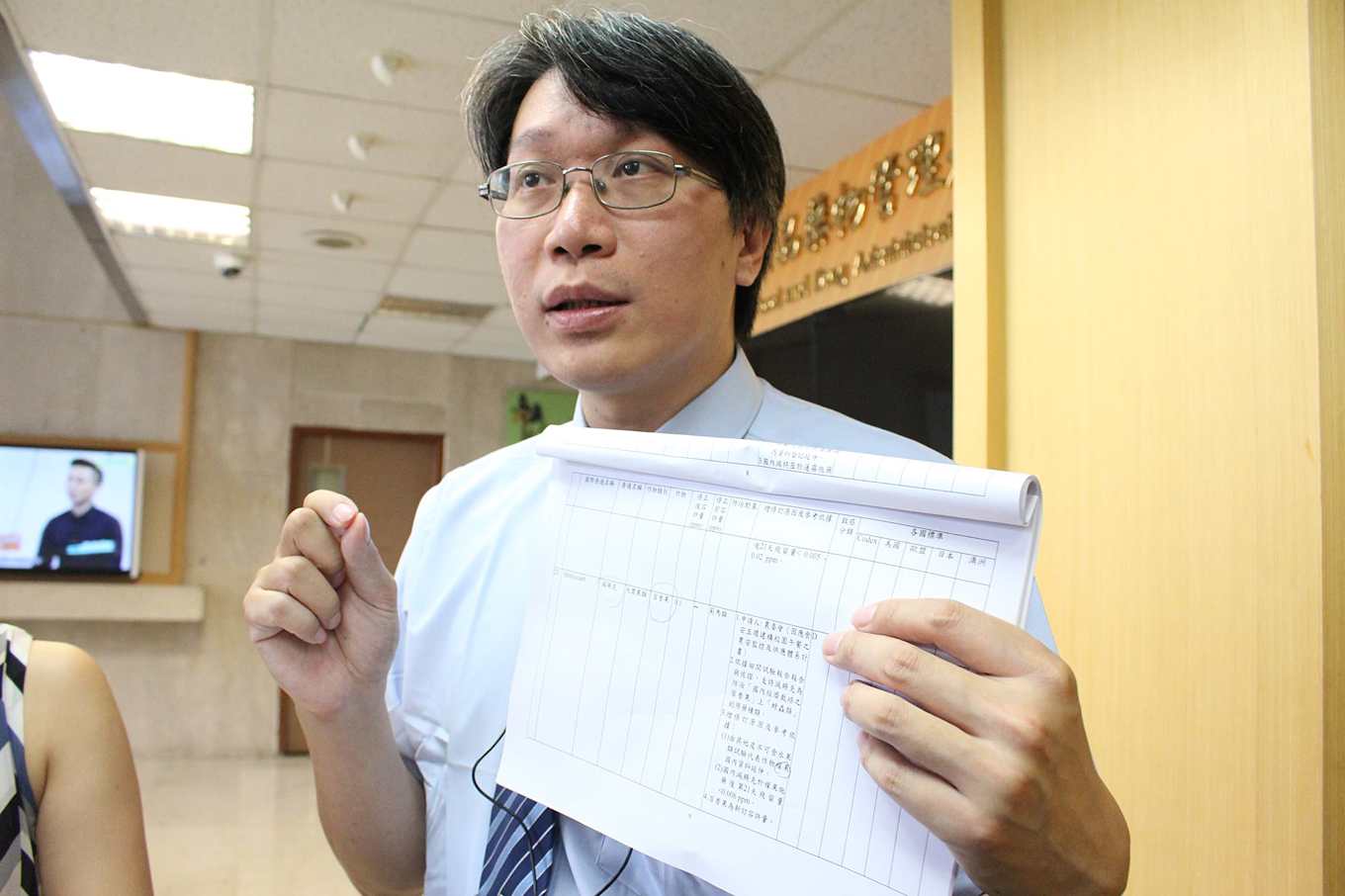
Taking tea as an example, Asian countries have cultivation needs, so they have pesticide control needs, Wei Renting pointed out. "Japanese people drink quite a lot of tea, but they set the residue tolerance for cyflumetofen in tea at 60 ppm." The FDA evaluated the domestic situation and considers Taiwan's residue tolerance of 20 ppm to be within a safe range.
(Photo / Liu Yixin)
Carbofuran pesticide residue tolerances significantly lowered
In addition, Wei also explained that besides needing new active substances to avoid resistance and setting safe tolerances, the FDA will also continue to evaluate existing pesticide residue tolerances. Based on past data for carbofuran, public exposure was slightly on the high side, so this announcement also lowered its residue tolerances to reduce public intake risk.
For carbofuran pesticide residue tolerances: leafy vegetables from 0.5 ppm to 0.1 ppm; melons and fruits from 1.0 ppm to 0.1 ppm; rice from 0.5 ppm to 0.1 ppm; citrus from 2.0 ppm to 0.5 ppm; root and stem vegetables from 0.5 ppm to 0.1 ppm; coarse grains from 0.5 ppm to 0.05 ppm.
Bureau of Animal and Plant Health Inspection and Quarantine: pesticide residue tolerance standards take effect; violators will be dealt with according to law
Zou Huijuan, Deputy Director-General of the Bureau of Animal and Plant Health Inspection and Quarantine, stated that both cyflumetofen and cyantraniliprole were applications by pesticide companies. The Bureau, in accordance with relevant regulations, conducted tests on field efficacy and residues, acute and chronic toxicology, and carcinogenicity, and convened meetings of experts and scholars. After approval, the matter was handed to the Ministry of Health and Welfare for subsequent risk assessment. A synchronized announcement was made today with the Ministry of Health and Welfare, and farmers may use cyflumetofen and cyantraniliprole on tea plants starting today.
Zou also pointed out that, based on scientific data, the total dietary intake of carbofuran by the public is on the high side, so the residue tolerances were lowered. The Bureau will also continue to evaluate high-usage, high-risk pesticides, having their standards lowered or their market withdrawal arranged. She emphasized that when used according to approved methods, there is no safety concern.
The FDA announced that the revised "Standards for Pesticide Residue Tolerances" officially took effect today. If violations of the pesticide residue tolerance standards are found, a fine of no less than NT$60,000 and no more than NT$200 million may be imposed under the Act Governing Food Safety and Sanitation, and local government health bureaus, together with agricultural authorities, will trace the supply sources and causes of the residues and deal with the matter according to law.