Mix a little yellow powder into orchid soil: alkaline soil turns acidic, roots burst out of the pot, and yellow leaves stay away
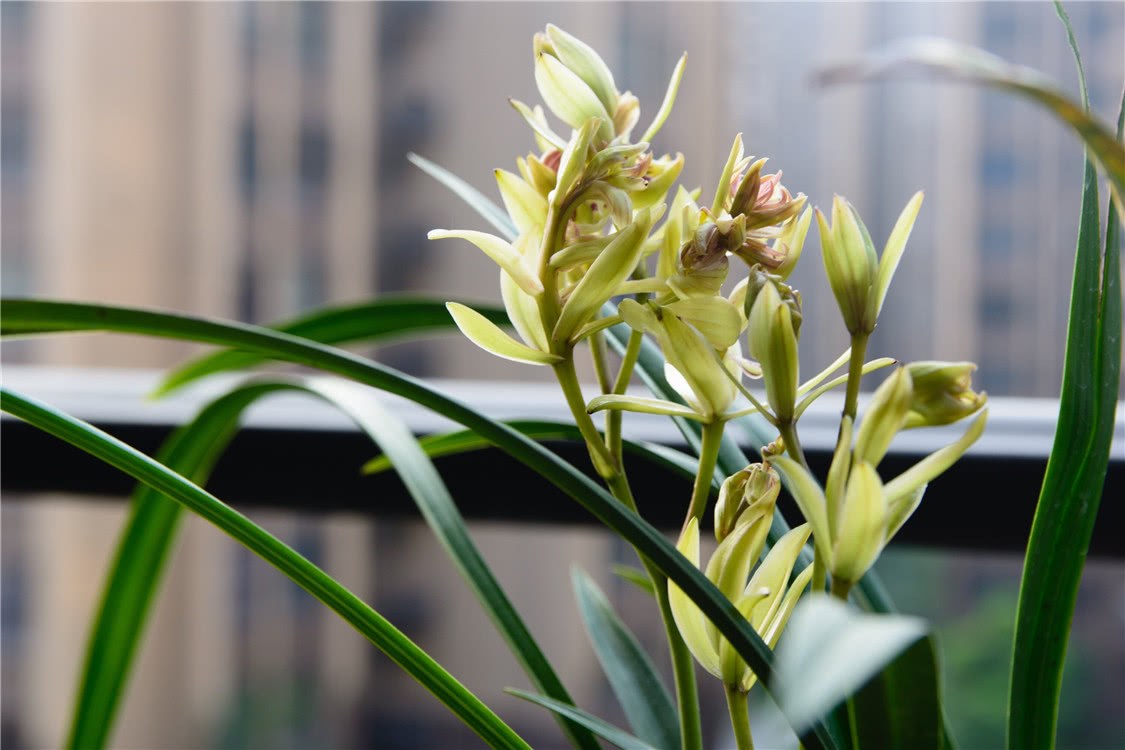
When growing orchids, growers with some experience agonize over watering, while new orchid growers agonize even more over soil mixing: how to mix the soil, what to use for mixing, what goes well with what. These questions give new orchid growers a "headache." Today, the little gardener shares with orchid growers a little trick from an old orchid-growing friend: they say mixing a little "powder" into the soil keeps orchids far from root rot. Image from forum user "Lazy Cat on the Tree."
1. Common orchid soil-mixing methods for beginners
Let the little gardener first tell everyone about the common orchid soil-mixing methods. New orchid growers can choose among these methods and adjust the mix themselves. The first method: 5 parts hard potting medium (bark, tree fern), 3 parts fine soil (pond mud, peat soil), 2 parts granules; the second method: 3 parts granular potting medium (volcanic rock), 5 parts fine soil, 2 parts clay pebbles (1 part for the bottom layer, 1 part for top dressing). There are many soil-mixing methods, and all of them can be adjusted to suit yourself.
2. Soil plus fertilizer: strong orchid roots, beautiful orchids
These soil-mixing methods are very suitable for new orchid growers, with good drainage and aeration, plus fine soil to nourish the roots and grow fragrant flowers. However, soil mixes based mainly on large granular material must be combined with top dressing to achieve results. How to fertilize? During the growing period, use organic fertilizer that strengthens seedlings and nourishes roots; during the flower bud stage, use organic fertilizer that promotes flowering and preserves blooms. Because there are elderly people and children at home, the little gardener suggests everyone use green orchid fertilizer fermented from plants.
3. A little magic tool for growing orchids: "sulfur powder"
The little gardener has also mentioned in previous articles that things like plant ash and coal cinders are also among the "treasures" for growing orchids. However, they are double-edged swords: they are alkaline, and if not handled well they may make the soil too alkaline. So we need to treat them a little, and the thing needed to treat them is the star of this article: "sulfur powder."
4. The "two major effects" of sulfur powder
It is said that some flower growers have used sulfur powder to improve soil pH when growing flowers, with pretty good results. So some orchid growers made an attempt: when potting orchids with plant ash or coal cinders, they mix in just a tiny bit of sulfur powder. It can make the soil "acidic" and make the environment more suitable for orchid fungi to grow, which is greatly beneficial for orchids sending out shoots and blooming.
Of course, sulfur powder has another effect: if a wound appears on the orchid roots, it can effectively prevent wound infection. That is good information indeed. But the little gardener's advice for new orchid growers is to try not to use sulfur powder; using carbendazim or thiophanate-methyl is better, as it is safer.
Today the little gardener mainly shares with orchid growers the matter of using "sulfur powder" to care for orchids. In fact, many things are "treasures" for growing orchids; the difference is that experts can use them well, while beginners can turn them into "poison." For growing orchids, what else do we have to learn? For today, let's first note down this "sulfur powder."