Handle your mail-order rose like this after it arrives, and flower buds will keep appearing
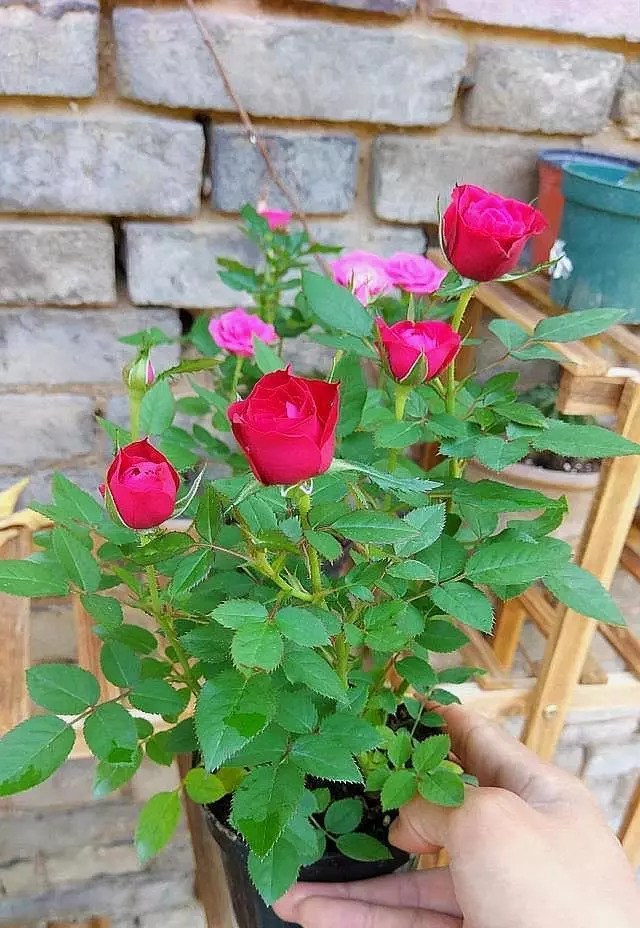
A newly purchased rose, having generally been through transport or a change of growing environment, will be somewhat unsettled; the main problem is root damage, with fine feeder roots generally over 90% damaged, followed by yellowing and dropping leaves. Therefore at this time pruning is not recommended; keep as many leaves as possible so the young plant can maintain photosynthesis and promote timely root development.
Please enter an image description
For newly purchased rose seedlings, yellowing leaves generally peak around 3-5 days; after these days, the yellowing basically will not continue, unless there is a problem with care. Generally the yellow leaves are mainly older leaves at the base turning yellow, which is physiological yellowing: the old leaves send nutrients back to the plant and then drop off, which is self-preservation. Yellowed leaves fall off at a touch, so there is no need to pick them off deliberately.
For handling new seedlings, you can roughly do this: first, when you get the seedling, remove the packaging bag, then do not repot it; water it thoroughly and place it in a shaded spot with indirect light and good ventilation. Check the seedling for pests and diseases, and treat them promptly if present. Then spray the whole plant with a broad-spectrum fungicide; either mancozeb or chlorothalonil will do. Spray the pot, potting soil, branches and stems, and both sides of the leaves with no spot missed, because nurseries often have large amounts of persistent pests and diseases, and you must never let your guard down. Once they infect your other flowers at home, that is trouble. Generally after 3 days of this care, the seedling can adapt to the environment and can be transplanted and repotted normally. For transplanting, it is recommended to use a loose, breathable substrate, so the potting soil does not easily become waterlogged and the roots develop quickly; generally in 5-7 days the roots can grow into the new potting substrate
Please enter an image description
When transplanting new flower seedlings, there is a recurring problem that even experienced growers often stumble on: the problem of a "sandwiched" root ball. For example, if the seedling you bought was grown in yellow clay soil, after you transplant it, a few days later the seedling starts to wilt, but the potting soil is moist and not waterlogged. At this point, if you take out the original soil ball of the seedling, you will find that this soil ball has not absorbed water at all and has become dry and hard. This is the sandwiched soil ball problem.
Please enter an image description