How do you care for succulents at home in autumn so they grow plump and thick?
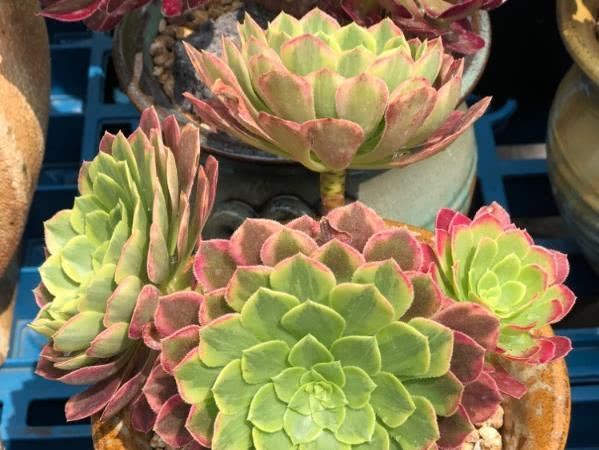
Be careful with watering in early autumn. In summer, many people restrict water or even cut it off entirely for succulents, though some do water normally. For succulents that have had restricted or no water, once the weather turns cool, it is best not to soak them thoroughly right away for the first one or two waterings; the amount of water should gradually return to normal, giving the succulent's roots a period to adapt and reducing the chance of rot.
Root care: Whether a succulent can grow well has a lot to do with how developed its roots are. When the roots are well developed, the plant naturally grows well. When the roots are weak, no amount of care will make the plant grow well. So when growing succulents, in the early stage we should care more about whether the roots have grown well.
So how do you grow good succulent roots? Succulent roots are not very developed, and soil that is too clayey or has poor water and air permeability tends to become hard, so the roots cannot push down into it. Therefore, the soil for growing succulents should ideally have some grit. Generally, use more gritty soil for small seedlings and less gritty soil for large plants. This is because small seedlings have weak roots, and gritty soil makes it easier for them to grow. Large plants, however, need more water, and gritty soil holds water poorly.
When repotting succulents in autumn, should you just throw away the old soil that has been used? Old soil can be used, but it is best not to use it directly; it should be properly treated. Potting soil that has previously grown plants will contain leftover roots, pathogens and insect eggs from the previous plant. With long-term watering, the nutrients in the original soil are also lost. The most critical drawback is that the grit in the medium breaks down, affecting aeration and drainage, which can prevent the new plant's roots from extending or cause root rot and death.
Because growers' old soil situations differ, some use peat, some use garden soil, some use their own mixed medium, some grow plants that are not prone to pests, some grow plants that are prone to pests, and so on, growers should adjust appropriately according to their own actual situation whether the old soil should be used. For example, if a grower grows roses (Rosa) and the roses have root knot disease, then all of that old soil must be thrown away, because sunning it or sprinkling some disinfectant chemicals cannot thoroughly clear out the pathogens.
So here we suggest to growers: soil without pathogens can be used a second time, but if the soil has a history of some hard-to-clear pathogens, we had best not use it a second time.
This is a gathering place for succulent lovers, sharing succulent care tips; you are welcome to follow and exchange ideas.