The water changed out from fish keeping is rich in nutrients and can be used for succulent plants.
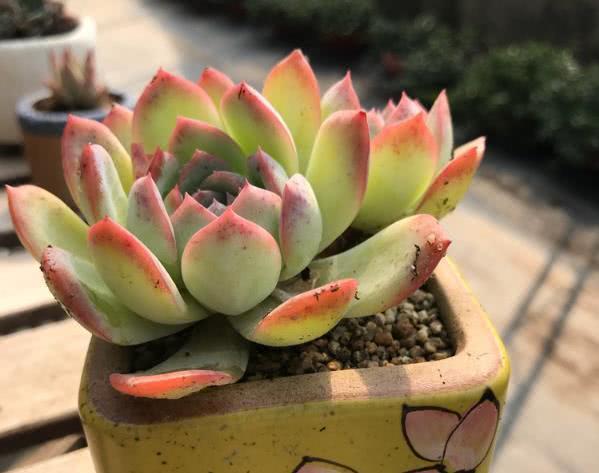
Some flower lovers not only enjoy growing flowers but also enjoy keeping fish. In the process of keeping fish, one tiring task is changing the water in the fish tank and washing the filter, which takes effort, water and physical strength. Now I have thought of a water-saving method: use the "black water" from washing the filter cotton to water the flowers. Wouldn't that kill two birds with one stone? The water changed out from fish keeping is rich in nutrients and can give plants and flowers better nourishment and make them grow better. There are some nutrients in fish-keeping water, but the nutrient concentration is extremely low and will not cause root burn.
Spring and autumn are the growing seasons for most succulent plants, so you can appropriately give succulents some nutrients. When using water changed out from the fish tank to water flowers, you need to pay attention to three points: if aquatic plants are grown in the fish tank, fertilizer is often applied, especially in landscape ornamental fish tanks full of aquatic plants, where more fertilizer is applied. If such water is used to water flowers, at the beginning you should carefully observe the growth of the flowers and plants and appropriately reduce ordinary fertilizing, so as to avoid causing the flowers and plants to grow leggy.
Second point: after the water is changed out from the fish tank, if you water the flowers directly, pay attention that the temperature of the water and the temperature of the soil in the flowerpot must not differ too much; it is best to let it sit for one or two days before using. Third: if aquatic plants are grown in the fish tank, snails often breed. When taking water from the tank to water flowers, snails will be brought into the flowerpot without being noticed, grow quickly in the soil and multiply in large numbers, which will harm the flowers and plants, and removing them is rather troublesome.
Why do my flowers' leaves turn yellow when I water them with fish-keeping water? Using fish-keeping water to water flowers is not the cause of the flowers' leaves turning yellow. Yellow leaves can be caused by many reasons, such as yellowing from too much water, yellowing from dryness, yellowing from too much fertilizer; with too little fertilizer the leaves also turn yellow. Yellowing also differs: with too much water the leaves are tender yellow, with too little water the old leaves turn yellow first, with deficiency the leaves are small and yellow, and so on. You can compare and identify them to find the exact cause.
Can fish-keeping water and nutrient solution be used to water flowers at the same time? Fish-keeping water and nutrient solution are not suitable for watering flowers at the same time. The mucus secreted on the surface of the fish's body is all organic matter, and before it has been fermented and decomposed, it is not a component that plants can absorb. Therefore, if it is used to water flowers at the same time as nutrient solution, it will not only dilute the nutrient solution, but after it is adsorbed by the soil it will also easily breed microorganisms, which may cause the roots and stems of the flowers to become virally infected.
Rice-washing water and tea water are waters that are relatively easy to come by in our daily life and seem to be rich in nutrients. In the past, the older generation was also used to watering some plants with rice-washing water and tea water. Therefore, some flower lovers, wanting succulents to grow quickly, want to use rice-washing water to water succulents. It is true that rice-washing water is rich in nutrients, but for watering household greenery, on the whole the disadvantages outweigh the advantages. The biggest problem is that rice-washing water contains nutrients and has not been decomposed; during the fermentation process it easily attracts small insects, such as fungus gnats. And during fermentation in summer, it may cause root burn in plants.
This is a gathering place for succulent plant lovers, sharing succulent care tips. You are welcome to follow and exchange ideas.