What are the reasons lavender never seems to survive?
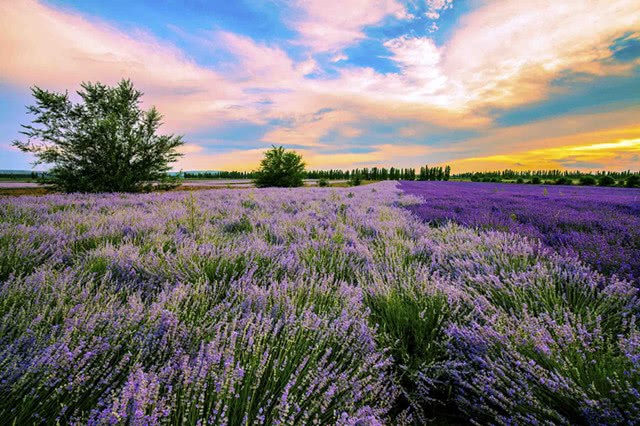
Lavender has been a fairly common and popular herb since Roman times. Besides the usual blue and deep purple, the flowers also come in other colors such as pink and white. Because the oil glands are hidden in the fine hairs on the flowers, leaves and stems of the whole plant, a gentle touch ruptures the oil glands and releases a fresh, slightly sweet fragrance; in earlier times it often appeared in French monasteries as a medicinal herb. If you ever have the chance to walk through a lavender field, you will never forget its distinctive fragrance. Some flower lovers complain that lavender is nice to look at but hard to grow, but in fact most of the reason is not having grasped lavender's habits. Today, let's learn the secrets of lavender care together.
The five key elements of lavender care are as follows:
1. Plenty of sunlight
What kind of light does lavender like? Simple: full sun. Whichever spot in the yard gets the strongest sun and whichever spot is the hottest, the place in direct sunlight is the most suitable place to plant lavender. Sunlight is very important for lavender's growth, so the site must be chosen well. Shady spots in the yard mostly get partial sun or even less than partial sun, so they are not suitable places to settle lavender. But there are a very few exceptions, for example fernleaf lavender does not need that much light; too much light instead makes its growth weak, prevents flowering or even causes bud drop, and it needs 50% shading, so in a partially sunny spot in the yard fernleaf lavender can actually grow better.
2. Water in moderation
Did you know? Most lavender dies from your excessive "spoiling" -- water control is the most important part of caring for lavender.
The owner keeps watering, causing water to accumulate at the roots and rot them, and in the end the plant withers. Lavender fears waterlogging, not drought, and does not need constant watering. There is an indicator you can refer to, for example with English lavender: look carefully at the leaf stalks. Normally, when lavender has plenty of water, the leaves turn upward. When the sun keeps shining and it starts to lose water, the leaf stalks gradually flatten; when the leaf stalks flatten, that is the best time to water, rather than watering just because the soil looks dry. The best time to water is in the morning or the evening, and never water at noon in midsummer -- the water temperature in the hose is too high, and watering the plant with it can easily cause lavender to die.
Also, water droplets falling evenly from a sprinkler head like this, under the shining sun, create a magnifying-glass effect, burning the leaves or flowers and causing spots. Therefore, both the amount of water and the timing of watering need constant attention in the daily care of lavender.
3. Keep it ventilated and avoid stuffiness
Lavender is a sun-loving plant and grows vigorously and well under conditions of ample sunlight, but it fears stuffiness most of all, so ventilation must also be good. The suitable growing temperature for lavender is 15-25°C, up to 35°C; if it stays above 38°C for a long time, the plant will show scorched symptoms. Well-drained soil: the soil for planting lavender needs to be well drained, because lavender is very afraid of flooding, and soil with too high a clay content will cause lavender's roots to suffocate and die from water accumulation.
4. Soil medium
Only when the soil has good drainage can lavender's root system grow normally. So a well-drained medium must be chosen. The most suitable cultivation medium ratio for them is: 1/3 peat, 1/3 vermiculite or perlite, 1/3 garden soil. These can all be bought at the flower market, and the price is not expensive.
5. Proper pruning
Lavender needs pruning every year, as only then can it keep a compact plant shape and grow vigorously. Generally, a light pruning can be done in early spring to keep the lavender hedge or a single plant in good shape and to delay the flowering period slightly. At the end of summer after flowering, prune off the flowers that have already bloomed or faded, which can help the plant produce the next wave of fresh growth. After reasonable summer pruning, French lavender and fernleaf lavender can bloom almost continuously throughout the whole summer. When pruning, use pruning shears to cut off the leaves grown in the previous season; after cutting, leave branches with buds or 2-5 cm of active branches, and make sure the pruned branches do not fall inside the plant, so as to avoid causing the new branches to rot.